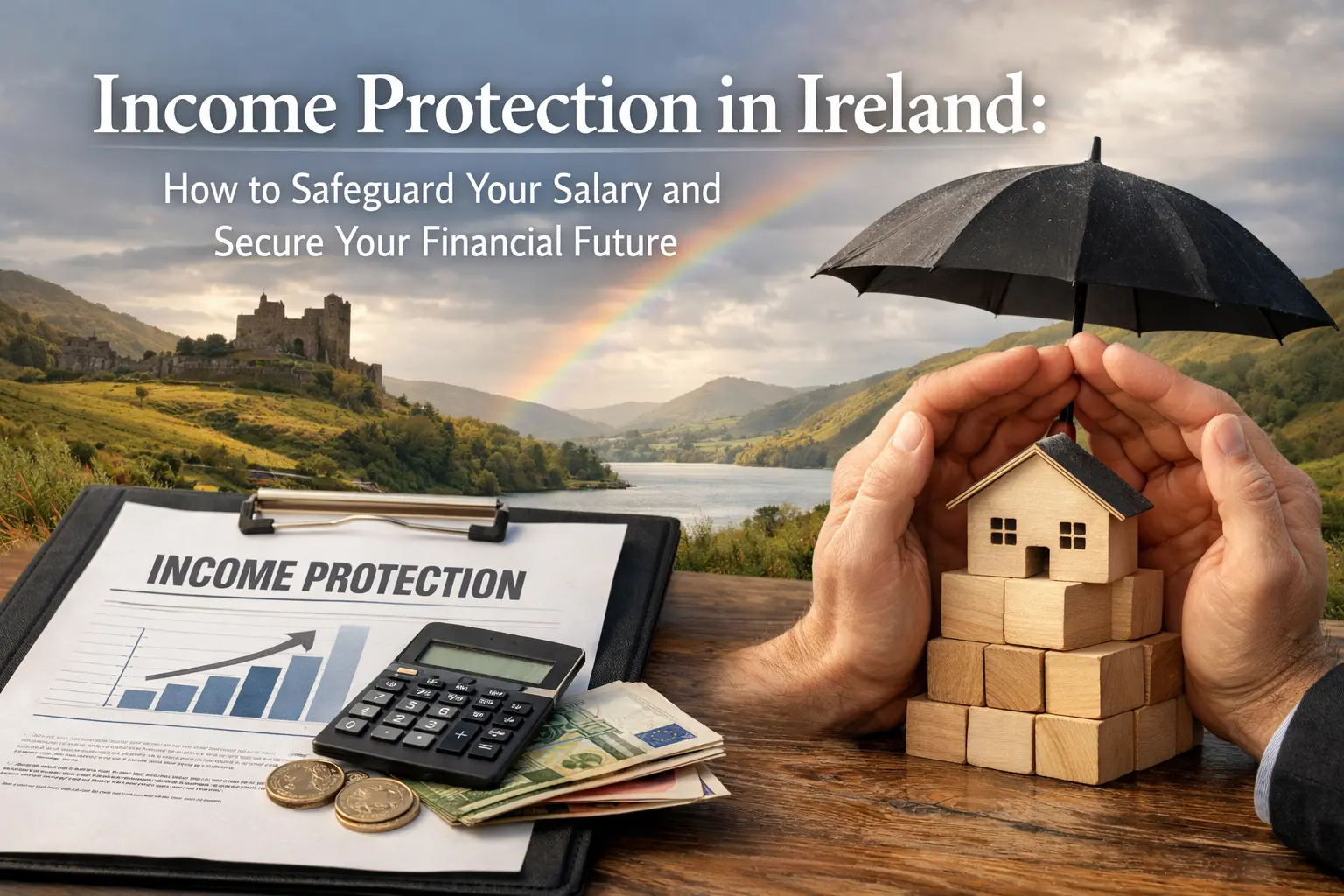
Your salary is the foundation of everything — your mortgage, your bills, your family’s lifestyle, and your future plans. But what happens if illness or injury suddenly stops you from working? That’s where Income Protection in Ireland becomes not just important, but essential. Yet despite being one of the most valuable financial safety nets available, it remains one of the most overlooked.
At Money Maximising Advisors, our team of Certified Financial Planners (CFP) and Qualified Financial Advisors (QFA) help people across Dublin, Galway, and the rest of Ireland understand and secure the right income protection cover — tailored to their exact needs and budget.
This guide covers everything you need to know about income protection insurance Ireland — how it works, who needs it, what it costs, and why 2026 is the year to finally get it sorted.
What Is Income Protection in Ireland?
Income Protection in Ireland (also known as salary protection insurance Ireland) is an insurance policy that pays you a regular monthly replacement income if you are unable to work due to a serious illness, injury, or disability. It is designed to cover your ongoing living costs during a period when you simply cannot earn.
Unlike a once-off payment (such as serious illness cover), income protection pays out on a continuous monthly basis — right up until you recover and return to work, or until the policy term ends, whichever comes first. This makes it particularly powerful for people dealing with long-term health conditions.
In simple terms: if you cannot work, your income protection policy steps in to pay your bills.
How Does Income Protection Work in Ireland?
Here is a straightforward breakdown of how income protection cover Ireland operates:
1. Choose Your Benefit Amount
You can insure up to 75% of your gross annual salary (minus any social welfare entitlements). Most providers allow you to select a benefit amount starting from as low as €10,000 per year, right up to the maximum allowed amount.
2. Set Your Deferred Period
This is the waiting period before your policy begins paying out. Common deferred periods are 4, 8, 13, 26, or 52 weeks. The longer your deferred period, the lower your premium. Ideally, your deferred period should align with how long your employer will continue to pay you when you are out sick.
3. Select Your Policy Term
Most policies run until your chosen retirement age — typically 60, 65, or 68. This ensures that if you suffer a long-term disability in your 30s or 40s, you are covered for decades, not just months.
4. Claim When Needed
If you become ill or injured and cannot work, you submit a claim after the deferred period. Once approved, monthly payments begin. These continue until you recover, reach your policy end date, or sadly pass away.
Unsure how much cover you need? Enquire Now and one of our advisors will help you calculate the right benefit amount for your situation.
Who Needs Income Protection Insurance in Ireland?
The short answer? Almost everyone who relies on a regular income. But certain groups have an especially pressing need for income protection insurance Ireland:
- Self-employed individuals — With no employer sick pay and no access to Illness Benefit in many cases, self-employed workers are among the most exposed.
- Employees with limited sick pay — Many Irish employers provide only 2–4 weeks of sick pay. What happens after that?
- Parents and primary earners — If your income supports a household, losing it even temporarily can be devastating.
- Professionals with mortgages — A mortgage does not pause because you are unwell.
- People in physically demanding roles — Higher risk of injury means higher risk of income loss.
- Public sector workers — Even those with generous sick pay schemes eventually exhaust their entitlements after prolonged illness.
Related Reading
- Income Protection Insurance: Is It Worth It?
- Securing Your Retirement: Financial Protection Advice for Dublin Residents
- Financial Protection Advice and Financial Planner Ireland-2023
- When Should I Stop Paying Income Protection Insurance? Expert Financial Protection Advice
Tax Relief on Income Protection in Ireland — A Little-Known Advantage
One of the biggest and most underappreciated benefits of income protection cover Ireland is the tax relief available on premiums.
You can claim income tax relief on up to 10% of your gross income on your income protection premiums. That means:
- A standard rate taxpayer (20%) effectively reduces their premium by 20%.
- A higher rate taxpayer (40%) reduces their premium by 40%.
This makes income protection one of the few insurance products in Ireland where Revenue effectively subsidises a portion of the cost. If you are paying €100 per month in premiums as a higher-rate taxpayer, your real cost is just €60 after tax relief.
How Much Does Income Protection Cost in Ireland?
The cost of income protection insurance Ireland varies based on several personal and policy factors:
- Age — Younger applicants typically pay lower premiums.
- Occupation — Higher-risk jobs attract higher premiums.
- Health history — Pre-existing conditions may affect eligibility or premium rates.
- Deferred period — A longer deferred period means a lower monthly premium.
- Benefit amount — The more you insure, the more it costs.
- Policy term — Coverage running to age 68 costs more than a shorter term.
As a rough guide, income protection premiums for a healthy 35-year-old professional in Ireland can range from approximately €30 to €80+ per month — before tax relief. After tax relief, the real cost is meaningfully lower.
The best way to find the right price for your circumstances is to request a personalised income protection quote from Ireland from our team.
Ready to get your quote? Book Now for a free, no-obligation consultation with one of our specialist advisors in Dublin or Galway.
How to Find the Best Income Protection in Ireland for You
With multiple providers competing in the Irish market — including Aviva, Irish Life, New Ireland, Royal London, Zurich, and others — navigating the options on your own can be time-consuming and confusing.
Finding the best income protection Ireland policy is not simply about finding the cheapest premium. It is about finding the right combination of:
- The right benefit amount for your salary and outgoings.
- A deferred period that aligns with your sick pay entitlements.
- A policy term that covers you to the right retirement age.
- A provider with a strong claims-paying track record.
- A policy that includes Guaranteed Insurability options — so you can increase cover later without new medical underwriting.
Our advisors at Money Maximising Advisors compare the full market to identify the best fit for you — not the most expensive or the most marketed, but the most suitable.
Income Protection for the Self-Employed in Ireland
If you are self-employed, income protection insurance Ireland is arguably even more critical than for employees. There is no employer to continue paying your wages when you are ill, and depending on your PRSI contributions, you may not qualify for the State’s Illness Benefit either.
Self-employed professionals — from tradespeople and consultants to sole traders and business owners — face a cliff edge the moment a serious illness strikes. Income protection bridges that gap, allowing you to keep paying yourself, your business costs, and your personal outgoings while you recover.
Conclusion: Your Salary Is Worth Protecting
Income Protection in Ireland is not a luxury — it is the financial safety net that keeps everything else intact when life takes an unexpected turn. If you rely on your salary to pay your mortgage, support your family, or simply keep the lights on, then protecting that income is one of the most sensible financial decisions you can make in 2026.
At Money Maximising Advisors, we make it straightforward. Our CFP and QFA-qualified advisors in Dublin and Galway will review your current situation, compare the market, and find the right income protection cover Ireland has to offer — at the right price, with tax relief factored in from day one.
Do not wait until you need it to wish you had it. Get protected today.
Contact Us: Schedule a callback or send us a message
Book an Appointment: Arrange your free financial consultation
Frequently Asked Questions (FAQs)
1.What is income protection insurance in Ireland?
Income protection insurance Ireland is a policy that pays you a regular monthly income if you cannot work due to illness or injury. It replaces up to 75% of your gross salary and continues paying until you recover or reach your policy end date.
2. How does income protection work in Ireland?
You choose a benefit amount, a deferred period (how long you wait before payments begin), and a policy term. Once you make a successful claim after the deferred period, the insurer pays your chosen monthly benefit directly to you until you return to work or the policy expires.
3. Is income protection worth it in Ireland?
Yes, for most working adults it is. The combination of salary replacement, long-term cover, and significant income tax relief makes income protection insurance Ireland exceptional value — particularly given how little employer or State sick pay covers long-term illness.
4. How much does income protection cost in Ireland?
Premiums vary based on your age, occupation, health, deferred period, and benefit amount. A healthy professional in their 30s might pay €30–€80+ per month before tax relief. An income protection quote Ireland from our advisors gives you an exact figure based on your own circumstances.
5. How much of my salary can I insure?
You can insure up to 75% of your gross annual salary, minus any State benefits you would receive. This ensures your total income in-claim does not exceed your take-home pay when working, complying with Revenue guidelines.
6. What percentage of income is covered?
The standard maximum is 75% of gross income under income protection cover Ireland. Policies can be set up for lower percentages if you prefer a reduced premium, and the net effective cost is further reduced by income tax relief at your marginal rate.
Disclaimer
This article is intended to provide general information about income protection insurance in Ireland and should not be considered personalised financial or insurance advice. Individual circumstances, health status, and financial needs vary significantly. Policy terms, premium rates, and tax relief rules can change, and all information should be verified at time of purchase. Always consult with a qualified financial advisor, such as the team at Money Maximising Advisors, before taking out or amending any income protection policy.