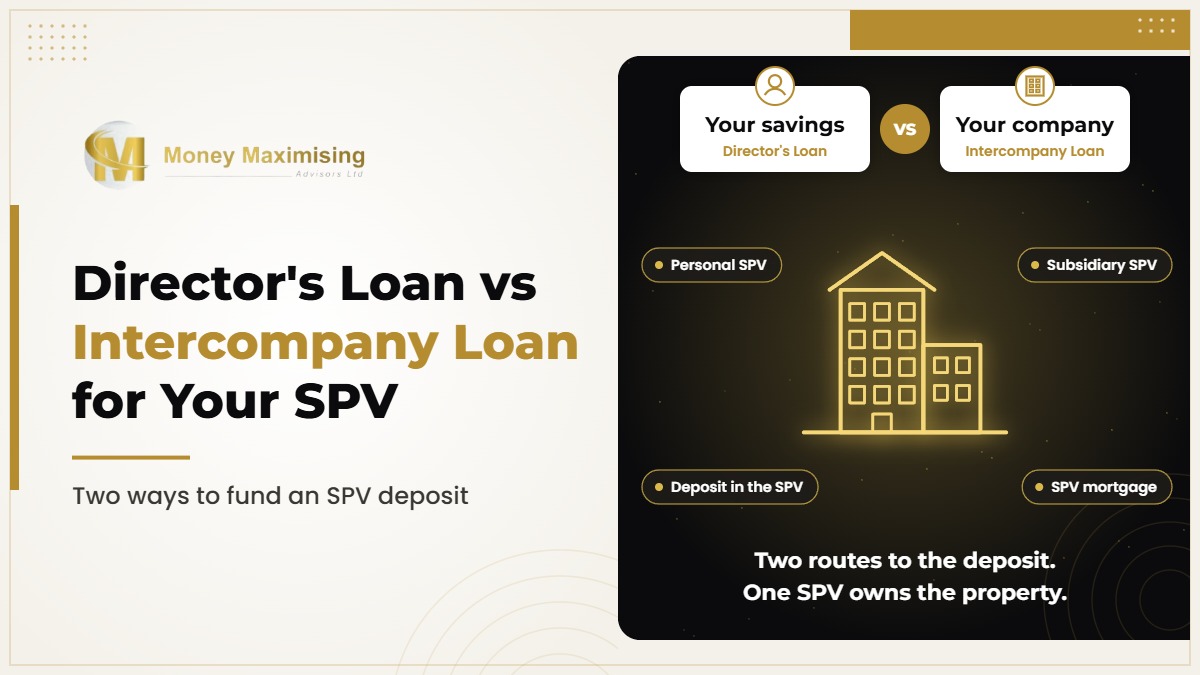
When you buy an investment property through a Limited Company, the company needs the deposit in its own bank account before it can apply for SPV mortgages. There are two main ways to get it there, and the right one usually comes down to whether your money is held personally or in a business.
In this guide
Option 1: Set Up an SPV Personally (Director’s Loan)
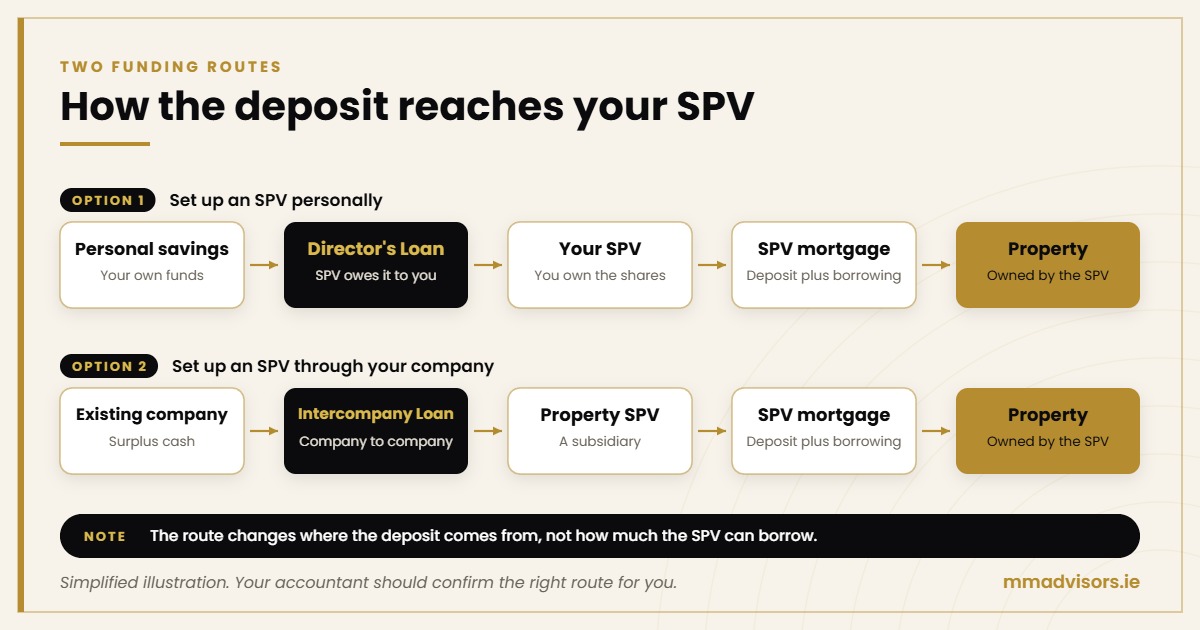
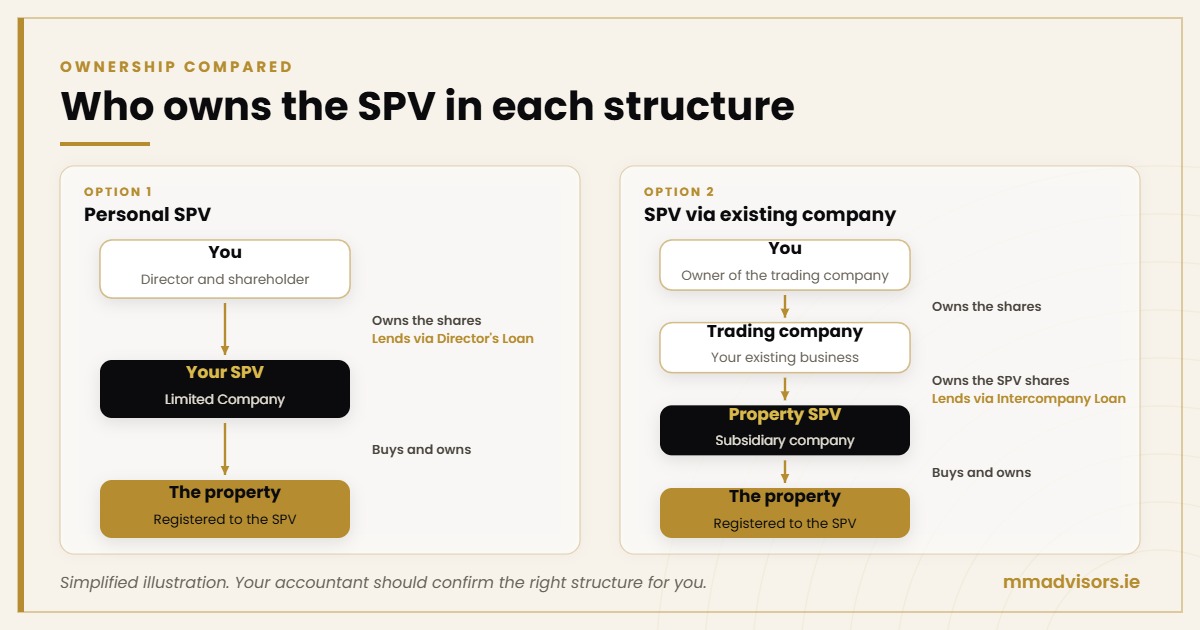
You set up a new Limited Company for the property investment and become its director and shareholder. You then lend your personal savings to the SPV, which uses them as the deposit.
A Director’s Loan is recorded as money the company owes you. As the property generates profit, the company can generally repay that loan to you over time.
Check with your accountant
Your accountant should confirm how Director’s Loan repayments are treated in your case.
This route may suit you if:
- ✓Your deposit is in personal savings
- ✓You do not own an existing company
- ✓You want the property held separately from any business you run
Option 2: Set Up an SPV Through Your Existing Company (Intercompany Loan)
If you already own a trading company, that company can set up a separate SPV as a subsidiary to hold the property. Surplus cash then moves from the trading company to the SPV through an Intercompany Loan.
This route may suit you if:
- ✓Your existing company has surplus cash
- ✓You want to keep the property separate from the trading business
- ✓You prefer not to draw funds out of the company personally first
Why company owners look at this route
Drawing cash out of a trading company personally, as salary or dividends, is usually taxed before you can use it. That is one reason company owners look at the Intercompany Loan route, though the right answer depends on your tax position. If you are weighing other uses for surplus company cash, our pages on corporate investments and the directors pension cover two common alternatives.
Side by Side Comparison
How Much Could the SPV Borrow?
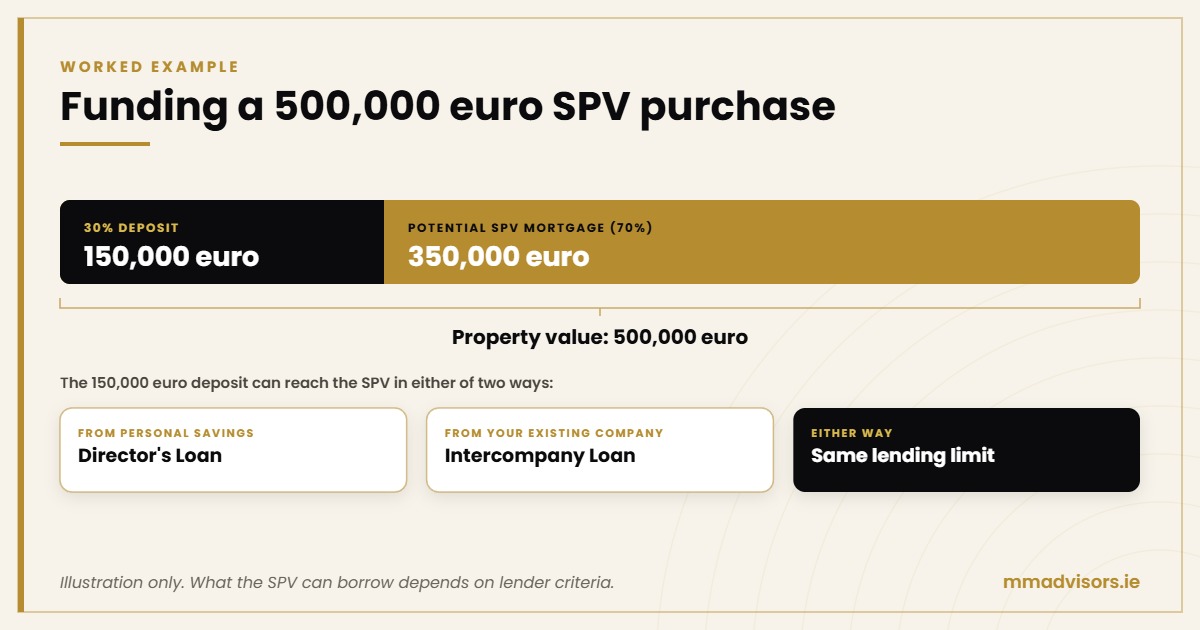
The deposit route does not change the lending limit. Depending on the lender, an SPV mortgage may offer up to 70% loan to value. On a 500,000 euro property, that means a 150,000 euro deposit and a potential mortgage of 350,000 euro, subject to the lender’s assessment of the property, the rent and the directors.
Rates and terms vary between lenders, and our guide to SPV mortgage rates explains what affects them. For the full application process, see how an SPV mortgage works.
Which Option Is Right for You?
Deposit in personal savings
Director’s Loan
You set up and own the SPV, and lend it your savings as the deposit.
Surplus cash in your company
Intercompany Loan
Your company sets up a subsidiary SPV and lends it the deposit.
Both routes can work. The better fit depends on where your funds are held, your existing company structure, the property you want and the lender’s criteria. Moving money between companies also raises tax points, so speak to your accountant alongside your mortgage advisor.
If you are still deciding whether a company structure makes sense at all, our guide to the pros and cons of using a limited company (SPV) for property investment is a good place to start. Independent mortgage comparison advice can then show which lenders accept each structure.
Next Steps
Not sure which structure suits you? Book a free mortgage consultation and we can talk through both options.
FAQs
Important information
WARNING: If you do not keep up your repayments you may lose your property.
WARNING: The cost of your monthly repayments may increase.
WARNING: You may have to pay charges if you pay off a fixed rate loan early.
This article is general information, not financial or tax advice. Lending is subject to lender criteria and approval.
Money Maximising Advisors Ltd is regulated by the Central Bank of Ireland. C154250.