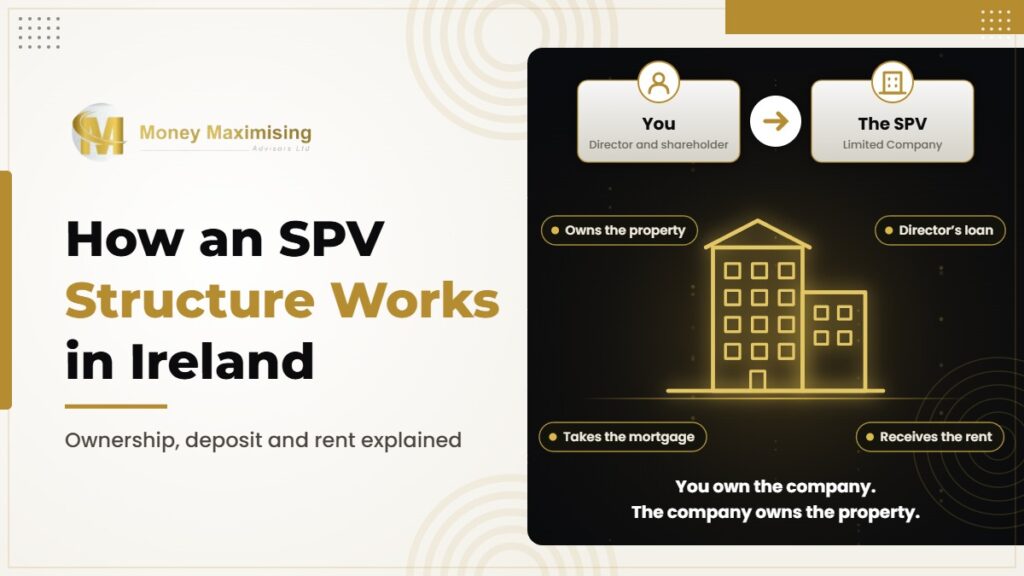

If you own a company with surplus cash, you may be able to put those funds towards an investment property without taking them out as salary or dividends. This guide explains how the subsidiary SPV structure works, with a worked example. For the wider picture, see our guide to buying property through a limited company.
In this guide
How the Structure Works
Your existing company sets up a subsidiary, a separate Limited Company that will only hold property. The existing company then lends funds to the subsidiary, which uses them as the deposit.
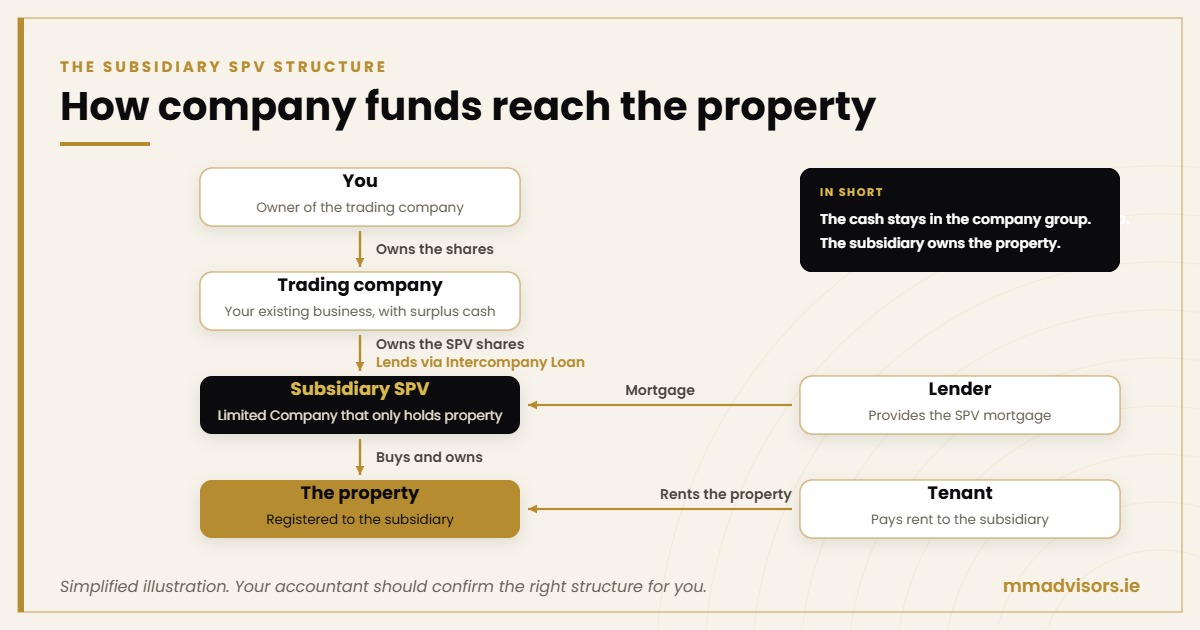
The subsidiary buys and owns the property, and the existing company owns the subsidiary’s shares. Our guide to the SPV structure explains who owns what at each stage.
Why Use a Subsidiary Rather Than the Trading Company?
Many lenders prefer the property to sit in a company that does nothing else. A subsidiary SPV:
- ✓Keeps the property separate from the risks of the trading business
- ✓Gives the lender a clean company to assess
- ✓Makes the rental income and costs easier to see on their own

Tax reliefs to consider
Holding substantial investment assets inside a trading company can also affect certain tax reliefs when you later sell or pass on the business, which is another reason owners keep property in a separate company. Your accountant can confirm how this applies to you.
Worked Example: 150,000 Euro of Company Funds
Your existing company has 150,000 euro available. It sets up a subsidiary and lends it the funds through an Intercompany Loan.
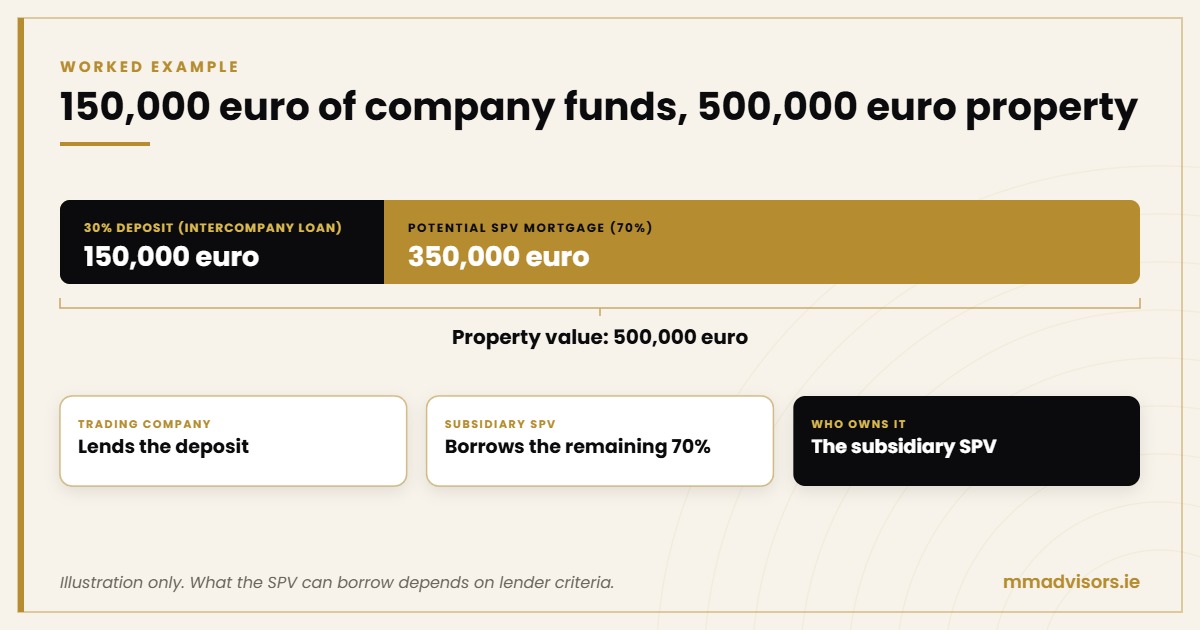
Lenders may offer up to 70% loan to value on SPV mortgages, subject to their assessment of the property, its rent and the directors. Our guide to SPV mortgage rates explains what affects pricing.
How This Differs From Using Personal Savings
Personal savings
Director’s Loan
You lend your own money to the SPV.
Company funds
Intercompany Loan
The money never leaves the company group.
With personal savings, you lend your own money to the SPV through a Director’s Loan, as covered in our guide to using personal savings for an SPV mortgage. Here, the money never leaves the company group.
Why keep the funds in the company
Drawing the funds out personally first, as salary or dividends, would usually create a personal tax bill before you could use them. Keeping them within a company structure may avoid that step, though you should confirm the tax position with your accountant. For a side by side view of both routes, see director’s loan vs intercompany loan.
If property is only one option for your surplus cash, our pages on corporate investments and the directors pension cover two common alternatives.
What Lenders Will Assess
Documentation varies between lenders. Expect to provide:
- ✓Accounts for the existing company
- ✓Company documents for both the existing company and the subsidiary
- ✓Evidence of the Intercompany Loan and the funds transfer
- ✓Director details, and possibly a personal guarantee from the directors
Is This Route Right for You?
It depends on your company’s structure, its available funds, your tax position and the lender’s criteria. Our guide to the pros and cons of using a limited company (SPV) for property investment sets out the trade offs, and independent mortgage comparison advice can show which lenders accept a subsidiary structure.
To talk it through with an advisor, book a free mortgage consultation.
FAQs
Important information
WARNING: If you do not keep up your repayments you may lose your property.
WARNING: The cost of your monthly repayments may increase.
WARNING: You may have to pay charges if you pay off a fixed rate loan early.
This article is general information, not financial or tax advice. Lending is subject to lender criteria and approval.
Money Maximising Advisors Ltd is regulated by the Central Bank of Ireland. C154250.