If you have savings set aside for an investment property, you can buy personally or put those funds towards a purchase through a Limited Company. This guide explains how the company route works, with a worked example. For the bigger picture, see our guide to buying property through a limited company.
In this guide
How a Director’s Loan Works
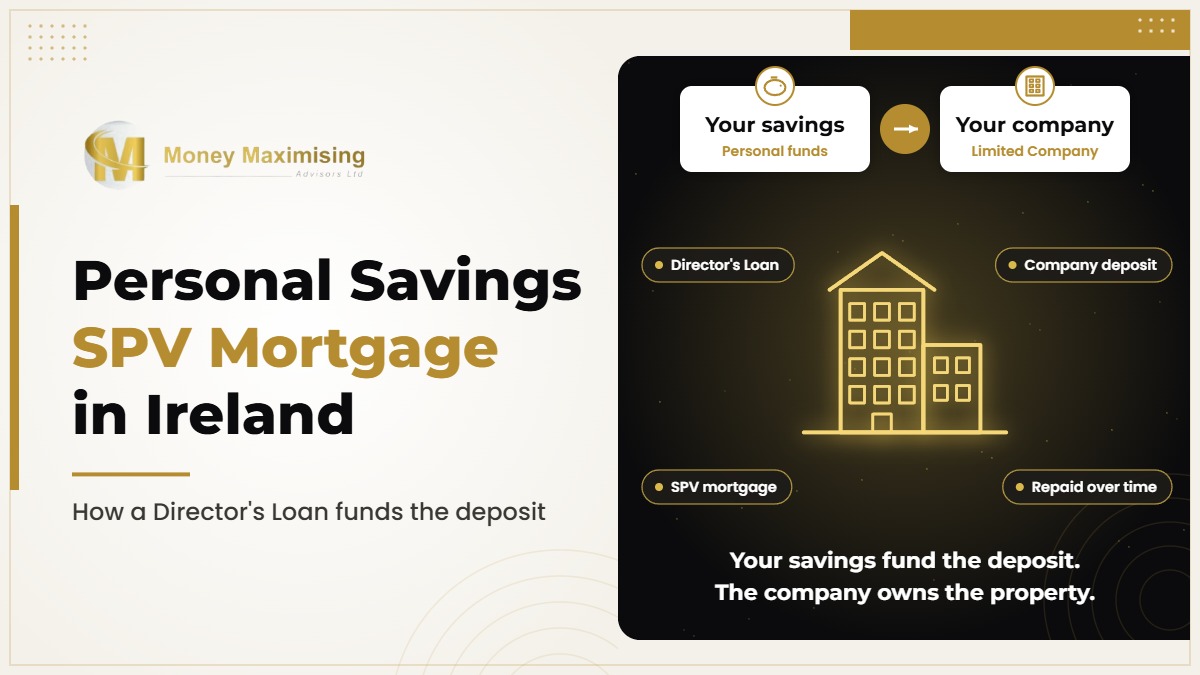
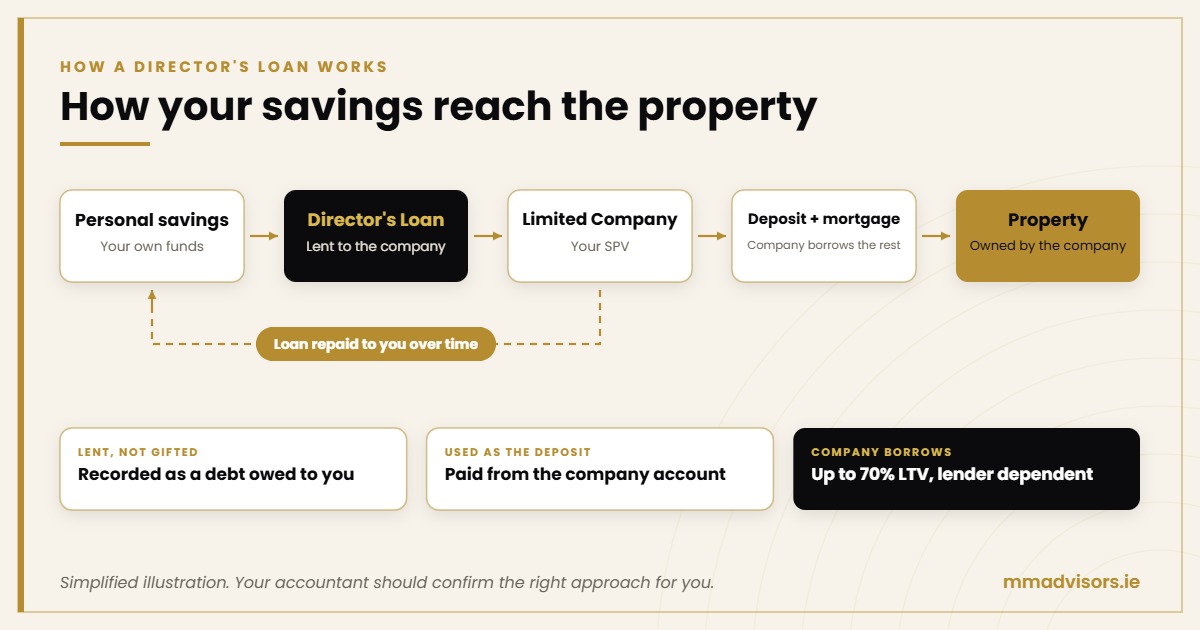
A Director’s Loan is money you, as a director, lend to your company. You transfer your personal savings into the company’s bank account, and the company records it as a loan owed back to you. The company then uses those funds as the deposit on the investment property.
Deposit held in a business?
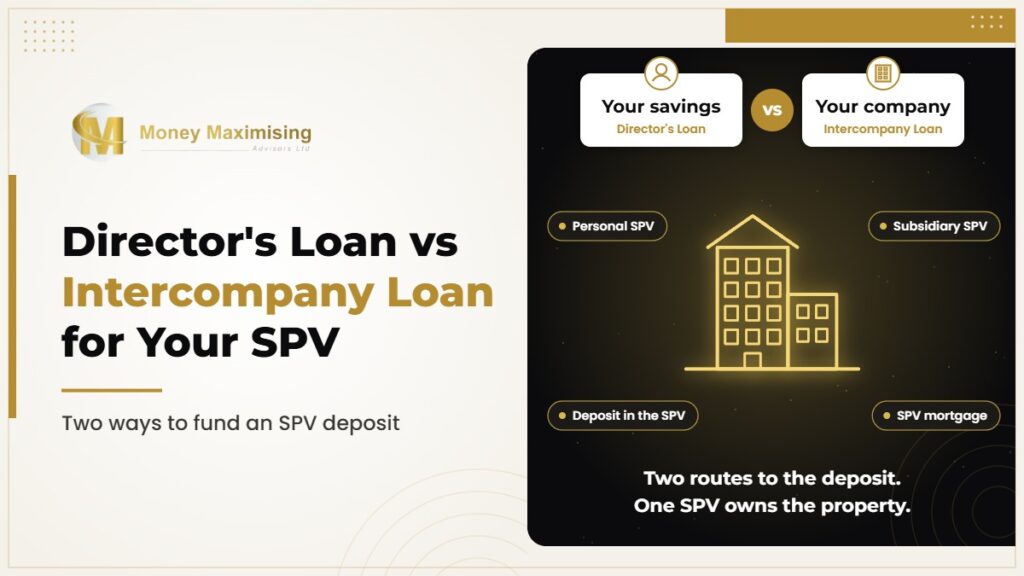
If your deposit sits in an existing business rather than in personal savings, the route is different. Our comparison of director’s loan vs intercompany loan explains both options.
Worked Example: 150,000 Euro in Savings
You have 150,000 euro in personal savings and want to buy a 500,000 euro investment property through a Limited Company.
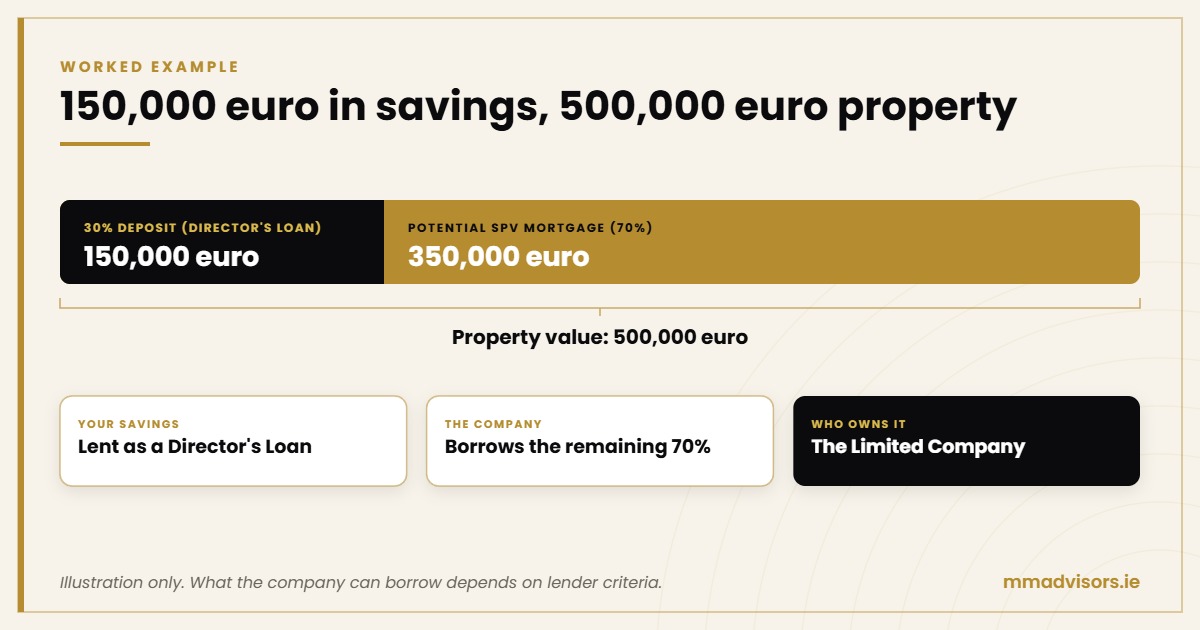
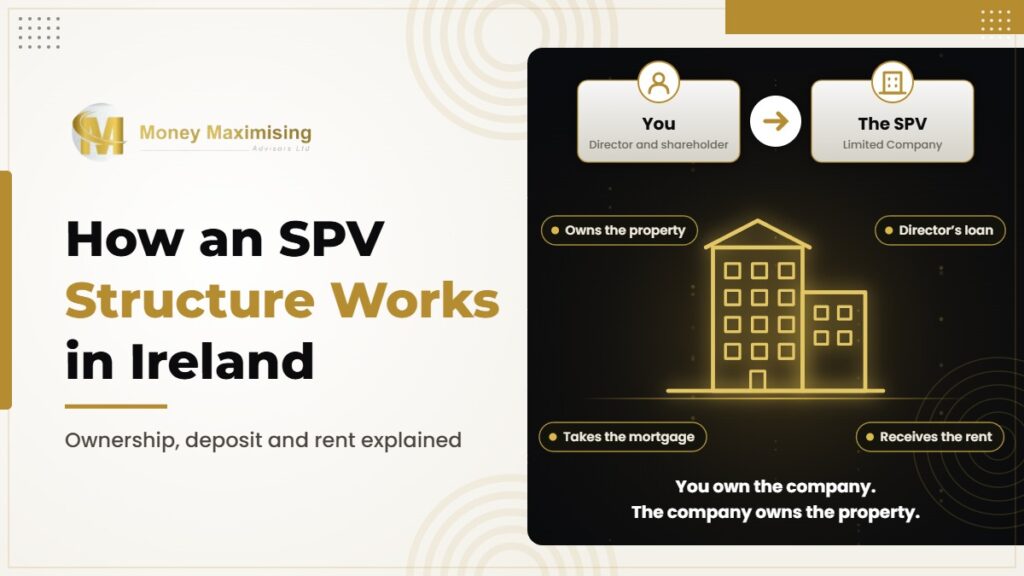
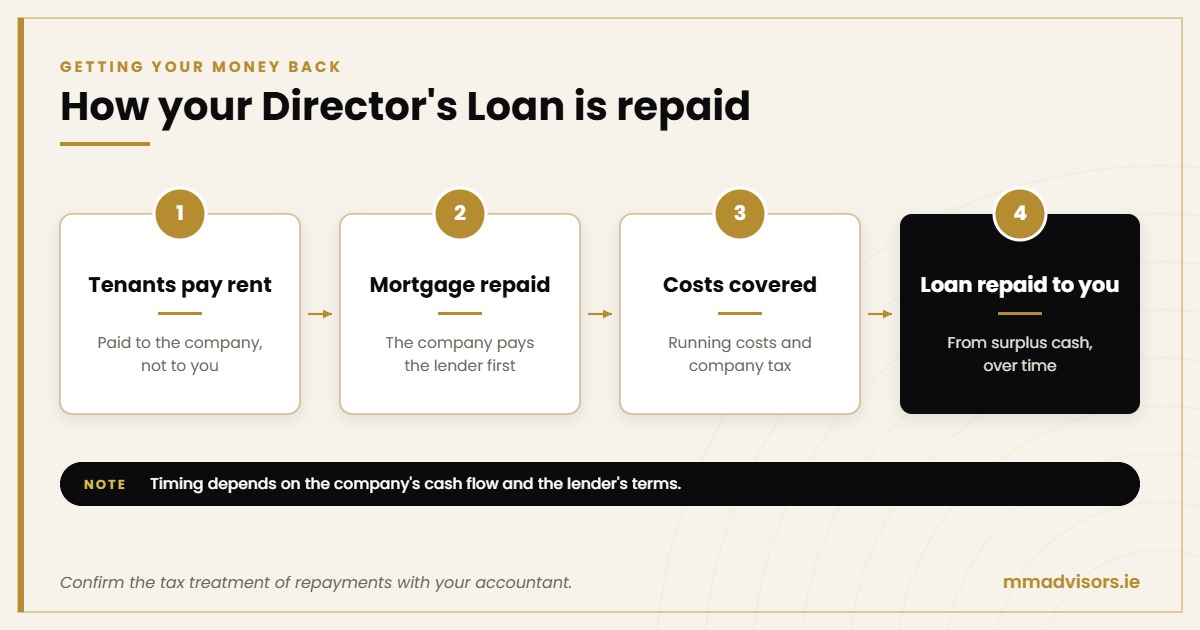
The Limited Company buys and owns the property. Tenants pay rent to the company, which makes the mortgage repayments. Our guide to the SPV structure shows who owns what at each stage.
Typical SPV mortgage terms
Loan to value
Up to 70%
Term
Up to 30 years
Rate options
Fixed, variable or interest only
Available terms depend on the lender. See our SPV mortgages page for more.
Getting Your Money Back Over Time
Because the deposit went in as a loan, the company owes it back to you. Once the property generates surplus cash, the company may be able to repay the Director’s Loan over time.
Check with your accountant
Repaying the loan capital is generally not taxed as income, since it is your own money coming back. Timing depends on the company’s cash flow and the lender’s terms, so confirm the treatment with your accountant.
How This Compares to Buying Personally
If you buy personally, you would apply for a buy to let mortgage in your own name. Our guide to buy to let mortgage rates vs SPV mortgage rates shows how pricing differs between the two.
What Lenders Will Want to See
- ✓Proof of where the savings came from, such as bank statements
- ✓Evidence the deposit has been transferred into the company account
- ✓Company documents, including the company constitution
- ✓Director identification and, often, a personal guarantee
Is This Route Right for You?
It depends on your circumstances, your tax position and the lender’s criteria. For some investors, buying personally will still be the better option. Our guide on whether you should buy property in Ireland through an SPV covers the trade offs, and independent mortgage comparison advice can show which lenders suit your plans.
To see whether this could work for you, book a free mortgage consultation.
FAQs
Important information
WARNING: If you do not keep up your repayments you may lose your property.
WARNING: The cost of your monthly repayments may increase.
WARNING: You may have to pay charges if you pay off a fixed rate loan early.
This article is general information, not financial or tax advice. Lending is subject to lender criteria and approval.
Money Maximising Advisors Ltd is regulated by the Central Bank of Ireland. C154250.