
As any Irish parent knows, the cost of putting a child through college is not getting any cheaper. Between tuition fees, accommodation, books, and living expenses, saving for education Ireland has become one of the most important financial goals for families across the country. The good news is that with the right plan in place, it is absolutely achievable.
At Money Maximising Advisors Limited, we help parents across Dublin, Galway, and all of Ireland create smart College Education Savings Ireland strategies that set their children up for success. In this guide, we will walk you through everything you need to know about saving for your child’s education, from how much it costs to the best ways to build your education fund Ireland.
How Expensive Is College in Ireland for Parents?
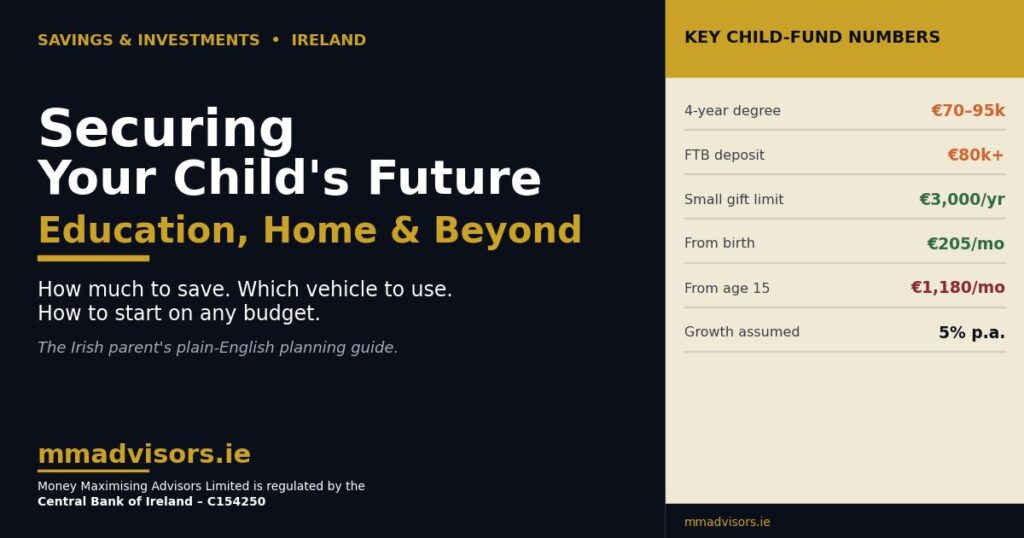
Before you start saving, it helps to understand just how much college actually costs. For a typical four-year degree in Ireland, the annual student contribution fee is currently around €3,000. On top of that, you need to factor in accommodation, food, transport, books, and general living expenses.
For a student living away from home, the total cost of a four-year degree can easily reach €40,000 to €60,000 or even more depending on the course and location. Our article on The Real Cost of College in 2025 and How to Save for It breaks down these figures in much more detail. And if you are feeling the squeeze, you are certainly not alone – read more about why Families Feeling the Pressure as College Costs Continue to Rise.
How Much Should I Save for My Child’s Education in Ireland?
This is the question every parent asks, and the answer depends on your goals and timeline. As a general guideline, if you start when your child is born and save consistently, putting away €150 to €250 per month could build a substantial education fund Ireland by the time they turn 18.
For example, saving €200 per month for 18 years would give you approximately €43,200 in pure savings alone. If you invest that money wisely through an education savings plan Ireland, the returns could push that figure significantly higher. The key is to start early and stay consistent.
For a comprehensive overview of your options, take a look at our College Education Savings in Ireland 2026: Your Complete Guide to Funding Your Child’s Future.
When Should Parents Start Saving for Education?
The short answer is: as soon as possible. The earlier you start saving for children’s future, the more time your money has to grow. Even small amounts add up over time thanks to the power of compound interest.
If your child is already in secondary school and you have not started yet, do not worry. It is never too late to begin. Even saving for three to five years before college can make a meaningful difference. The important thing is to have a plan and stick to it.
What Is the Best Way to Save for College in Ireland?
There are several ways to build your child education savings Ireland, and the best approach depends on your risk appetite, timeline, and how much you can set aside each month. Here are some of the most popular options:
- Regular savings accounts. A safe, simple option where you save a fixed amount each month. Returns are modest but your capital is secure.
- An Post savings products. State-backed savings options like Prize Bonds or savings certificates can offer tax-free returns.
- Investment funds. For parents with a longer time horizon, investing in a managed fund can potentially deliver higher returns than a standard savings account.
- Education savings plans. Dedicated education savings plan Ireland products are specifically designed to help parents save for college costs.
- Children’s savings accounts. Many Irish banks offer savings accounts specifically for children, often with higher interest rates.
Not sure which option to choose? Our guide on Which College Education Savings Plan in Ireland Should Parents Choose? compares the options side by side.
Is It Better to Save or Invest for Child Education in Ireland?
This depends on your timeline and comfort with risk. If your child is very young and you have 10 to 18 years before they start college, investing in a diversified fund could deliver much stronger returns than a savings account. However, if your child is closer to college age, keeping your money in a safer, more accessible savings product makes more sense.
A blended approach often works best. You might invest a portion of your college savings Ireland parents fund for growth and keep the rest in a secure savings account for peace of mind. Our advisors at Money Maximising Advisors Limited can help you create a personalised strategy. For practical tips on getting started, see our article on 4 Smart Ways to Start Saving for Your Child’s Education Today in Ireland.
Can I Open a Savings Account for My Child in Ireland?
Yes, absolutely. Most Irish banks and credit unions offer savings accounts that parents or guardians can open on behalf of a child. These accounts are a great way to start building savings for university Ireland from an early age. Some accounts offer higher interest rates for younger savers, making them an attractive option.
You can also encourage grandparents and other family members to contribute to the account for birthdays and special occasions. It is a wonderful way to build an education fund Ireland over time. For a deeper look at the best way to save for child education, explore the College Education Savings Plan in Ireland: The 2025 Parent’s Guide to Smart Education Planning.
Practical Tips for Building Your Education Savings
Here are some practical money saving tips to help you stay on track:
- Set up a standing order. Automate your savings so a fixed amount goes into your education fund every month without you having to think about it.
- Review your finances regularly. Check your savings progress at least once a year and adjust if needed.
- Take advantage of tax-free savings. Certain State savings products offer tax-free returns which can boost your overall savings.
- Get professional advice on saving money. A qualified financial advisor can help you maximise your savings and investments.
- Involve the whole family. Encourage grandparents and relatives to contribute to the education fund instead of buying gifts.
Want to create a solid savings planning strategy for your child’s education? Enquire Now for expert guidance, or Book Now to schedule a personalised consultation. You can also Contact Us or Book an Appointment through our website.
Conclusion
Saving for your child’s education does not have to be overwhelming. With early planning, consistent saving, and the right College Education Savings Ireland strategy, you can ensure your child has the financial support they need when the time comes. At Money Maximising Advisors Limited, we are here to help families across Dublin, Galway, and all of Ireland plan for the future with confidence.
Frequently Asked Questions (FAQs)
1. How much should I save for my child’s education in Ireland?
A good target is €150 to €250 per month if you start when your child is born. The total cost of a four-year degree including living expenses can range from €40,000 to €60,000 or more.
2. What is the best way to save for college in Ireland?
Options include regular savings accounts, An Post savings products, investment funds, and dedicated education savings plans. The best choice depends on your timeline and risk appetite.
3. When should parents start saving for education?
As early as possible. Starting when your child is born gives you 18 years for your savings to grow. Even starting a few years before college can make a meaningful difference.
4. How expensive is college in Ireland for parents?
The annual student contribution is around €3,000, but with accommodation, food, transport, and other expenses, the total cost of a four-year degree can easily reach €40,000 to €60,000.
5. Can I open a savings account for my child in Ireland?
Yes, most Irish banks and credit unions allow parents or guardians to open savings accounts for children. Some offer higher interest rates for young savers.
6. Is it better to save or invest for child education in Ireland?
If you have a long time horizon of 10 or more years, investing may deliver better returns. For shorter timeframes, a savings account is safer. A blended approach often works best.
Disclaimer
This article provides general information and should not be considered personalised savings or investment advice. Savings rates, investment returns, and education costs change periodically, and individual circumstances vary. Always consult with our qualified financial advisors before making significant financial decisions.