
The Irish property market has always been a hot topic of conversation, but in 2026, it’s taking centre stage like never before. Whether you’re a first-time buyer trying to get onto the property ladder, a homeowner looking to remortgage, or an investor exploring opportunities, understanding the current landscape is crucial. At Money Maximising Advisors Limited, we’ve been guiding clients through the complexities of mortgages for years, and we’re here to break down everything you need to know about Irish mortgage rates 2026 and the significant changes shaping the market this year.
The mortgage landscape in Ireland has undergone notable shifts in recent months, influenced by European Central Bank decisions, regulatory updates from the Central Bank of Ireland, and evolving lender policies. If you’re navigating the mortgage market in 2026, this comprehensive guide will help you make informed decisions about your financial future.
Understanding Irish Mortgage Rates 2026
Irish mortgage rates 2026 have become more competitive than many anticipated at the start of the year. Following the ECB’s monetary policy adjustments throughout 2024 and early 2025, we’re seeing interest rates that offer genuine opportunities for borrowers across Ireland, particularly in Dublin and Galway where property demand remains strong.
Currently, the best mortgage rates Ireland offers range from approximately 3.2% to 4.5% for fixed-rate products, depending on your loan-to-value ratio, term length, and lender. Variable rates are hovering between 3.5% and 5.2%, though these figures fluctuate based on individual circumstances and the lender’s risk assessment.
What’s particularly encouraging is that multiple lenders are competing aggressively for business, which has created a borrower-friendly environment. This competition has resulted in improved rates, more flexible terms, and enhanced cashback offers for those willing to shop around.
Enquire now to discover which mortgage products best suit your financial situation and goals.
Ireland Mortgage Interest Trends: What’s Driving the Changes?
Ireland mortgage interest trends in 2026 reflect a broader European picture. The ECB’s influence on Irish mortgages cannot be overstated. After a period of rate increases designed to combat inflation, we’re now seeing a stabilisation phase, with some economists predicting potential modest decreases later in 2026.
Several factors are influencing current trends:
Market Competition: New entrants to the Irish lending market and increased digital banking options have intensified competition, forcing traditional lenders to offer more attractive rates.
Economic Stability: Ireland’s relatively strong economic performance has given lenders confidence, translating into better terms for borrowers with solid financial profiles.
Property Price Dynamics: While property prices in Dublin and Galway remain elevated, the rate of increase has moderated, creating a more balanced environment for mortgage lending.
Understanding these trends helps you time your mortgage application strategically. For personalised guidance, book now for a consultation with our qualified financial advisors.
2026 Mortgage Regulation Changes Ireland: What You Must Know
The Central Bank of Ireland mortgage rules have seen important updates in 2026, designed to maintain financial stability whilst supporting homeownership. Here’s what’s changed:
Loan-to-Income (LTI) Adjustments: The Central Bank has maintained its prudential framework but introduced slight flexibilities for first-time buyers in certain circumstances. Most borrowers can access up to 3.5 times their gross annual income, with allowances for some to borrow up to 4 times income under specific conditions.
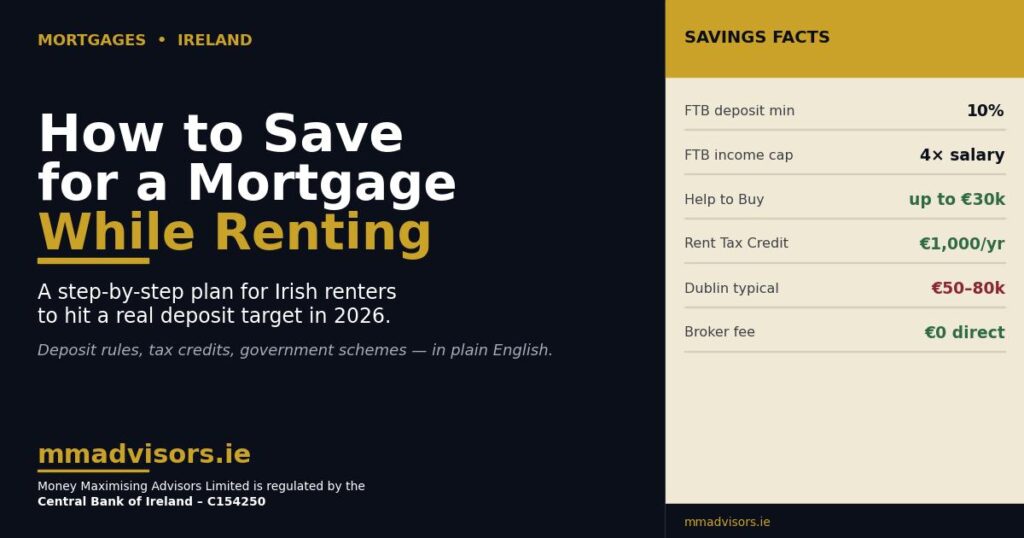
Loan-to-Value (LTV) Requirements: First-time buyers can still borrow up to 90% LTV for properties valued up to €500,000, with the remainder requiring at least a 10% deposit. Non-first-time buyers typically require a minimum 20% deposit.
Stress Testing: Lenders now apply more sophisticated stress testing to ensure borrowers can manage repayments even if interest rates rise by 2% or more above the mortgage rate. This protects both borrowers and the financial system.
Documentation Requirements: Irish lending criteria 2026 have become more streamlined for employed individuals with regular income, whilst remaining rigorous for self-employed applicants who must provide comprehensive business accounts and tax returns.
If you’re unsure about how these regulations affect your situation, our team can provide clarity. Contact us today.
Fixed vs Variable Mortgage Rates Ireland: Making the Right Choice
One of the most common questions we receive at Money Maximising Advisors is whether to opt for fixed or variable mortgage rates in Ireland. In 2026, this decision carries significant weight given the current rate environment.
Fixed-Rate Mortgages provide certainty and protection against future rate increases. With fixed rates available from 2 to 10 years, you’ll know exactly what your monthly repayments will be, making budgeting considerably easier. Given the current competitive rates, locking in a medium-term fixed rate (3-5 years) could prove financially prudent if rates increase later in the decade.
Variable-Rate Mortgages offer flexibility and the potential to benefit if rates decrease. However, they carry the risk of increased repayments should the ECB impact on Irish mortgages lead to rate rises. Variable rates may suit those with greater financial flexibility or those planning to pay off their mortgage quickly.
Many of our clients are also exploring tracker mortgages, which follow the ECB rate plus a set margin. These can offer a middle ground between fixed and variable options.
For more insights on navigating your mortgage options, check out our related post: How to Choose the Best Mortgage Lender in Ireland.
First-Time Buyer Mortgage Conditions: Opportunities in 2026
First-time buyer mortgage conditions have remained relatively supportive in 2026, recognising the challenges young people face entering the property market. The Help to Buy scheme continues to offer tax rebates of up to €30,000 for qualifying first-time buyers purchasing newly built homes.
Additionally, several lenders have introduced dedicated first-time buyer products with competitive rates and reduced fees. Some institutions are also accepting “gifted deposits” from family members more readily, provided proper documentation is in place.
The key challenges remain saving sufficient deposits and meeting the debt-to-income ratios, particularly in high-cost areas like Dublin and Galway. However, with proper planning and professional guidance, homeownership remains achievable.
If you’re a first-time buyer feeling overwhelmed, our article What Should You Know Before Getting a Buy-To-Let Mortgage in Ireland? provides valuable context, even for residential purchases.
Mortgage Tax Relief Ireland 2026: What’s Available?
Whilst the old mortgage interest relief scheme ended years ago, mortgage tax relief Ireland 2026 still exists in specific circumstances. First-time buyers purchasing properties before the end of 2026 may qualify for Help to Buy, which provides a refund of income tax and DIRT paid over the previous four years, up to 10% of the purchase price (maximum €30,000).
For those working from home, there may be opportunities to claim tax relief on a portion of mortgage interest if you’ve established a dedicated workspace used exclusively for business purposes. This typically applies to self-employed individuals and requires proper documentation.
Understanding your tax position is crucial for maximising your financial efficiency. Our guide Tips On How to Calculate Mortgage Repayments in Ireland includes considerations beyond just interest rates.
Special Considerations for Different Borrower Types
Public Sector Employees: Public sector workers often enjoy preferential rates due to perceived job security. Our post Top Mortgages for Public Sector Employees in Ireland: What You Need to Know explores these benefits in detail.
Self-Employed Borrowers: Irish lending criteria 2026 requires self-employed applicants to provide two to three years of audited accounts, demonstrating consistent income. Whilst challenging, specialist lenders understand the self-employed market better than ever.
Investors: Buy-to-let mortgages have their own criteria, typically requiring 30-40% deposits and rental income assessments. Interest rates are generally higher than residential mortgages, reflecting the increased risk profile.
Taking Action: Your Next Steps
Navigating the best mortgage rates Ireland has to offer in 2026 requires expert guidance tailored to your unique circumstances. At Money Maximising Advisors Limited, our team of Qualified Financial Advisors and Certified Financial Planners specialises in securing optimal mortgage solutions for clients across Ireland.
Whether you’re purchasing your first home, upgrading to a larger property, or refinancing an existing mortgage, we can help you understand how the ECB impact on Irish mortgages affects your situation and identify the most competitive rates available.
Don’t navigate this complex landscape alone. Book an appointment with our experienced advisors today and take the first step toward securing your financial future.
Frequently Asked Questions
1. What are the current mortgage interest rates in Ireland in 2026?
Current Irish mortgage rates 2026 range from approximately 3.2% to 4.5% for fixed rates and 3.5% to 5.2% for variable rates, depending on your loan-to-value ratio, term, and lender. Individual circumstances significantly affect the exact rate you’ll receive.
2. How has the Irish mortgage market changed in 2026?
The 2026 mortgage market features increased competition among lenders, more streamlined application processes for employed borrowers, and stable rates following ECB policy adjustments. Regulatory requirements remain robust but unchanged from recent years.
3. What new mortgage rules are in place in Ireland for 2026?
The Central Bank of Ireland mortgage rules maintain the existing loan-to-income and loan-to-value frameworks, with enhanced stress testing protocols. Irish lending criteria 2026 focuses on sustainable lending whilst supporting homeownership.
4. Are fixed or variable mortgage rates better in Ireland right now?
Fixed rates offer certainty and protection against future increases, making them attractive in the current environment. Variable rates provide flexibility but carry risk. Your optimal choice depends on your financial situation, risk tolerance, and timeframe.
5. How does the ECB affect Irish mortgage rates in 2026?
The ECB impact on Irish mortgages is significant, as ECB base rate decisions influence the cost of funding for Irish lenders. When the ECB adjusts rates, variable and tracker mortgages typically respond quickly, whilst fixed rates reflect market expectations.
6. Is it easier for first-time buyers to get a mortgage in Ireland in 2026?
First-time buyer mortgage conditions remain supportive with schemes like Help to Buy and dedicated first-time buyer products. However, saving deposits and meeting income requirements remain challenging, particularly in high-cost areas like Dublin and Galway.
Disclaimer: This article provides general information and should not be considered personalised financial or tax advice. Irish tax laws and lending criteria change periodically, and individual circumstances vary significantly. The mortgage rates and conditions mentioned are indicative and subject to change. Always consult with qualified financial advisors or tax professionals before making significant financial decisions regarding property purchase or mortgage selection.