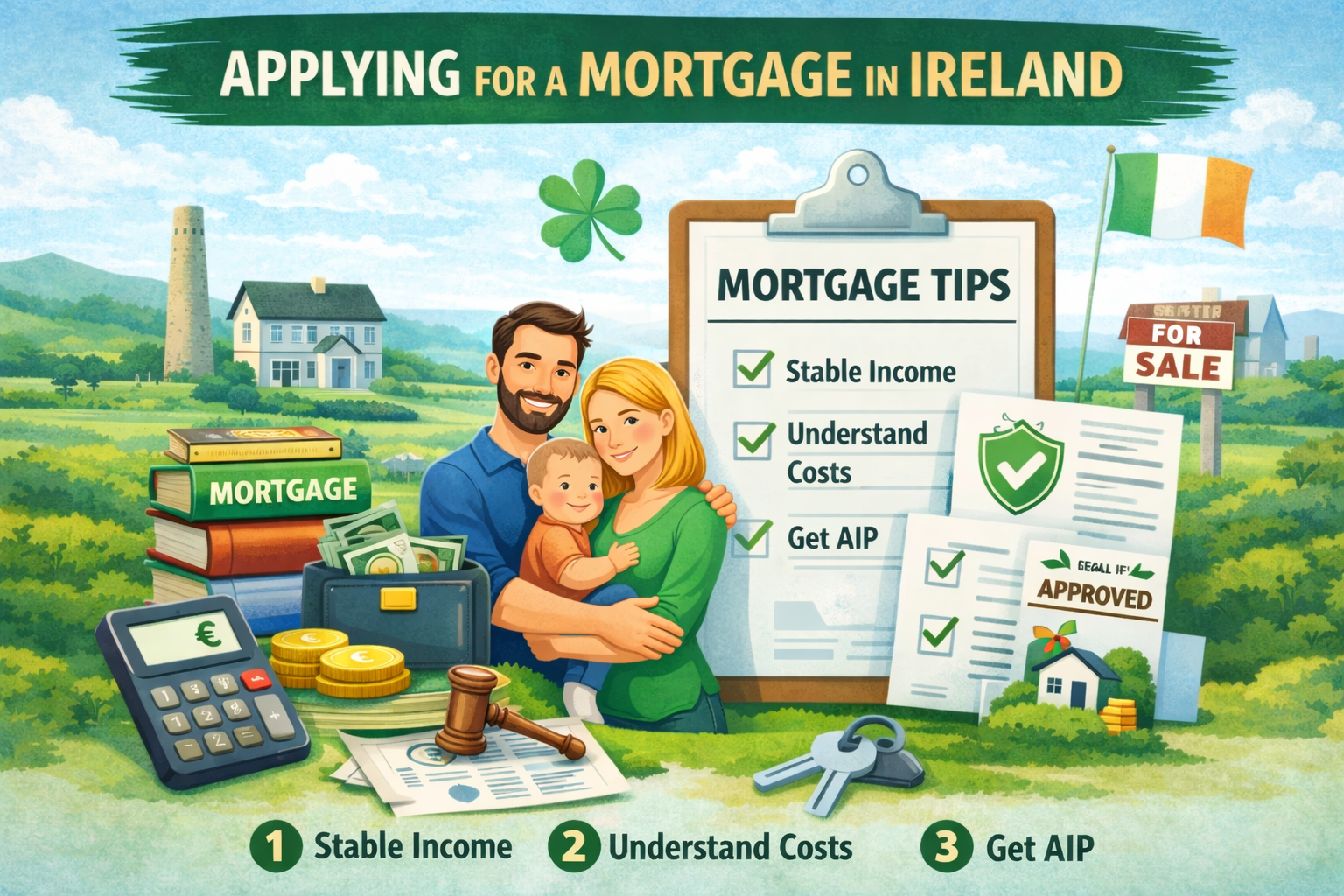
Applying for a mortgage in Ireland is a major milestone – and for many people, it is the biggest financial decision they will ever make. Whether you are a first-time buyer in Dublin, looking to move in Galway, or considering a property anywhere in Ireland, being well-prepared is the key to a smooth and successful mortgage application.
At Money Maximising Advisors Limited, our Certified Financial Planners (CFP) and Qualified Financial Advisors (QFA) have guided hundreds of Irish mortgage applicants through this process. Here are 10 essential things you must know before you start applying for a mortgage Ireland.
1. Know How Much You Can Borrow
The Central Bank of Ireland sets lending limits at 3.5 times your gross annual income. So, if you earn €60,000 per year, your maximum mortgage loans amount would typically be €210,000. Joint applicants combine their incomes, which can significantly increase borrowing power.
Understanding this early on helps you set a realistic budget before you start house hunting. If you are unsure about how to get a mortgage in Ireland, speaking with a financial advisor is a great first step.
2. Save Your Deposit Early
First-time buyers need a minimum 10% deposit, and second-time buyers need at least 20%. Start saving as early as possible and keep your deposit in a dedicated savings account. Lenders want to see a consistent savings history over at least 6 months when applying for a mortgage loan.
If family members are helping with your deposit, you will want to understand the tax rules. Our article on How Much Money Can You Gift to a Family Member Tax-Free in Ireland? explains everything you need to know.
3. Get Your Finances in Order
Before applying for a mortgage, review your spending habits carefully. Lenders will examine your bank statements for the last 6 months. Clear any outstanding debts, avoid unnecessary splurges, and steer clear of gambling transactions. A clean financial record goes a long way in the mortgage application process.
4. Get Approval in Principle First
Before you start making offers on properties, get an Approval in Principle (AIP) from your lender. This gives you a clear idea of how much mortgage you can secure and shows estate agents and sellers that you are a serious buyer. It is a crucial step in how to apply for a mortgage successfully.
5. Understand the Different Types of Mortgage Ireland
There are several mortgage Ireland options available, including fixed-rate, variable-rate, and split-rate mortgages. Each has its pros and cons depending on your financial situation and risk appetite. If you are considering property investment, our guide on Step-by-Step Guide: How to Get an Investment Property Mortgage in Ireland (Using an SPV) is a must-read.
6. Budget for Additional Costs Beyond the Mortgage
When getting a mortgage, many buyers focus solely on the property price and forget about additional expenses:
- Stamp duty – Currently 1% on properties up to €1 million.
- Legal fees – Solicitor and conveyancing costs, typically €2,000 to €3,500.
- Valuation and survey fees – Around €150 to €300 for a valuation, more for a full structural survey.
- Mortgage protection insurance – A legal requirement for most borrowers.
7. Consider Buy-to-Let Options Carefully
If you are thinking about purchasing an investment property, the rules and requirements differ from a standard residential mortgage in Ireland. Our articles on What Should You Know Before Getting a Buy-To-Let Mortgage in Ireland? and Residential Buy-To-Let Mortgage in Ireland: Can I Get Residency in Ireland if I Buy a House? cover the key points.
Need help navigating the mortgage landscape? Book an Appointment with our expert advisors today.
8. Expats and Returning Irish Citizens Can Apply Too
If you are living abroad and wondering how do I get a mortgage in Ireland, the good news is that it is possible. The process is slightly different, but our team has extensive experience helping expats. For more details, check out How to Get a Mortgage in Ireland as an Ex-Pat and How to Get a Mortgage in Ireland as an Expat: A Step-by-Step Guide.
9. Follow the Do’s and Don’ts Leading Up to Your Mortgage Application
Do:
- Maintain a consistent savings pattern for at least 6 months.
- Keep your bank statements clean and organised.
- Pay off existing debts and close unused credit cards.
Don’t:
- Take on new credit in the months before applying for a mortgage Ireland.
- Make large unexplained transactions.
- Change jobs right before your application, if possible.
10. Work with a Qualified Financial Advisor
Navigating the mortgage Ireland landscape on your own can be overwhelming. A qualified advisor can help you compare lenders, find the best rates, and guide you through every step of the process – from how to get a mortgage to closing the deal.
Ready to take the first step? Enquire Now to get started on your mortgage application, or Book Now to schedule a personalised consultation with our team.
Have questions about applying for a mortgage? Contact Us – we are here to help every step of the way.
Conclusion
Getting a mortgage in Ireland does not have to be a daunting experience. By understanding the lending rules, preparing your finances, and seeking professional guidance, you can approach the process with confidence. Whether you are a first-time buyer, an expat, or looking to invest, the right preparation makes all the difference.
At Money Maximising Advisors Limited, we are committed to helping people across Dublin, Galway, and all of Ireland achieve their homeownership dreams. Our team of experienced financial advisors is ready to guide you through every stage of applying for a mortgage Ireland.
Frequently Asked Questions (FAQs)
1. What do I need to know before applying for a mortgage in Ireland?
You should understand how much you can borrow (3.5 times income), have your deposit saved, clean up your finances, and ideally get Approval in Principle before starting your property search.
2. Can I obtain a mortgage before moving back to Ireland?
Yes, many Irish lenders offer mortgage loans to expats and returning citizens. The process requires additional documentation, but it is entirely possible with the right guidance.
3. How do I apply for a mortgage in Ireland?
Start by getting your finances in order, save your deposit, gather your documents (payslips, bank statements, ID), and apply for Approval in Principle. Working with a qualified advisor makes how to apply for a mortgage much simpler.
4. What must I know before I get a mortgage?
Understand your borrowing limits, budget for additional costs like stamp duty and legal fees, maintain clean bank statements, and ensure you have a stable employment history. Proper preparation is key to a successful Irish mortgage application.
5. What are the do’s and don’ts when applying for a mortgage?
Do save consistently, keep your finances tidy, and seek professional advice. Don’t take on new debt, make large unexplained transactions, or change jobs right before your application.
Disclaimer: This article provides general information and should not be considered personalised financial or mortgage advice. Irish mortgage regulations and lending criteria change periodically, and individual circumstances vary. Always consult with our qualified financial advisors or mortgage professionals before making significant financial decisions.