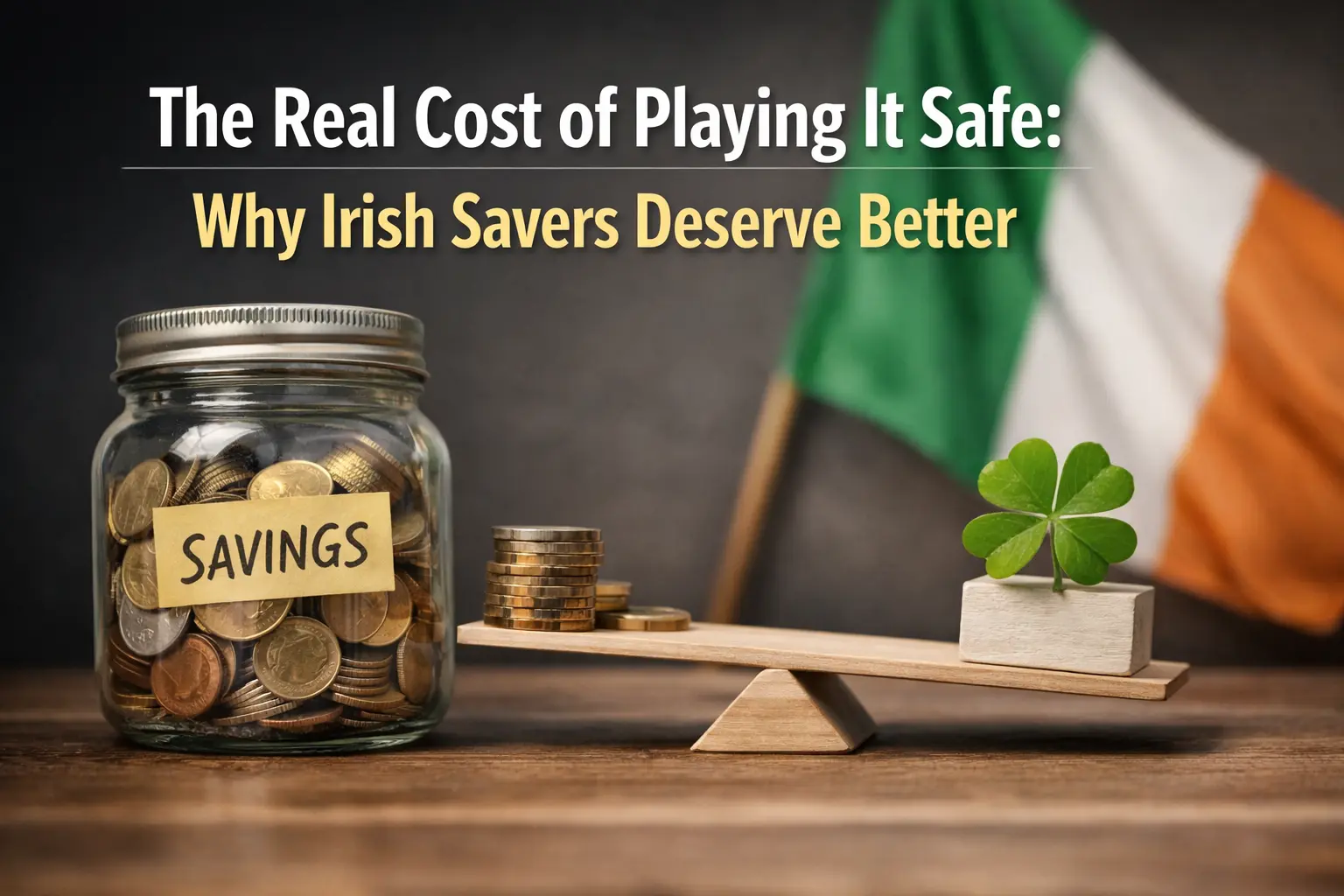
If you have money sitting in a savings account right now, you might feel reassured. It’s safe. It’s accessible. And technically, it’s growing — even if only by a tiny fraction each year. But here’s the uncomfortable truth: for many people across Ireland, playing it safe with their money is quietly costing them more than they realise.
At Money Maximising Advisors Limited, we work with individuals and families every day who are surprised to discover that their cautious approach to Savings & Investments is actually leaving them worse off in real terms. This blog unpacks why that happens, what you can do about it, and why 2026 is the right time for Irish savers to start thinking differently.
The Illusion of Safety: What Your Savings Account Is Really Doing
There is nothing wrong with keeping money in a bank. For short-term needs and emergency funds, savings accounts serve a real purpose. But when it comes to building long-term wealth, the picture looks far less comfortable.
Most savings accounts Ireland are currently offering interest rates that hover between 0.5% and 3% annually — and that’s on the better end. Many standard instant-access accounts still pay significantly less. Meanwhile, the cost of living in Ireland has risen sharply over the past few years. Groceries, energy, housing, education — almost everything costs more today than it did three or four years ago.
That gap between what your savings earn and what inflation is doing to your purchasing power is the real cost of playing it safe.
Savings vs Inflation Ireland: The Numbers That Should Concern You
Let’s keep this simple. If inflation is running at 3% per year and your savings account is paying 1.5% interest, you are effectively losing 1.5% of your money’s value every single year. You won’t see it leave your account — the balance will still go up slightly — but what that money can actually buy you in the real world is going down.
This is what financial professionals mean when they talk about the inflation impact on savings Ireland. It’s not a dramatic event. It’s a slow, invisible erosion that compounds year after year until you look up and realise your savings pot doesn’t stretch nearly as far as you expected.
Over 10 years, that gap can translate to thousands of euros of lost purchasing power. For someone saving diligently towards retirement, a property deposit, or their children’s education, that is a significant setback.
Why Are Irish Savers Still Playing It Safe?
It’s a fair question. If the maths doesn’t add up, why do so many people in Ireland continue to rely almost entirely on traditional deposit accounts?
A few reasons come up again and again:
- Familiarity and habit. Most people were taught that saving in a bank is responsible. That message was reinforced by parents and grandparents, and it’s hard to shake.
- Fear of risk. The word “investment” can trigger anxiety, especially for anyone who remembers the financial crash of 2008. Many Irish savers still carry that wariness.
- Lack of clarity. People genuinely don’t know what the alternatives are or how they work. The information feels complicated, and that uncertainty keeps people where they are.
- Low interest savings Ireland feels safe even when it isn’t growing wealth meaningfully.
The problem is that in 2026, staying still is not a neutral choice. It has real financial consequences.
How to Grow Savings Ireland: Smarter Options Worth Knowing
The good news is that how to grow savings Ireland doesn’t have to involve high-risk stock picking or complicated financial instruments. There is a wide spectrum of options between a standard savings account and the stock market, and most people are not fully aware of what sits in the middle.
Some options worth exploring include:
- State Savings products such as those offered through An Post, which are government-backed and generally offer better rates than standard bank deposits.
- Regular investment plans that put modest monthly amounts into diversified funds, spreading risk over time.
- Pension contributions, which remain one of the most tax-efficient ways to grow money in Ireland, particularly for higher earners.
- Structured products that offer a degree of capital protection while allowing for some market participation.
The right mix depends entirely on your personal situation — your timeline, your attitude to risk, and what you’re actually saving for. This is exactly where professional guidance makes a genuine difference.
Ready to explore smarter options for your money? Enquire Now and one of our advisors will get back to you.
Investing vs Saving Ireland: Understanding the Difference
One of the most important shifts Irish savers can make is understanding that investing vs saving Ireland is not an either/or decision. You don’t have to choose between being responsible and being smart. The two can work together.
Saving is about security and liquidity — keeping money you might need in the near term somewhere safe and accessible. Investing is about growth over time — putting money to work so that it builds wealth across months, years, and decades.
For most people, the answer is a sensible combination of both. An emergency fund in a savings account. Medium and long-term goals addressed through investment strategies suited to their circumstances. The proportion of each depends on your age, income, goals, and risk tolerance.
The issue for too many Irish savers is that they are doing almost all saving and very little investing — and as a result, savings vs inflation Ireland is a race they are slowly losing.
Want to take the next step? Book a consultation with our team and get a clear picture of your financial position.
Related Posts You May Find Useful
- Best Savings Account Ireland 2025 – Where to Get the Highest Rates
- Looking for an Alternative Home for Your Savings Ireland?
- 4 Smart Ways to Start Saving for Your Child’s Education Today in Ireland
- Best Savings Accounts in Ireland for Long-Term Financial Growth
What Irish Savers in Dublin and Galway Are Asking in 2026
Across Dublin, Galway, and the rest of Ireland, we’re seeing a real shift in the questions people are asking about their finances. Fewer people are asking “where should I put my savings?” and more are asking “how do I make sure my money is actually working?”
That shift in mindset is healthy. It reflects a growing awareness that Savings & Investments need to be approached with intention, not just habit. Whether you’re in your 30s building toward your first property, in your 40s thinking seriously about retirement, or in your 50s looking to protect and grow what you’ve accumulated — the strategy matters enormously.
The starting point is always the same: understand where you are now, be clear about where you want to go, and get proper advice on the most efficient route between the two.
FAQs: What Irish Savers Most Want to Know
Why are savings rates so low in Ireland?
Savings rates in Ireland are influenced by European Central Bank (ECB) policy and competition among Irish banks. While rates have improved slightly since 2022, many standard accounts still offer relatively modest returns compared to inflation, meaning savers need to look beyond deposits for meaningful growth.
Are Irish savers losing money due to inflation?
In real terms, yes. If your savings account pays less than the current rate of inflation, your money is losing purchasing power year on year. This is one of the key reasons that a balanced approach to Savings & Investments is so important.
Is it better to save or invest in Ireland?
It’s generally best to do both, depending on your goals and timeline. Savings accounts work well for short-term needs and emergency funds. For medium and long-term goals, some level of investment is usually necessary to keep pace with inflation and build meaningful wealth.
What is the safest way to grow money in Ireland?
State Savings products through An Post are government-backed and widely considered among the safest options available. Beyond that, diversified investment funds with a long time horizon tend to balance safety and growth effectively. A qualified financial advisor can help you identify what’s appropriate for your situation.
How much interest do savings accounts pay in Ireland?
Rates vary widely depending on the bank and product type. In 2025–2026, some fixed-term accounts have offered rates of up to 2.5%–3%, while standard instant-access accounts often pay considerably less. It’s always worth comparing current rates and considering whether alternatives might offer better long-term outcomes.
Conclusion: You’ve Worked Hard for Your Money — Make Sure It Works for You
Playing it safe has its place. But when “safe” quietly means “falling behind,” it’s time to reassess. Across Ireland, thousands of savers are sitting on money that could be doing far more for them — if only they had the right guidance and the confidence to act.
At Money Maximising Advisors Limited, our team of Certified Financial Planners, Qualified Financial Advisors, and experienced tax specialists are here to help you make the most of what you have. Whether you’re just getting started with Savings & Investments or looking to restructure an existing portfolio, we’ll give you clear, honest, jargon-free advice tailored to your circumstances.
Don’t let another year pass while inflation quietly chips away at your hard-earned money.
👉 Contact Us to start the conversation today. 👉 Book an Appointment and take the first step toward a more confident financial future.
Disclaimer: This article provides general information and should not be considered personalised financial or investment advice. The value of investments can go down as well as up, and past performance is not a reliable indicator of future results. Irish financial regulations and tax laws change periodically, and individual circumstances vary. Always consult with a qualified financial advisor before making any significant decisions regarding your savings or investments.