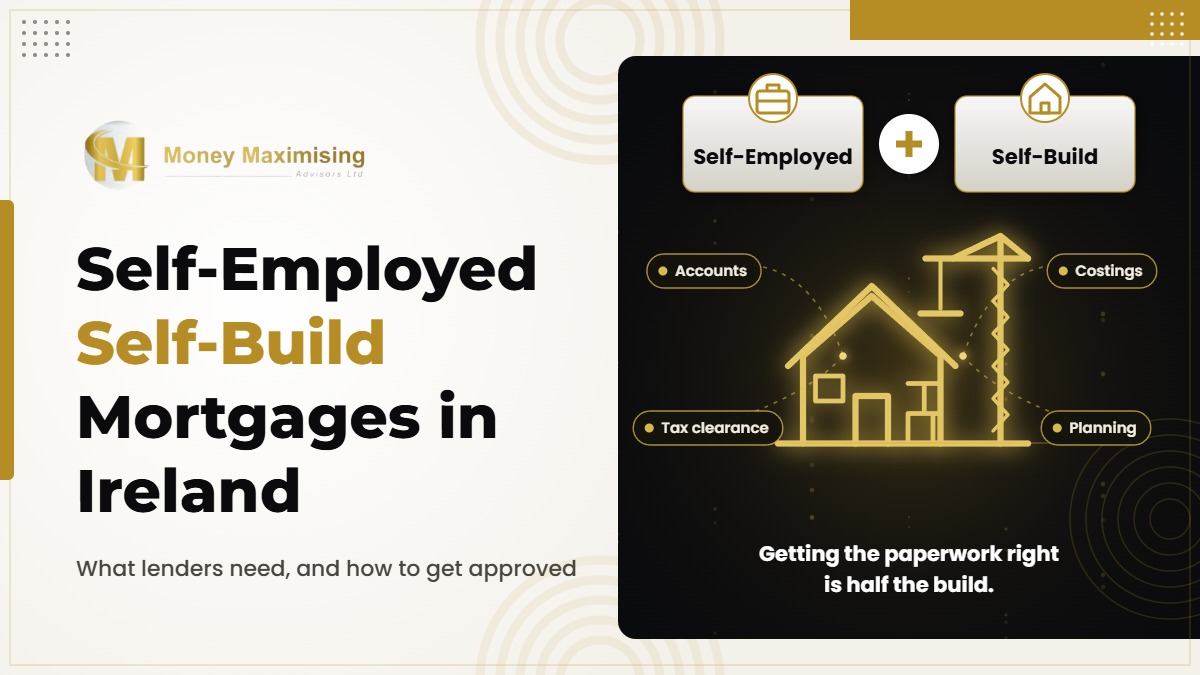
Being your own boss and building your own home are both big projects. Combine them and lenders will want more paperwork than a standard purchase, but a self-employed self-build mortgage is very achievable with the right preparation. As a mortgage broker, MMAdvisors works with self-employed clients every week, and this guide explains how lenders assess your income, what they need for the build and how to avoid the delays that catch most applicants out.
In this guide
How a Self-Build Mortgage Works in Ireland
A self-build mortgage is released in stages rather than as one lump sum. Your lender approves a total loan, then pays out tranches as the build reaches set milestones, typically four to six stages from foundations to completion.
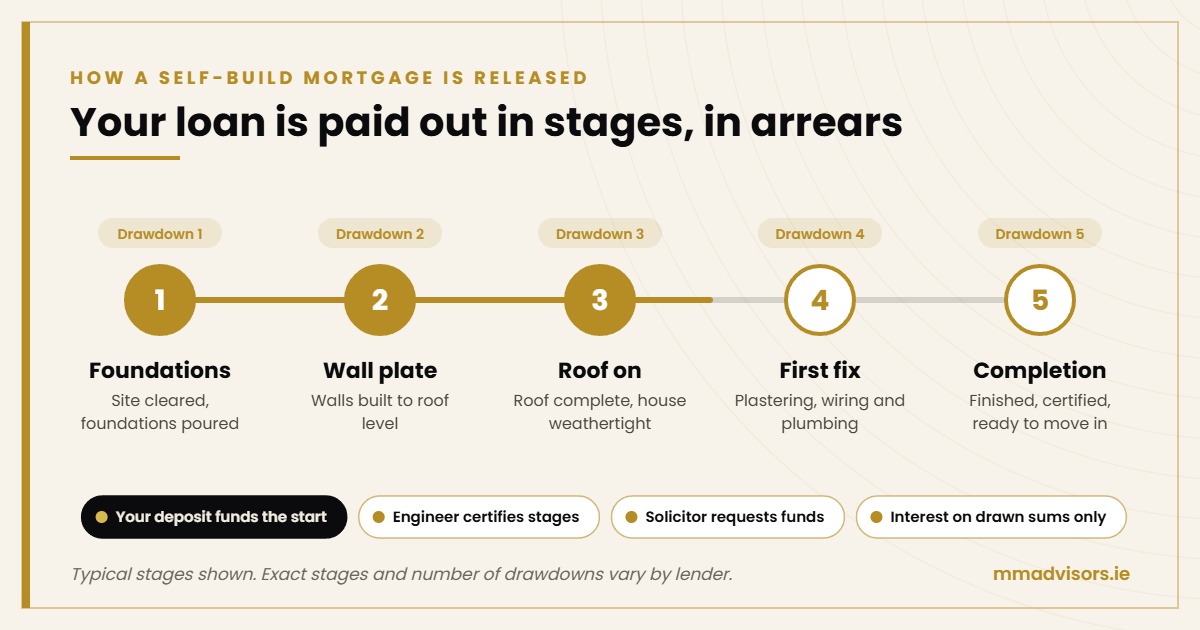
Irish lenders release each stage in arrears. Your architect or engineer certifies that the work is done, your solicitor requests the drawdown, and the funds follow. That means your own deposit pays for the first stage, and you need enough cash flow to keep the build moving between drawdowns. You generally pay interest only on the amount drawn so far, not the full approved loan.
Good to know
The lender’s valuation is based on the site value plus the estimated build cost, not the market value of a finished house.
Central Bank Lending Limits Still Apply
Being self-employed does not change the Central Bank of Ireland mortgage measures:
4x
Loan to income
Gross income, first time buyers
3.5x
Loan to income
Second and subsequent buyers
90%
Loan to value
Maximum, so a minimum 10% deposit
Worked example
A sole trader first time buyer with net profit of 70,000 euro faces a regulatory ceiling of:
280,000 euro
70,000 euro x 4
Lenders can approve a limited share of lending above these limits through exemptions, but they are allocated case by case and are harder to secure on a self-build.
How Lenders Calculate Self-Employed Income
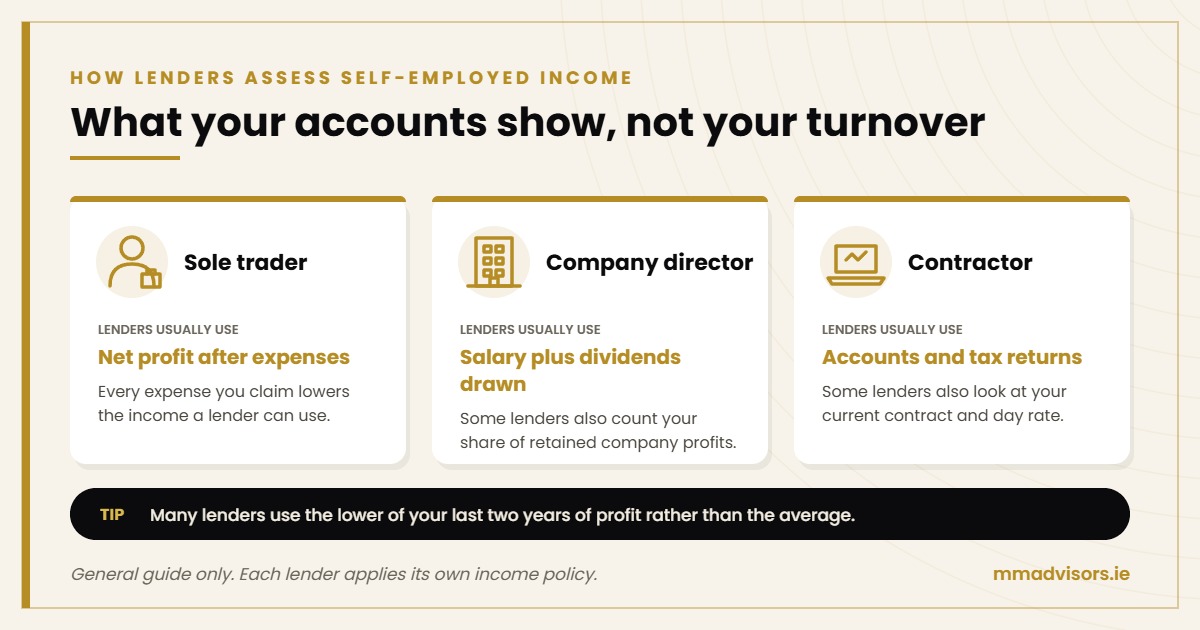
Lenders assess what your accounts and Revenue records show, not what the business turns over. The method depends on how you trade.
Sole traders
You are usually assessed on net profit after expenses. Every expense you claim to reduce your tax bill also reduces the income a lender can use, so aggressive tax planning in the years before an application can cost you borrowing power.
Limited company directors
Lenders typically use your salary plus dividends drawn. Some lenders will also consider your share of retained company profits, which can make a significant difference if you leave money in the business. Company contributions to a directors pension reduce company profit, so plan their timing with your accountant.
Contractors and freelancers
Contractors working through their own company or as sole traders are assessed in the same way as other self-employed applicants. Some lenders will consider a contractor’s current contract and day rate alongside accounts, particularly for professionals with a strong track record.
Couples with mixed income
Where one applicant is PAYE and the other is self-employed, lenders combine both incomes. The PAYE salary is verified with payslips, while the self-employed income still needs full accounts. A steady PAYE income can strengthen an application where business profits vary year to year.
Fluctuating or falling profits
Many lenders use the lower of your last two years of profit rather than an average. An accountant’s letter explaining a dip, along with current year trading figures, can help your case. Personal pensions for the self-employed remain worthwhile, but discuss contribution timing with your broker before you apply.
The Self-Employed Document Checklist
If you have seen UK guides mention SA302 forms, the Irish equivalent is your Revenue statement of liability. Most Irish lenders ask for:
- ✓Two years of certified or audited accounts, prepared by a qualified accountant
- ✓Form 11 returns and Revenue statements of liability for the same years
- ✓Tax clearance or accountant confirmation that your tax affairs are up to date
- ✓An accountant’s letter confirming current year trading and no significant change since the last accounts
- ✓Six months of personal and business bank statements
Avoid a common delay
Have your latest accounts signed off before you apply. Applications built on draft figures are one of the most common reasons self-employed cases stall.
Can you apply with one year of accounts?
Some lenders will consider applicants with less than two years of trading, particularly where you have moved into self-employment in the same field you worked in as an employee. Options are narrower and conditions stricter, which is where a broker’s knowledge of individual lender policy matters most.
What Lenders Need for the Build
On top of your income documents, the lender needs proof the project is viable and fully costed:
Planning permission
Full planning permission before a full letter of offer is issued.
Costings
A fixed price contract or detailed costings for each element of the build.
Site map
Ordnance Survey Ireland or Property Registration Authority style site map.
Stage certification
An architect or engineer to certify each stage of the build.
Contingency fund
A buffer for overruns, with Bank of Ireland advising around 10% of the total project cost.
Insurance
Site and building insurance before work starts and before each drawdown.
If you are using a timber frame, modular or other modern method of construction, check early that your lender accepts the system and what certification it needs, as some stage payment structures differ for factory built homes.
Protect the build
Most lenders also require mortgage protection before drawdown. As a self-employed borrower with no employer sick pay, pairing it with income protection means repayments continue if illness stops you working during a long build.
Funding Your Deposit as a Self-Employed Builder
Your contribution can come from several sources:
Help to Buy and Other Supports
Self-employed first time buyers can claim Help to Buy on a self-build on the same terms as PAYE workers. The rebate is the lowest of 30,000 euro, 10% of the approved valuation, or the income tax and DIRT paid over the previous four years.
Help to Buy rules for self-employed applicants
Tax compliant
Every Form 11 for those four years must be filed and paid before you apply through ROS or myAccount.
70% minimum loan
Your mortgage must be at least 70% of the approved valuation. If you own your site outright and borrow less, you can lose eligibility.
500,000 euro cap
The approved valuation must be 500,000 euro or less, and the rebate is paid after your first drawdown.
The First Home Scheme and the Local Authority Home Loan can also support eligible self-builders. Our self-build mortgages page summarises the current rules for all three schemes.
Rates, Income Changes and Credit History
Do self-employed borrowers pay higher rates?
Mainstream Irish lenders generally price mortgages on loan to value and the energy rating of the home rather than employment type, so a self-employed applicant approved by a main lender typically accesses the same rates as a PAYE borrower. Fixed rates give certainty while your income varies; variable rates offer flexibility to overpay in strong trading years. A broker can compare both across lenders for your situation.
What if your income drops during the build?
Your approval is based on your position when the offer is issued, but a build can take a year or more. Your solicitor may need to confirm there has been no material change in your circumstances before later drawdowns. If trading slows mid build, speak to your broker early so the issue can be managed with the lender before a stage payment is due.
Previous credit issues
Lenders check your record on the Central Credit Register. Missed payments in the last few years make approval harder, but older or resolved issues are not always a barrier. Being upfront and providing an explanation with your application is better than letting the lender find it.
How MMAdvisors Helps as Your Mortgage Broker
Self-employed self-build cases are where lender policies differ most. One lender may accept retained profits while another ignores them, and one may consider a year of trading while another insists on two. As an independent mortgage broker, MMAdvisors:
Assess
Assesses your income the way each lender will, before you apply.
Match
Matches your trading structure and build plan to the lender most likely to approve it.
Package
Packages your accounts, tax documents and build costings so the application is complete first time.
Guide
Guides you through Help to Buy, stage drawdowns and the protection needed before funds are released.
Independent mortgage comparison advice means you see the options across lenders rather than one bank’s view. Returning from abroad to build at home? Read our guide to Irish ex-pat mortgages.
Self-build mortgages
Building Your Own Home While Self-Employed?
Have your accounts and costings reviewed by an independent mortgage broker before you apply.