Quick answer
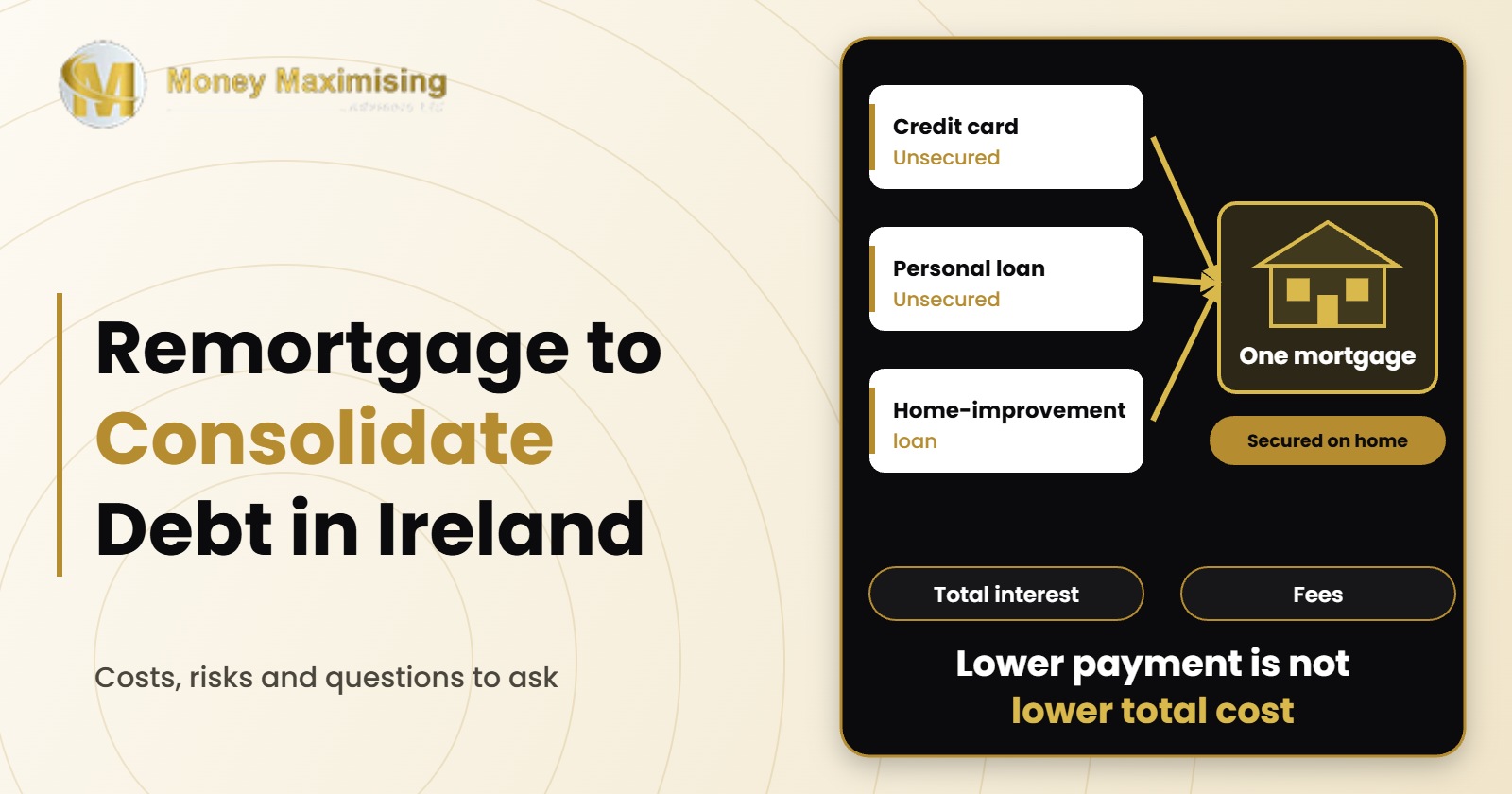
A remortgage to consolidate debt can replace several repayments with one mortgage repayment. The monthly figure may fall because mortgage borrowing often uses a longer term. That does not automatically mean the debt becomes cheaper.
The central trade-off is serious. Unsecured loans or credit-card balances can become debt secured on your home. A longer term can also increase total interest, even where the interest rate is lower.
How debt consolidation through a mortgage works
A lender may approve a larger mortgage that clears the existing mortgage and specified debts. The lender assesses the home value, equity, income, expenditure, credit history and repayment capacity. It may pay creditors directly rather than releasing unrestricted cash.
The MMA landing page includes consolidating existing loans among the purposes for a standard equity release remortgage. It also warns that a new loan may take longer to repay and may cost more over a longer term. Approval and purpose remain subject to lender criteria.
Why the monthly payment can be misleading
Monthly repayments are only one part of the comparison. A five-year loan moved into a 20-year mortgage can produce a lower monthly payment because the balance is spread across many more months. Interest then runs for much longer unless the borrower overpays or shortens the term.
Compare the amount required to clear each debt today with the total amount repayable under the new mortgage. Add legal fees, valuation costs and any fixed-rate breakage charge. Use written lender illustrations rather than a rough rate comparison.
An illustrative example
A household has a mortgage, a home-improvement loan and a personal loan. The separate payments are difficult to manage. A larger remortgage could reduce the combined monthly outflow, but the personal-loan balances might then be repaid across the mortgage term.
The household should compare two scenarios: keeping the debts on their remaining terms, and consolidating them with the intended mortgage term. They should also compare a shorter consolidation term. No saving should be claimed until all interest and fees are included.
The main risks
Your home becomes security for more debt
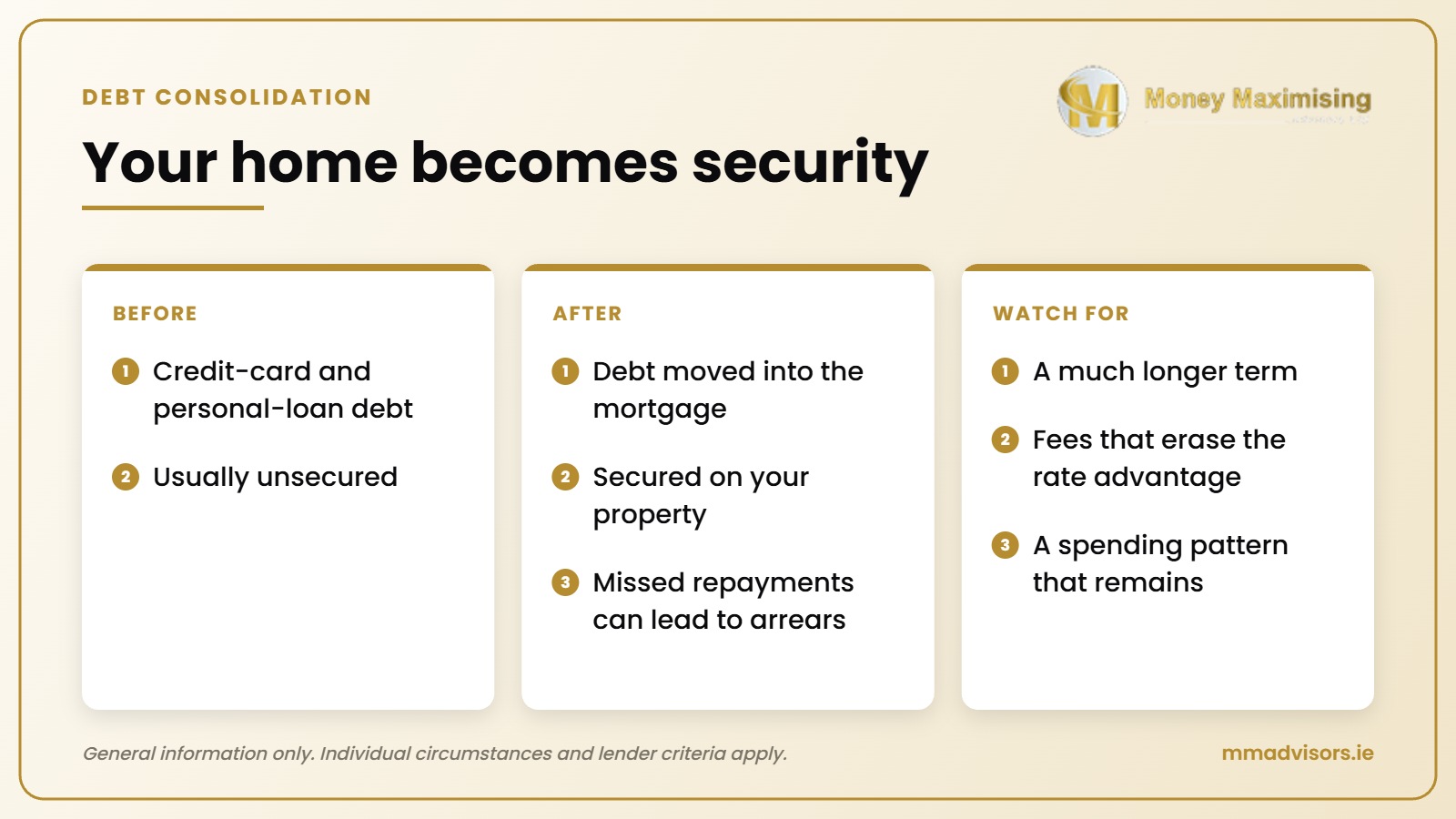
Credit-card and personal-loan debt is usually unsecured. Moving it into a mortgage increases the amount secured on the property. Missed mortgage repayments can lead to arrears, damage the borrower’s credit record and place the home at risk.
The debt can last much longer
A lower repayment can feel like immediate relief. If the term is extended too far, the borrower can still be paying for old spending years later. The loan term should match a realistic repayment plan, not simply the lowest possible monthly figure.
Fees can erase the rate advantage
Legal work, valuation fees, broker or lender charges and early repayment costs should be included. If the full mortgage balance moves to a higher rate, the cost applies to more than the debts being consolidated.
The spending pattern may remain
Consolidation clears balances, but it does not fix an unaffordable budget. Reusing cleared credit limits can leave a household with both a larger mortgage and new unsecured debt. A practical budget and a plan for old accounts are essential.
Eight questions to answer before applying
- What is the exact settlement figure for every debt?
- What is the remaining term and total amount repayable if each debt stays unchanged?
- What fees and early repayment charges apply to the remortgage?
- Will the interest rate on the existing mortgage balance change?
- What is the shortest affordable term for the consolidated amount?
- Can voluntary overpayments be made without charge?
- How would repayments cope with a higher rate or temporary income reduction?
- Is independent debt and budgeting support more suitable than additional borrowing?
What lenders assess
- Current property value and the loan-to-value after refinancing.
- Income, employment position and demonstrated repayment ability.
- Bank statements, regular expenditure and existing commitments.
- Credit history and Central Credit Register information.
- The purpose of the borrowing and settlement details for debts.
- Age, requested term and the ability to repay into retirement where relevant.
When free debt support should come first
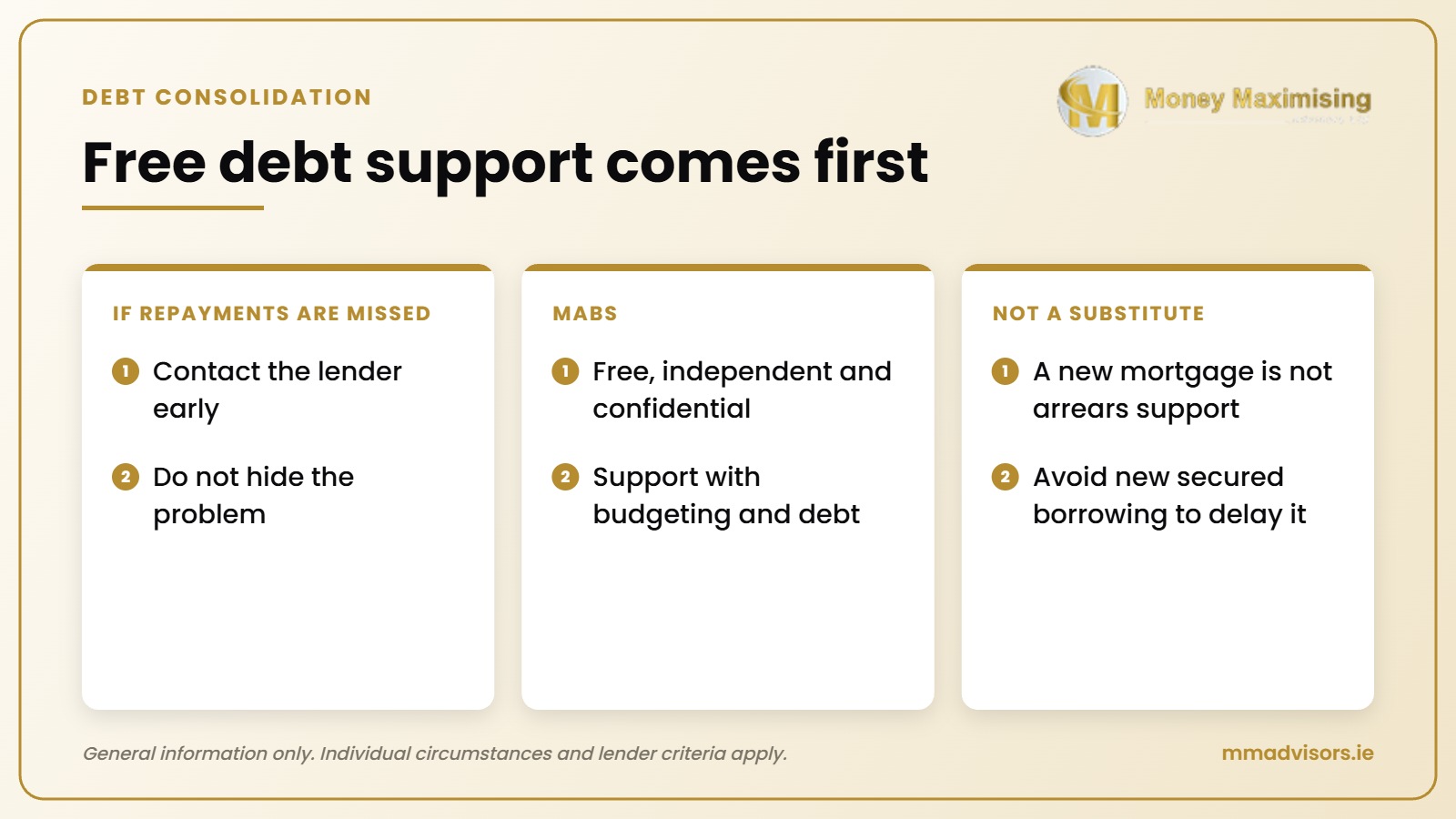
A new mortgage is not a substitute for arrears support. If repayments are already being missed, or the household cannot meet normal living costs, contact the lender early. MABS provides free, independent and confidential support with budgeting and debt.
The Central Bank explains that lenders must assess a borrower’s full circumstances when dealing with mortgage arrears or financial difficulty. A borrower should not hide the problem or take new secured borrowing simply to delay it.
Alternatives to compare
- A structured repayment plan that keeps debts unsecured.
- A shorter consolidation loan, where affordable.
- A mortgage product review without increasing the balance.
- Selling an unused asset or using savings while retaining an emergency reserve.
- Free budgeting and debt advice from MABS.
- A formal insolvency option, but only with appropriate professional advice where relevant.
A safer comparison method
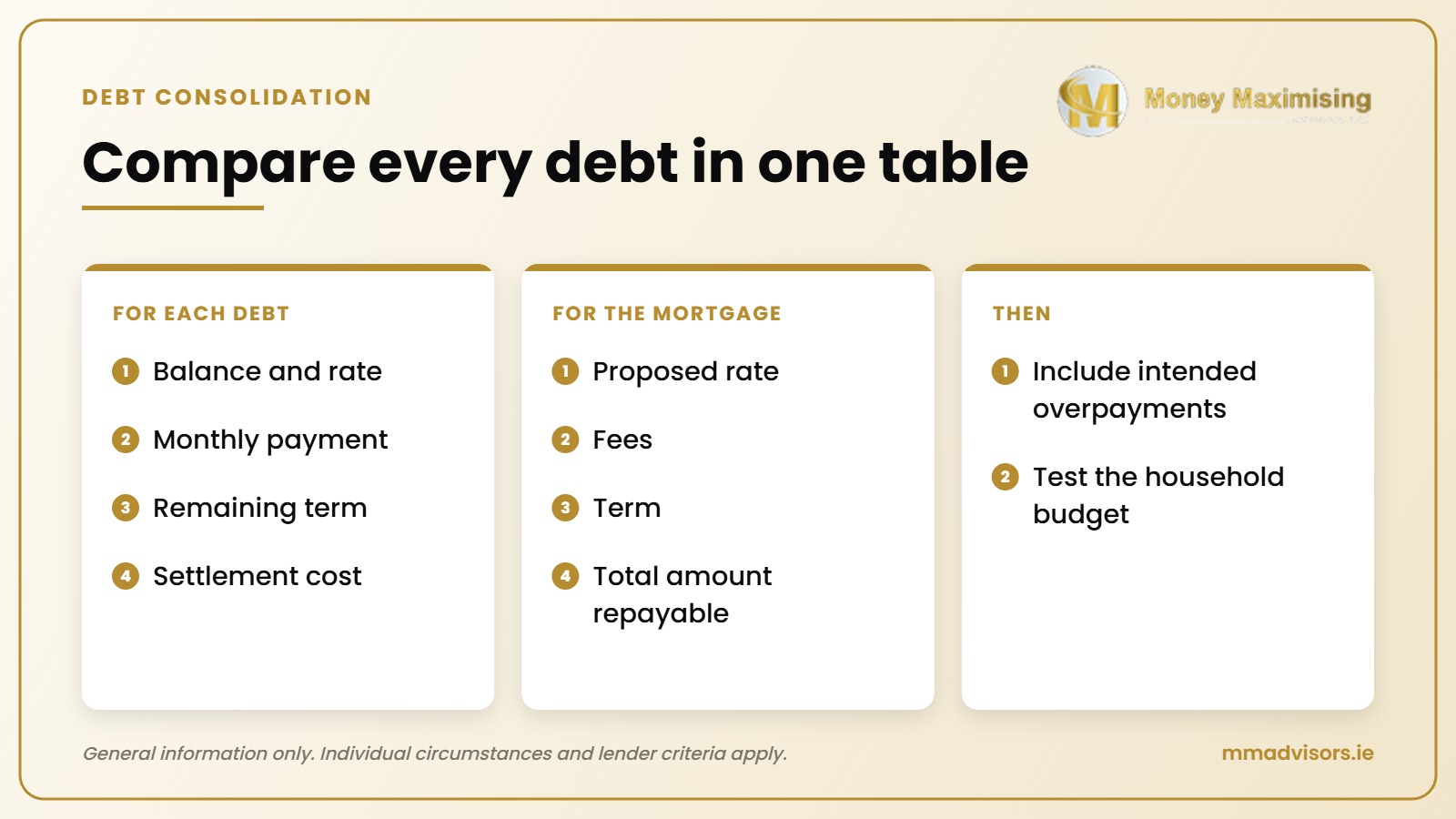
Create one table with every debt balance, rate, monthly payment, remaining term and settlement cost. Add the proposed mortgage rate, fees and term. Compare total cost under a realistic repayment pattern, including any intended overpayments.
Then test the household budget after essential spending, insurance, maintenance and savings. A plan that works only when nothing goes wrong is not a robust plan.
How to compare terms with a simple worksheet
Create one row for each option and record the amount borrowed, annual percentage rate, monthly payment, number of payments, fees and total amount repayable. Keep the purpose and amount constant. If terms differ, add a second comparison that assumes the same monthly budget is paid into each option.
A borrower might choose a longer contractual term for flexibility but plan regular overpayments. That plan only works if the mortgage allows those overpayments and the household can maintain them. The legal obligation remains the contractual term, so do not treat voluntary payments as guaranteed.
What to do after consolidation
- Confirm in writing that every intended debt has been cleared.
- Update the household budget to the new mortgage payment and due date.
- Decide whether cleared credit limits should be reduced or closed.
- Set a realistic emergency fund target so new short-term debt is less likely.
- Review the mortgage annually and direct affordable overpayments to the balance.
- Seek help early if the new repayment becomes difficult.
Consolidation should be a reset, not a temporary pause. The plan is strongest when the household understands why balances built up and changes the cash-flow system that produced them.
Fixed and variable rate considerations
A fixed rate can provide payment certainty for a stated period, but early repayment or switching charges may apply. A variable rate can offer flexibility, but repayments may rise. The choice should reflect the household budget, overpayment plans and expected time in the property.
Ask for the annual percentage rate of charge and a full mortgage illustration. Do not assume the advertised rate will apply to the final loan-to-value or application profile. The relevant comparison is the approved offer, including all conditions and costs.
Keep a written decision record
Record why consolidation is being considered, the alternatives reviewed and the expected total cost. This makes it easier to test whether the proposal solves a cash-flow problem or merely postpones it. It also provides a useful reference for the adviser, household and future mortgage reviews.
Frequently asked questions
Can consolidating debt reduce monthly repayments?
It can, particularly where the term is longer. A lower monthly repayment does not prove that total interest is lower.
Will the lender release the money to me?
Some lenders may pay creditors directly or require proof that debts were cleared. Procedures vary.
Can I consolidate debt if my mortgage is in arrears?
A standard top-up is generally unlikely where the mortgage is not up to date. Contact the lender and seek independent support.
Does debt consolidation improve my credit record?
Clearing balances does not remove accurate credit history. Future repayment conduct remains important.
Should I close cleared credit cards?
That is a personal budgeting decision. The key is to avoid rebuilding the same balances. Consider limits and account access as part of the plan.
Discuss the full cost, not only the monthly payment
Money Maximising Advisors can help compare the existing debts with a proposed remortgage and explain current lender criteria. Where financial difficulty is present, independent debt support should also be considered.
Sources
Important information
WARNING: If you do not meet the repayments on your loan, your account will go into arrears. This may affect your credit rating, which may limit your ability to access credit in the future.
WARNING: You may have to pay charges if you pay off a fixed-rate loan early.
WARNING: This new loan may take longer to pay off than your previous loans. This means you may pay more than if you paid over a shorter term.
General information only. Individual circumstances, lender criteria and eligibility requirements apply. This content does not constitute financial, tax or legal advice.
Money Maximising Advisors Ltd is regulated by the Central Bank of Ireland. C154250.