
Planning for the future is never easy — but ignoring it can cost your loved ones dearly. For families across Dublin, Galway, and the rest of Ireland, understanding inheritance tax Ireland is no longer something you can put off until tomorrow. With property values still running high and Revenue keeping a close eye on estate transfers, even modest inheritances can trigger a significant tax bill if the right structures are not in place.
At Money Maximising Advisors Limited, we work with families every day who are surprised to learn just how much their estate could be exposed to inheritance tax Ireland — and, more importantly, how much of it could have been avoided with proper planning. This guide walks you through the most common pitfalls in inheritance and succession planning in Ireland, and what you can do about them right now in 2026.
What Is Inheritance Tax in Ireland? A Quick Refresher
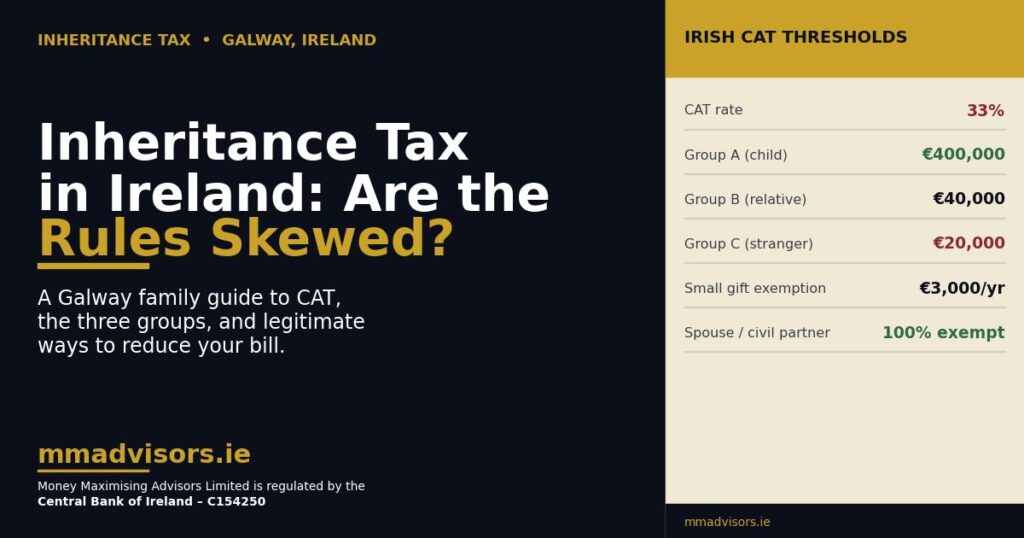
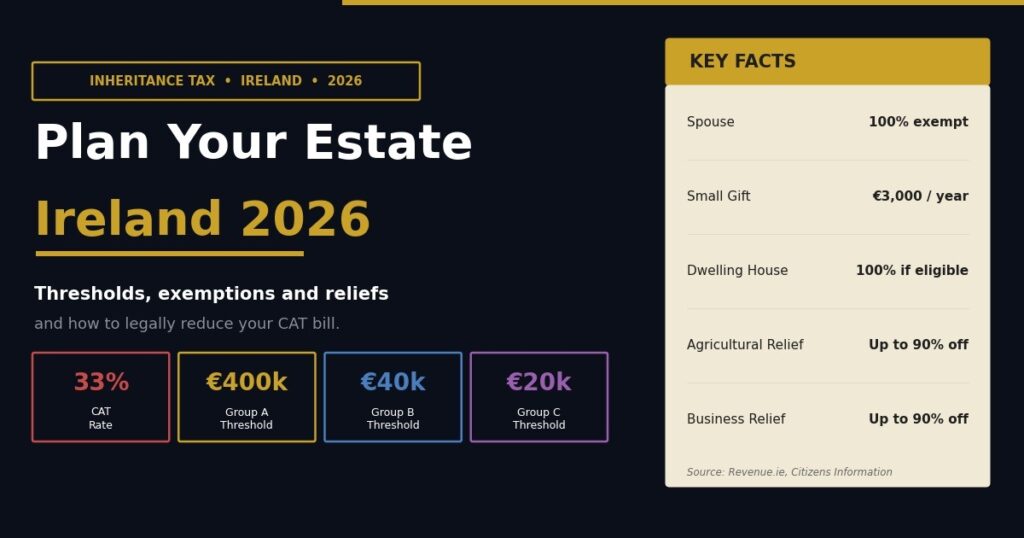
In Ireland, inheritance tax Ireland falls under Capital Acquisitions Tax (CAT). When you inherit money, property, or other assets, Revenue may apply CAT at a flat rate of 33% on any amount that exceeds your tax-free threshold. The amount you can receive tax-free depends on your relationship to the person who passed away.
As of 2026, the main inheritance tax threshold Ireland figures are:
- Group A — €400,000: Children inheriting from a parent.
- Group B — €40,000: Siblings, nieces, nephews, and certain other relatives.
- Group C — €20,000: All other beneficiaries.
These thresholds apply on a cumulative lifetime basis — meaning previous gifts and inheritances already received count towards your limit. Many families in Dublin and Galway are unaware of this rule until it is too late.
For a detailed breakdown of how capital acquisitions tax Ireland is calculated, read: Demystifying Inheritance Tax in Ireland: Rules and Calculations.
The 7 Most Common Inheritance and Succession Pitfalls in Ireland
1. Assuming Your Estate Is Too Small to Be Taxed
Many people look at their savings and assume they are safe from inheritance tax Ireland. But when you factor in the family home, pension lump sums, investments, and business interests, the combined value often far exceeds the inheritance tax threshold Ireland. A house in Dublin or Galway alone could push your estate over the Group A threshold for more than one child.
2. Not Having a Will — Or Having an Outdated One
Dying intestate (without a valid will) means Irish succession law decides who gets what. This can lead to delays, disputes, and unintended tax consequences. An outdated will — one that has not been revised after marriage, divorce, or the birth of grandchildren — can be equally damaging. Estate planning Ireland starts with a current, legally sound will.
3. Missing Out on Annual Small Gift Exemptions
Each year, you can gift up to €3,000 per person completely free of capital acquisitions tax Ireland. Over time, this can significantly reduce the taxable value of your estate. Yet many families never take advantage of it. A structured gifting strategy, guided by inheritance planning Ireland professionals, can make a substantial difference over a decade.
4. Ignoring Inheritance Tax on Property
Property is often the largest asset in an Irish estate. Inheritance tax on property Ireland catches many beneficiaries off guard — particularly when they inherit a home they wish to keep but cannot afford the tax bill to do so. The Dwelling House Exemption can help in certain circumstances, but eligibility rules are strict and frequently misunderstood.
Read more on this topic: Inheritance Tax Ireland – How to Reduce your Tax Burden.
Ready to talk about your estate? Enquire Now and one of our advisors will be in touch.
5. Overlooking Business Succession Planning
For business owners, succession planning Ireland is a matter of survival for the enterprise as well as the family. Agricultural Relief and Business Relief can reduce the taxable value of qualifying assets by up to 90% — but the conditions are complex and must be carefully structured. Failing to plan for these reliefs is one of the costliest mistakes we encounter.
6. Not Using Section 72 or Section 73 Life Insurance Policies
A Section 72 policy is taken out specifically to cover a future CAT liability, and crucially, the proceeds are exempt from inheritance tax Ireland if used correctly. A Section 73 policy can be used to fund future gifts. Both are Revenue-approved tools for inheritance planning Ireland that are frequently overlooked.
Read more: How a Section 73 Policy Can Reduce Inheritance Tax in Ireland.
7. Leaving Succession Too Late
The earlier you begin estate planning Ireland, the more options you have. Trusts, phased gifting, pension structuring — all of these become less effective or entirely unavailable when planning is left to the final years. Many of our clients in Dublin and Galway wish they had started a decade earlier.
Take action today. Book a Consultation with our team and we will review your estate plan from the ground up.
How to Legally Reduce or Avoid Inheritance Tax in Ireland
There are several legitimate strategies available for how to avoid inheritance tax Ireland. These are all Revenue-sanctioned planning tools, not loopholes:
- Annual Gift Exemption: Gift up to €3,000 per recipient per year, free of CAT.
- Dwelling House Exemption: Transfer the family home to a qualifying child free of inheritance tax under specific conditions.
- Agricultural and Business Relief: Reduce taxable values of qualifying assets by up to 90%.
- Section 72 / 73 Life Insurance: Revenue-approved policies that pay the CAT bill without eroding the estate.
- Discretionary Trusts: Hold assets for future generations with flexibility and tax efficiency.
- Pension Planning: Pensions are generally outside the estate for CAT purposes when structured correctly.
Full guide: Inheritance Tax Ireland | How To Avoid Legally.
Also see: Gift Tax in Ireland: How Does Gift and Inheritance Tax Work?.
Why 2026 Is the Year to Act on Succession Planning in Ireland
Irish property values remain elevated across Dublin and Galway, and political discussions around adjusting inheritance tax Ireland thresholds continue to evolve. At the same time, digital assets, crypto holdings, and AI-driven financial tools are adding new layers of complexity to estate planning Ireland. Your succession plan needs to account for these 2026 realities.
The Revenue Commissioners have also sharpened their focus on capital acquisitions tax Ireland compliance, with increased scrutiny on gift and inheritance returns. This makes it more important than ever to have qualified estate planning services Ireland in your corner before issues arise.
Our Estate Planning and Succession Services
At Money Maximising Advisors Limited, our team of Certified Financial Planners (CFP) and Qualified Financial Advisors (QFA) offers a full range of estate planning services Ireland, including:
- Inheritance Tax Planning: CAT thresholds, exemptions, and reduction strategies.
- Succession Planning Ireland: Business and family wealth transfer planning.
- Estate Planning Ireland: Wills, trusts, and asset distribution.
- Capital Acquisitions Tax Advice: CAT calculations, filing, and relief claims.
- Section 72 / 73 Life Insurance: Tax-efficient policies for estate transfers.
- Pension and Investment Advice: Long-term wealth building aligned with your estate goals.
Conclusion: Don’t Leave Your Family’s Future to Chance
Inheritance and succession planning is one of the most important financial steps an Irish family can take — yet it remains one of the most commonly delayed. The pitfalls are real, the tax exposure can be significant, and the strategies to reduce it are available right now.
Whether you are thinking about inheritance tax Ireland, passing on a family business, or simply ensuring your will reflects your true wishes, the team at Money Maximising Advisors Limited is here to help. We serve clients across Dublin, Galway, and all of Ireland.
Take the first step today. Contact Us to speak with our advisors, or Book an Appointment at a time that suits you. Your family’s financial security is worth the conversation.
Frequently Asked Questions (FAQs)
1. What is inheritance tax in Ireland?
In Ireland, inheritance tax Ireland is levied under Capital Acquisitions Tax (CAT) at a rate of 33% on inheritances that exceed your tax-free group threshold. The threshold depends on your relationship to the deceased — children typically benefit from the highest tax-free amount under Group A.
2. Who pays inheritance tax in Ireland?
The beneficiary — the person receiving the inheritance — is responsible for paying inheritance tax Ireland. They must file a CAT return with Revenue and settle any tax due by the relevant deadline, typically 31 October following the valuation date.
3. How much inheritance is tax free in Ireland?
The inheritance tax threshold Ireland in 2026 stands at €400,000 for children inheriting from a parent (Group A), €40,000 for siblings and certain relatives (Group B), and €20,000 for all others (Group C). These are lifetime cumulative limits, not per-inheritance limits.
4. What is the current CAT threshold in Ireland?
The current capital acquisitions tax Ireland Group A threshold is €400,000. These figures are reviewed periodically through the annual Budget, so it is always advisable to confirm the latest figures with a qualified advisor or check the Revenue Commissioners website.
5. Can I avoid inheritance tax in Ireland legally?
Yes — there are several Revenue-approved strategies for how to avoid inheritance tax Ireland legally, including the annual gift exemption, Dwelling House Exemption, Business and Agricultural Relief, and Section 72/73 life insurance policies. A qualified estate planning Ireland advisor can tailor a plan to your situation.
6. Is there inheritance tax on property in Ireland?
Yes, inheritance tax on property Ireland applies when the value of a property exceeds the beneficiary’s CAT threshold. However, the Dwelling House Exemption may allow a qualifying child to inherit the family home without a CAT charge, subject to strict eligibility conditions.
Disclaimer: This article provides general information about inheritance tax and estate planning in Ireland and should not be considered personalised financial or tax advice. Irish tax legislation — including Capital Acquisitions Tax thresholds and reliefs — is subject to change, and individual circumstances vary. The figures referenced reflect guidance available as of 2026 and may be updated following subsequent Finance Acts or Revenue guidance. Always consult with a qualified financial advisor or tax professional before making significant decisions regarding your estate, succession, or inheritance planning.