Quick answer
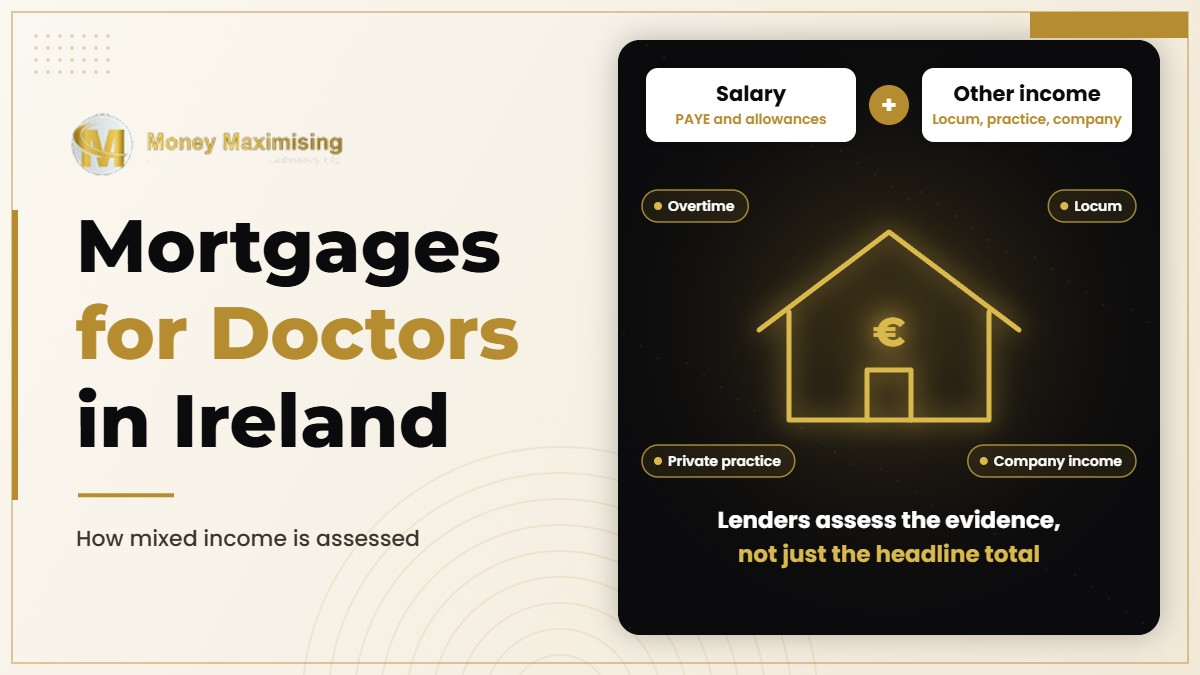
A mortgage application can be less straightforward when your income comes from more than one medical role. A hospital salary may sit alongside overtime, allowances, locum shifts, private-practice profits or remuneration from your own company. Each source can have a different record, payment pattern and level of predictability.
Irish lenders assess the evidence behind your income as well as the headline total. They also consider your existing commitments, spending, savings and ability to meet repayments. A strong application therefore begins by organising the full picture rather than relying on one payslip or a healthy company balance.
This guide explains the main issues doctors and consultants should prepare for. It is general information. Each lender applies its own criteria, and mortgage approval remains subject to affordability and individual circumstances.
Why doctors can have a more complex mortgage application
Many applicants receive one regular salary from one employer. A doctor may have several income streams across different arrangements. These could include:
- A public-sector salary.
- Regular or occasional overtime.
- Pensionable and non-pensionable allowances.
- Locum payments under PAYE or self-employment.
- Profits from a private practice.
- Salary or other properly paid income from a limited company.
- A spouse or partner’s separate income.
The lender needs to understand which income belongs to you personally, how reliably it is received and whether it is likely to continue. Business receipts are not automatically personal income. Company turnover and retained profits are also different from salary already paid to you.
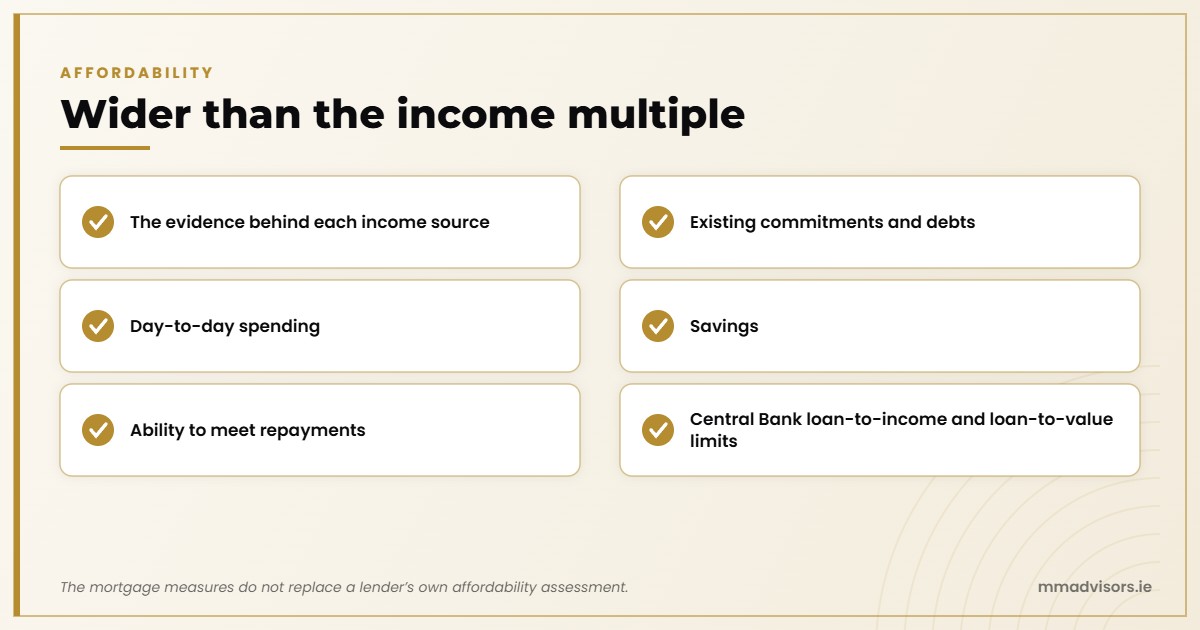
This distinction matters because a lender must assess your ability to repay. The Central Bank of Ireland’s mortgage measures set loan-to-income and loan-to-value limits for residential lending, with limited allowances available to lenders. These measures do not replace a lender’s own affordability assessment.
How PAYE salary may be assessed
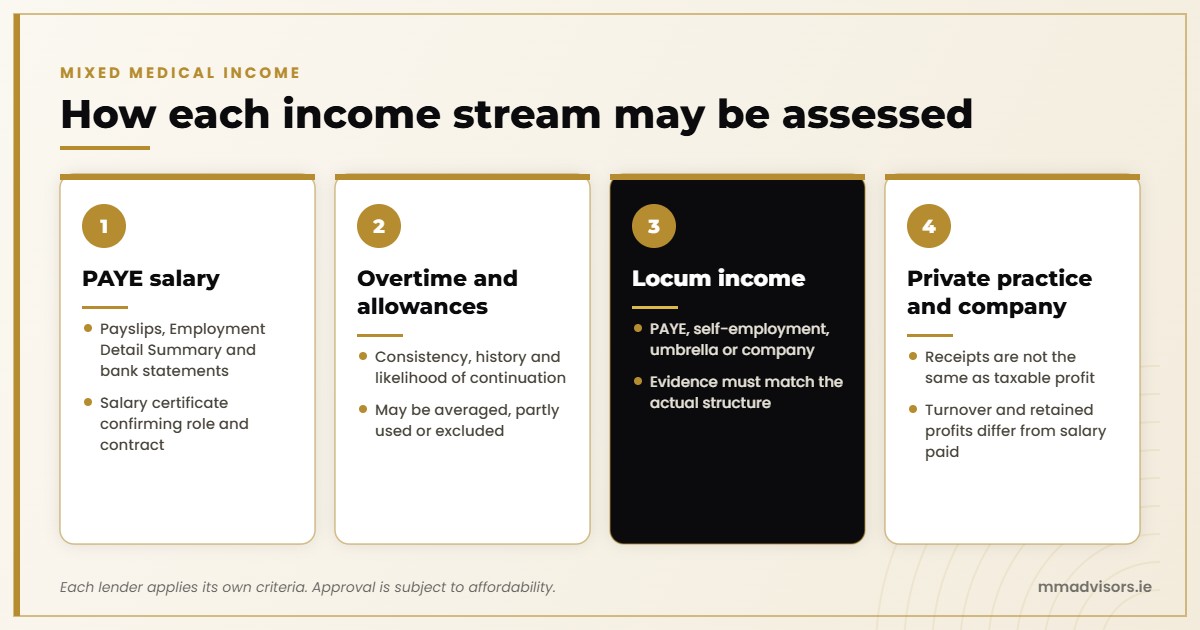
A regular public-sector salary is often the simplest part of the file. A lender may request recent payslips, an Employment Detail Summary, bank statements and a salary certificate. The salary certificate can confirm your role, contract type, income and employment status.
Doctors who move between hospitals or work on fixed-term contracts may need to provide more context. A lender may consider continuity of employment, the length and type of the current contract, prior earnings and the likelihood of ongoing work. Being a doctor does not remove the need to prove income and repayment capacity.
If you recently changed role, were promoted or are on probation, ask what supporting evidence the lender requires. Do not assume another applicant’s experience will apply to you. Policies and individual decisions can differ.
Will overtime and allowances count?
Some lenders may consider regular overtime or qualifying allowances when there is sufficient evidence. The key questions usually concern consistency, history and likelihood of continuation.
Prepare records that separate basic salary from variable payments. If the amount changes from month to month, show a clear history rather than selecting only the strongest period. A lender may average variable earnings, use only part of them or exclude them. The approach depends on its criteria and the evidence available.
This is also a useful financial-planning exercise. A mortgage should remain affordable if overtime reduces, a particular allowance ends or family costs rise. Borrowing based on the maximum possible income can leave too little flexibility for pensions, savings and other goals.
How locum income may be treated
The word “locum” does not define the underlying tax or employment position. A locum engagement could involve PAYE employment, genuine self-employment, an umbrella arrangement or a limited company. The lender will need evidence that matches the actual structure.
For PAYE locum work, the file may include payslips, contracts, Revenue records and bank statements. For self-employed work, the lender may request certified accounts, tax documents and evidence of an established earnings pattern. The CCPC lists two years of certified accounts among the documents a self-employed mortgage applicant may be asked to provide. Each lender sets its own requirements.
Short or irregular engagements can require more explanation. Keep contracts, invoices, payment records and tax information organised. A concise schedule showing the source and date of each payment can help your adviser understand the pattern, but it does not replace the lender’s required documents.
Private practice profits and self-employed income
Private-practice receipts are not the same as taxable profit. Costs such as premises, staff, professional expenses and administration may reduce the amount available. Tax liabilities must also be allowed for.
Where you operate as a sole trader, a lender may review your accounts and tax information over a suitable period. A strong recent year may not be used in full if earlier results were lower or if the increase cannot be explained. A fall in income may also require context.
Work with your accountant before applying. Confirm that accounts, returns and tax payments are up to date. Ask the accountant to explain any unusual items, changes in structure or one-off expenses that could otherwise be misunderstood.
Company income, turnover and retained profits
If your private practice operates through a limited company, the company’s money is legally separate from your personal money. Turnover does not show what you personally receive. Retained profits are not automatically treated as personal borrowing income.
A lender may examine salary, other properly paid remuneration, company accounts, ownership, trading history and the sustainability of payments. Some lenders may have approaches to company profits, but these vary and must be checked. Do not take a dividend, increase salary or change pension funding solely to improve a mortgage application without coordinated tax and financial advice.
The mortgage decision should also respect business needs. Funds required for tax, payroll, operating costs or future investment should not be treated as a house deposit simply because they are visible in the company bank account.
Documents to organise before applying
The exact list depends on the lender and your circumstances. A useful preparation file may include:
- Proof of identity, address and PPSN.
- Recent personal current-account and savings statements.
- Credit-card and loan statements where required.
- Payslips and an Employment Detail Summary.
- A salary certificate or employer confirmation.
- Employment and locum contracts.
- Certified accounts and tax documents for self-employed income.
- Company accounts and remuneration records where relevant.
- Evidence of deposit and regular savings.
- An explanation of significant transfers between business and personal accounts.
Review the lender’s current checklist before submitting anything. Consistent, complete documents can reduce follow-up questions. They cannot guarantee approval.
Affordability is wider than the income multiple
The Central Bank’s limits are only one part of the decision. Lenders also examine outgoings, dependants, childcare, loans, credit history and money management. They may test whether repayments remain affordable at a higher interest rate.
Your own plan should go further. Consider how the proposed repayment fits with:
- Tax reserves for private or locum income.
- Existing pension and AVC contributions.
- Emergency savings.
- Education or family costs.
- Planned parental leave or reduced working hours.
- Protection costs.
- Your expected retirement date.
A mortgage that is technically available may still be too restrictive for the life you want. The aim is not only to secure approval. It is to choose a commitment that can coexist with your other priorities.
Think about the mortgage and retirement together
The term of a mortgage can extend into the years when you want to reduce work. The CCPC notes that lenders consider how repayments will be covered if a mortgage runs beyond expected retirement. A lender may request evidence of pension or other retirement income and may offer a shorter term.
For doctors with public-sector benefits and private income, this question can be especially important. Reducing public work, stopping a private practice and drawing pension benefits are separate events. Model them separately before committing to a long mortgage term.
Mortgage overpayments may reduce debt, but they also use money that could fund accessible savings, pensions or investments. The correct balance depends on interest rates, tax treatment, access needs, risk and personal priorities.
A practical preparation sequence
- List every income source and identify its legal and tax structure.
- Gather the documents supporting each source.
- Separate personal income from business receipts and reserves.
- Review accounts and tax records with your accountant.
- Calculate current household spending and other commitments.
- Test the mortgage payment against lower variable income and higher costs.
- Compare lender criteria through an authorised adviser or directly with lenders.
- Review the mortgage alongside pension, savings and retirement decisions.
Frequently asked questions
Can a locum doctor get a mortgage in Ireland?
Potentially, yes. The lender will consider the actual engagement, income history, documentation, affordability and its own criteria. Locum status does not guarantee or prevent approval.
Will a lender include overtime and allowances?
Some lenders may include regular and well-evidenced payments. They may average them, include only a portion or exclude them. The treatment varies by lender and payment type.
Can retained company profits increase my borrowing capacity?
They are not automatically personal income. A lender may review company accounts and the sustainability of personal remuneration. Its treatment of company profits will depend on its criteria.
How many years of accounts will I need?
The CCPC notes that self-employed applicants may be asked for two years of certified accounts. Requirements vary, so confirm the current list with the lender or mortgage adviser.
Should I reduce pension contributions before applying?
Do not change pension funding solely for a mortgage application without advice. Consider tax relief, scheme rules, long-term goals and affordability. The lender will apply its own assessment.
Sources
Next step
A joined-up financial plan can show how a mortgage fits with your public and private income, pensions, practice commitments and family goals. Learn more about financial planning for doctors and consultants.
Doctors and consultants
Planning a mortgage on mixed medical income?
Important information
General information only. Mortgage approval is subject to lender criteria and affordability. Tax and pension treatment depend on individual circumstances and may change.
Money Maximising Advisors Ltd is regulated by the Central Bank of Ireland. C154250.