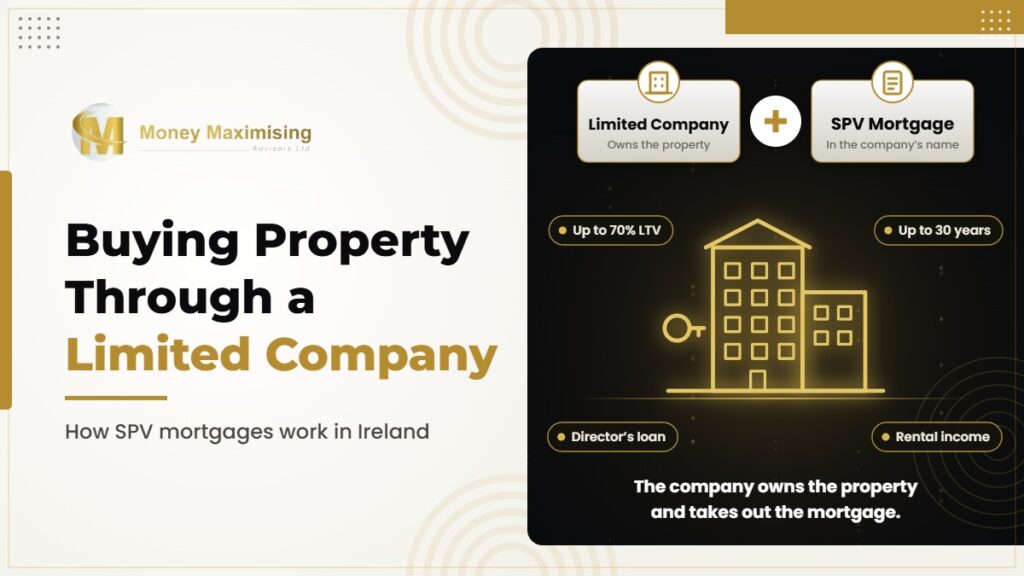
Buying an investment property through a Limited Company can sound complicated, but the SPV structure itself is simple once you see who does what. This guide follows the ownership, the borrowing and the money from start to finish. If you are new to the idea, start with our overview of SPV mortgages.
In this guide
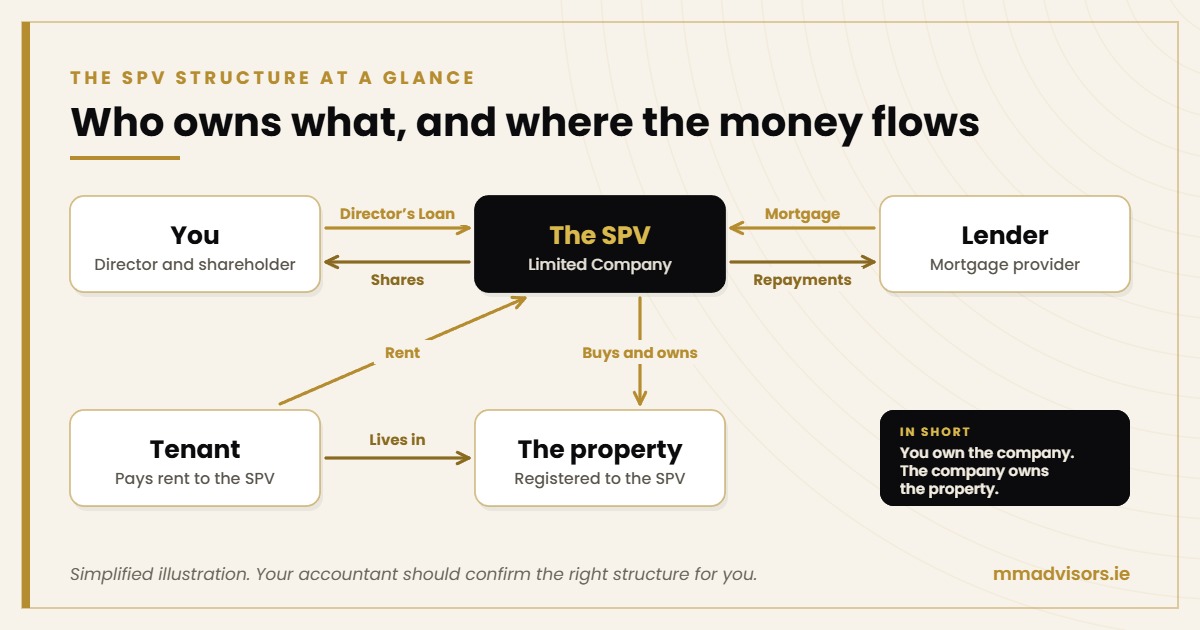
The SPV Structure at a Glance
Step 1: Set Up the SPV
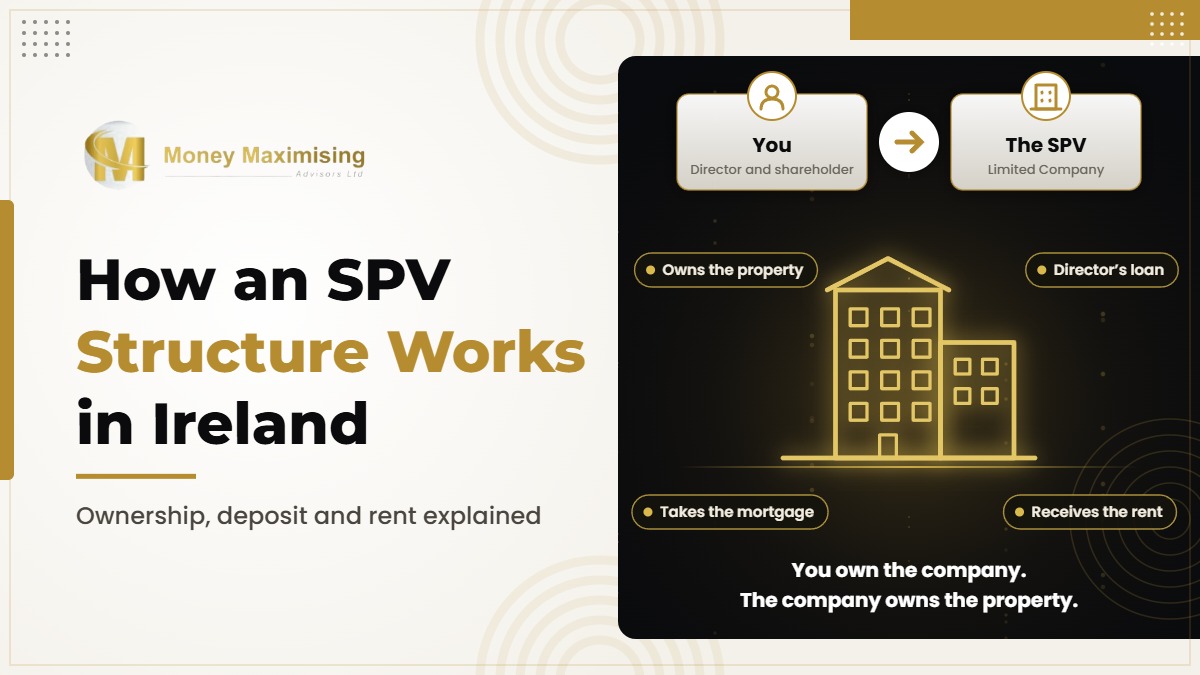
You form a new Limited Company used only for property investment. This is the SPV. You are typically its director and shareholder.
Why keep it separate
Keeping the SPV separate from any trading business keeps the property investment ring fenced, and many lenders prefer it that way.
Step 2: Get the Deposit Into the Company
The SPV needs the deposit in its own bank account before it can borrow. There are two common routes:
Personal savings
Director’s Loan
You lend your personal savings to the company, recorded as money the company owes you.
Existing trading company
Intercompany Loan
If you already own a trading company, funds may be lent from that company to the SPV, depending on your structure.
Take advice first
Your accountant should confirm which route suits your company and tax position.
Step 3: The SPV Applies for the Mortgage
The company, not you personally, is the borrower. The lender typically looks at:
- ✓The property and its value
- ✓The expected rental income, which usually needs to cover the repayments by a margin the lender sets
- ✓The company’s documents
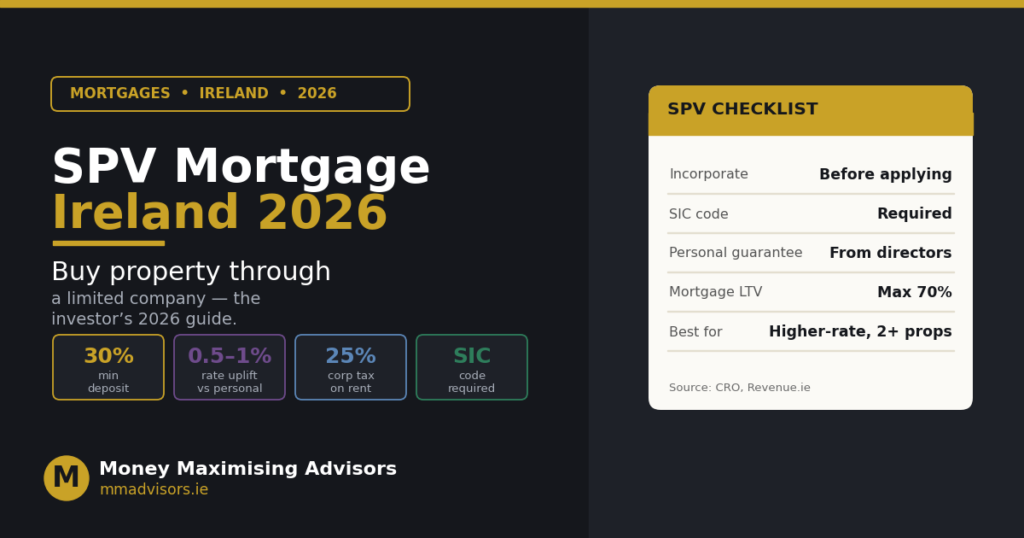
- ✓The directors, who may be asked for a personal guarantee
Lender pricing varies, and our guide to SPV mortgage rates explains what drives it. For the lender’s side of the application in more detail, see how an SPV mortgage works.
Step 4: The SPV Buys and Owns the Property
Once the loan is approved, the SPV completes the purchase and the property is registered in the company’s name. From then on, tenants pay rent to the company and the company makes the mortgage repayments.
Worked Example: A 500,000 Euro Property
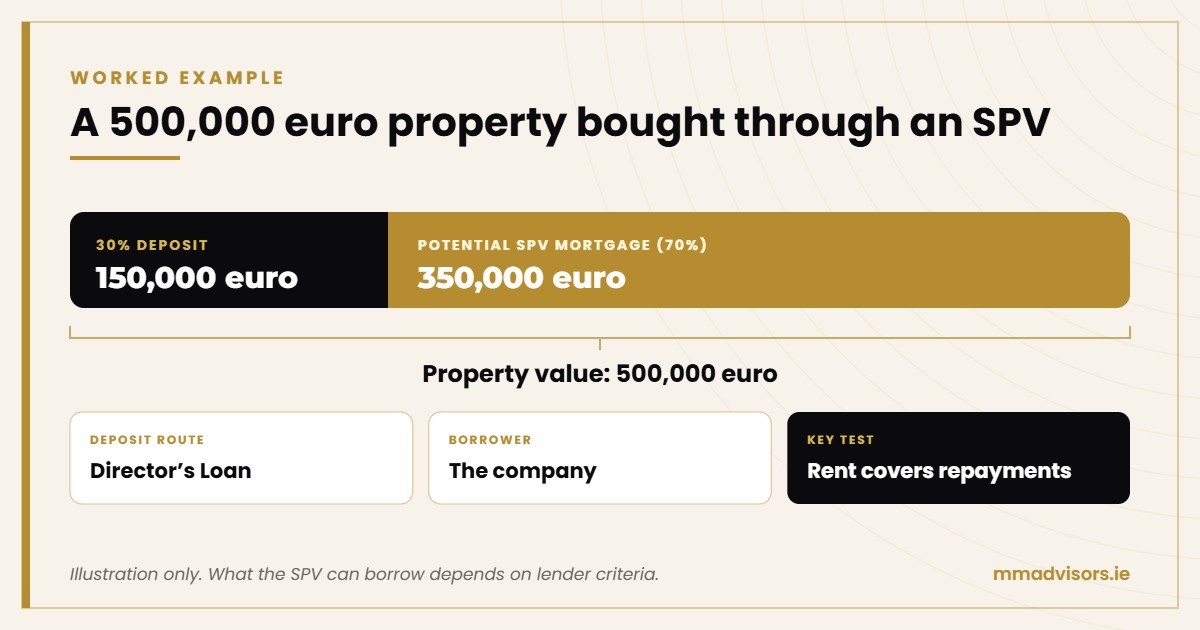
Illustration only
What the SPV can borrow depends on lender criteria, including whether the rent comfortably covers the repayments.
Who Owns What?
How Is This Different From Buying Personally?
With a personal buy to let mortgage, the lender assesses mainly your own income and commitments. With an SPV, the lender focuses more on the property and its rent, though directors are still assessed. Our comparison of buy to let mortgage rates vs SPV mortgage rates shows how pricing differs too.
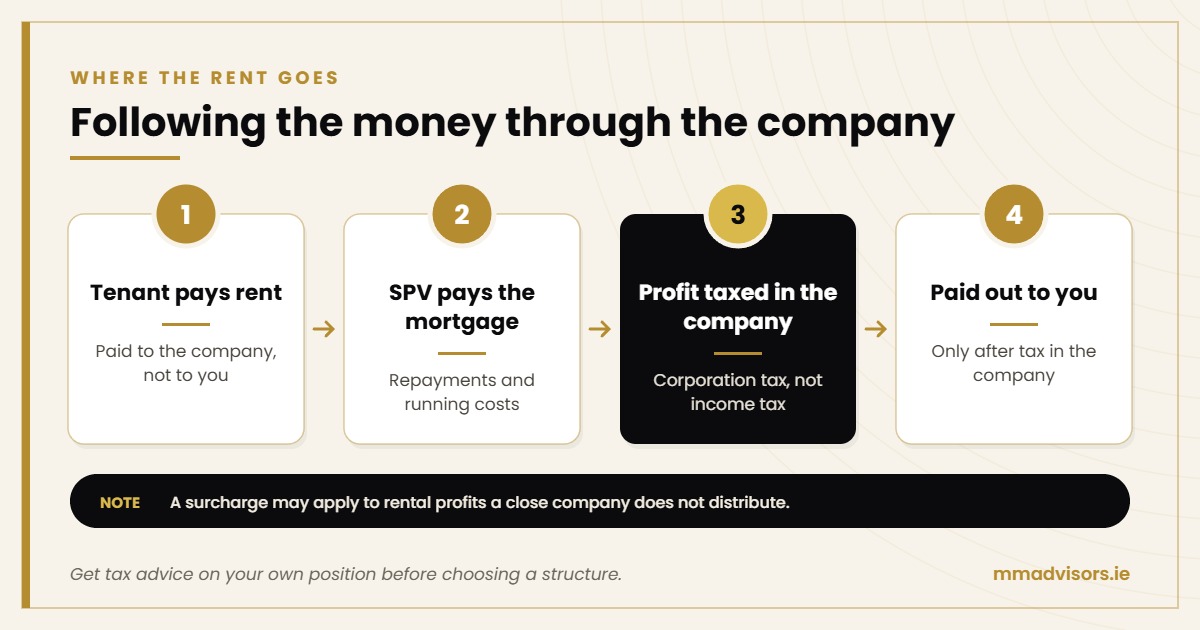
Tax treatment changes
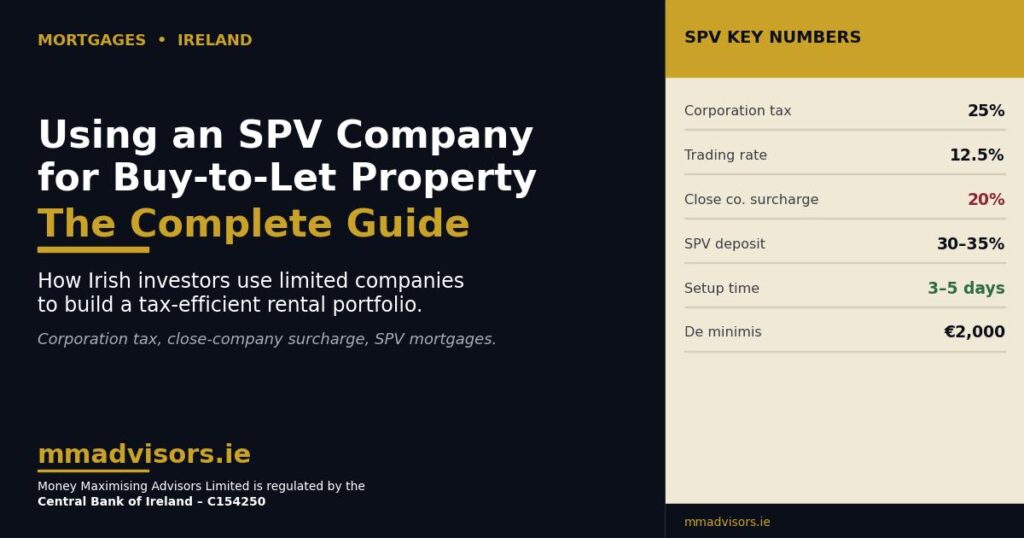
Rental profits in a company are subject to corporation tax rather than income tax, and a surcharge may apply to rental profits a close company does not distribute. Get tax advice on your own position before choosing a structure.
Is the SPV Structure Right for You?
It depends on all of the above. Our guide on whether you should buy property in Ireland through an SPV weighs up the pros and cons, and independent mortgage comparison advice can show how an SPV compares with buying in your own name.
Next Steps
To see whether an SPV structure could work for your purchase, book a free mortgage consultation with one of our advisors.
FAQs
Important information
WARNING: If you do not keep up your repayments you may lose your property.
WARNING: The cost of your monthly repayments may increase.
WARNING: You may have to pay charges if you pay off a fixed rate loan early.
This article is general information, not financial or tax advice. Lending is subject to lender criteria and approval.
Money Maximising Advisors Ltd is regulated by the Central Bank of Ireland. C154250.