
As we step into 2026, Irish families are facing unique financial challenges—from rising living costs to evolving pension regulations and increased housing expenses. Setting clear financial resolutions Ireland goals has never been more critical. Whether you’re in Dublin, Galway, or anywhere across the country, establishing solid money goals 2026 can transform your family’s financial future.
At Money Maximising Advisors Limited, we understand the complexities Irish families face when managing their finances. Our team of Experienced Tax Advisors, Certified Financial Planners (CFP), and Qualified Financial Advisors (QFA) specialises in helping families navigate everything from pensions and investments to inheritance tax planning and budgeting. This comprehensive guide outlines ten essential financial resolutions Ireland every Irish family should prioritise this year, along with practical steps to achieve them through effective Irish financial planning.
1. Create a Realistic Household Budget That Actually Works
Irish budgeting tips start with understanding where your money goes each month. Many Irish families underestimate their discretionary spending, particularly on subscriptions, dining out, and impulse purchases.
Begin by tracking every euro spent for at least one month. Categorise expenses into essentials (mortgage/rent, utilities, groceries) and non-essentials. Use budgeting apps or simple spreadsheets to monitor your cash flow. The goal isn’t to eliminate enjoyment but to make conscious spending decisions that align with your personal finance goals Ireland.
A well-structured budget should allocate funds for savings, emergency funds, and long-term investments whilst ensuring you can manage day-to-day expenses comfortably. Consider the 50/30/20 rule: 50% for needs, 30% for wants, and 20% for savings and debt repayment.
2. Build an Emergency Fund for Financial Security
Irish savings goals should always include an emergency fund. Financial experts recommend saving three to six months’ worth of living expenses in an easily accessible account.
With Ireland’s cost of living remaining high, having this safety net protects your family from unexpected expenses like car repairs, medical bills, or sudden job loss. Start small if necessary—even €50 per month adds up to €600 by year’s end. Gradually increase contributions as your budget allows.
Consider opening a dedicated savings account with competitive interest rates. Many Irish banks now offer instant-access savings accounts that provide better returns than traditional current accounts whilst keeping your emergency fund accessible when needed.
Ready to take control of your finances? Enquire now to speak with our experienced team about personalised Irish financial planning strategies.
3. Review and Optimise Your Pension Contributions
Pension planning represents one of the most tax-efficient ways to build wealth in Ireland. With the State Pension age potentially rising and Auto-Enrolment on the horizon, reviewing your pension becomes crucial in 2026.
Many Irish workers don’t maximise their employer pension contributions, essentially leaving free money on the table. If your employer matches contributions up to 5%, ensure you’re contributing at least that amount. The tax relief available on pension contributions makes this one of the smartest money goals 2026 you can set.
Financial Planning Matters Ireland when it comes to retirement. A financial planner can help determine whether you’re on track to maintain your desired lifestyle in retirement. They’ll assess your current pension pot, projection growth rates, and retirement age to identify any shortfalls.
For more insights on choosing the right advice, read our article on How to Choose the Right Irish Pensions Advisor for Your Financial Goals.
4. Tackle High-Interest Debt Strategically
Credit card debt and personal loans with high interest rates can cripple your financial progress. Making debt reduction a priority New Year financial resolution Ireland can save thousands in interest payments.
List all debts with their interest rates and minimum payments. Use either the avalanche method (paying off highest interest rate first) or snowball method (paying off smallest balance first) to systematically eliminate debt. Consider consolidating multiple debts into a single lower-interest loan if appropriate.
Avoid taking on new debt whilst paying down existing balances. If you’re struggling with debt management, our advisors can help create a sustainable repayment plan that doesn’t compromise your essential living expenses.
Book now for a consultation to discuss debt management strategies tailored to your situation.
5. Invest in Tax-Efficient Savings and Investment Vehicles
Understanding tax implications on investments is fundamental to maximising returns. Ireland offers several tax-efficient investment options, including pension contributions, certain life assurance policies, and investment funds with specific tax treatments.
The difference between gross and net returns can be substantial when taxes are factored in. For instance, deposit interest retention tax (DIRT) currently stands at 33%, whilst capital gains tax is 33%. However, certain investment vehicles offer more favourable tax treatment.
Our detailed guide on Financial Planning Advice: Do You Pay Taxes on Investments? explains how different investment types are taxed in Ireland and strategies to minimise your tax burden legally.
Working with a financial planner ensures you’re utilising the most tax-efficient investment structures for your circumstances. Whether you’re saving for children’s education, a house deposit, or early retirement, the right investment strategy makes a significant difference.
6. Protect Your Family with Adequate Life Insurance
Life insurance often gets overlooked until it’s too late. Protecting your family’s financial future should be a cornerstone of any comprehensive Irish financial planning strategy.
Consider how your family would manage financially if you or your partner were no longer around. Could they maintain mortgage payments, cover childcare costs, and maintain their standard of living? Life insurance provides peace of mind that your loved ones won’t face financial hardship during an already difficult time.
Term life insurance remains affordable for most Irish families, particularly when taken out at younger ages. Speak with a Qualified Financial Advisor (QFA) to determine the appropriate coverage level based on your family’s needs, existing debts, and future obligations.
For comprehensive insights into finding the right advisor, explore our post on Best Financial Planners in Ireland for Retirement Planning.
7. Plan for Inheritance Tax and Estate Planning
Irish families often underestimate the importance of estate planning until it becomes urgent. With inheritance tax (Capital Acquisitions Tax) thresholds relatively low in Ireland, proper planning can save your beneficiaries significant amounts.
Current CAT thresholds mean that children inheriting more than €335,000 from parents face a 33% tax bill on amounts above this limit. Strategic planning, including utilising annual gift exemptions, dwelling house relief, and proper will structuring, can substantially reduce this burden.
Estate planning isn’t just for the wealthy—it’s for anyone who wants to ensure their assets pass to chosen beneficiaries efficiently. Our article on How Much Money Can You Gift to a Family Member Tax-Free in Ireland? provides valuable insights into maximising tax-free transfers.
Contact us today to discuss inheritance tax planning strategies that protect your family’s wealth.
8. Maximise Your Savings Account Returns
With interest rates fluctuating, ensuring your savings work as hard as possible is essential. Many Irish families leave substantial sums in accounts earning minimal interest when better options exist.
Research savings accounts offered by Irish banks and credit unions. Compare interest rates, access terms, and any conditions attached. Some accounts offer competitive rates but require notice for withdrawals, whilst others provide instant access with slightly lower returns.
Consider diversifying where you hold savings. Keep your emergency fund in an instant-access account, but consider notice accounts or fixed-term deposits for money you won’t need immediately. Our guide on Best Savings Accounts in Ireland for Long-Term Financial Growth compares options available in 2026.
For savings held for longer-term goals (5+ years), investment options might provide better growth potential than traditional savings accounts, though they come with additional risk considerations.
9. Seek Professional Financial Advice
One of the most valuable financial resolutions Ireland you can make is committing to professional guidance. Many people wonder, “Is paying 1% to a financial advisor worth it?” The answer depends on your financial complexity and the value added through expert advice.
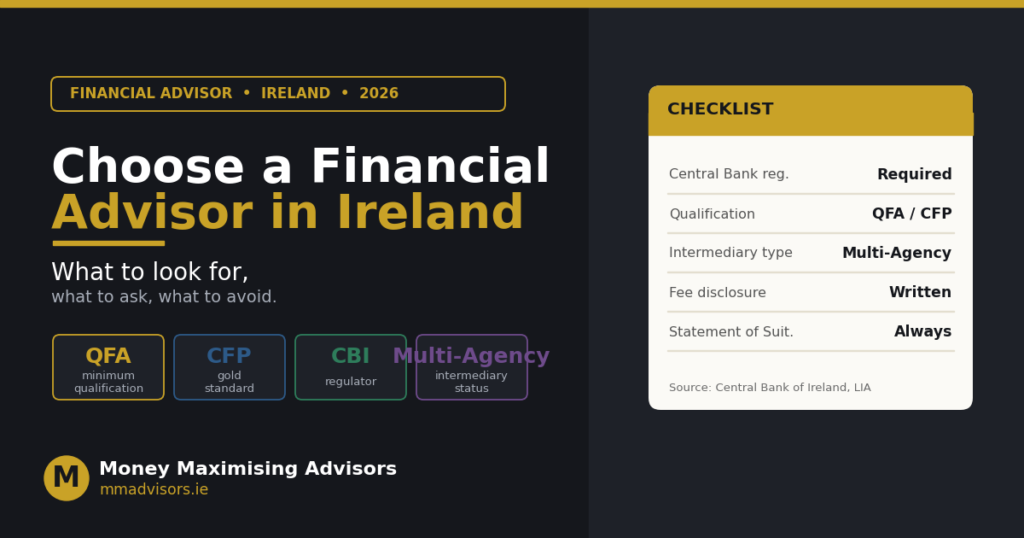
A financial planner provides objective analysis of your complete financial picture, identifies opportunities you might miss, and helps you avoid costly mistakes. The difference between a QFA and a CFP lies in qualifications and scope—CFPs hold internationally recognised certification with comprehensive training across all financial planning areas.
FPSB Ireland (Financial Planning Standards Board) oversees CFP certification in Ireland, ensuring advisors meet rigorous education, experience, and ethical standards. When selecting an advisor, verify their qualifications and ensure they’re regulated by the Central Bank of Ireland.
Discover why professional advice matters in our article: Financial Planner Ireland: 10 Reasons Why You Need a Financial Advisor.
Book an appointment with our team to discuss how professional financial planning can benefit your family.
10. Avoid Common Financial Mistakes
Learning from others’ mistakes is cheaper than making them yourself. Irish individuals frequently fall into predictable financial traps that could be avoided with proper planning and awareness.
Common pitfalls include:
- Not reviewing insurance policies regularly, leading to inadequate coverage or overpayment
- Ignoring pension contributions until it’s too late to build adequate retirement funds
- Making emotional investment decisions rather than following a strategic plan
- Failing to update wills and estate plans after major life changes
- Underestimating the true cost of borrowing when taking loans
Our comprehensive article on Common Financial Pitfalls Faced by Individuals in Ireland explores these issues in detail and provides practical solutions.
Additionally, if you’re approaching retirement, our guide on Smart Investing for Seniors in Ireland: A Practical Guide to Financial Peace of Mind offers age-appropriate strategies for protecting and growing your wealth.
Making Your Financial Resolutions Stick
Setting Irish financial planning resolutions is the easy part—maintaining them throughout 2026 and beyond requires commitment and accountability. Here are strategies to ensure your money goals 2026 become lasting habits:
Schedule quarterly financial reviews to assess progress toward your goals. Mark these in your calendar as non-negotiable appointments with yourself or your financial planner. These check-ins allow you to adjust strategies as circumstances change.
Automate wherever possible. Set up automatic transfers to savings accounts, pension contributions, and investment accounts. When saving happens automatically, you’re less likely to spend that money elsewhere.
Celebrate milestones. When you reach a savings goal, pay off a debt, or achieve another financial milestone, acknowledge the accomplishment. This positive reinforcement makes financial discipline more rewarding.
Find an accountability partner. Whether it’s your spouse, a trusted friend, or a professional advisor, having someone to discuss your financial progress with increases the likelihood of success.
Conclusion
The financial decisions you make in 2026 will shape your family’s future for years to come. These ten financial resolutions Ireland provide a comprehensive framework for building financial security, whether you’re just starting out, raising a family, or planning for retirement.
At Money Maximising Advisors Limited, we’re committed to helping Irish families achieve their personal finance goals Ireland through expert guidance and personalised strategies. Our team of Tax Advisors, CFPs, and QFAs brings decades of combined experience to every client relationship.
Don’t navigate the complexities of Irish financial planning alone. Professional advice can identify opportunities, prevent costly mistakes, and provide the peace of mind that comes from knowing your financial future is on solid ground. From pension planning and investment strategies to inheritance tax planning and budgeting, we’re here to help you maximise your money and achieve your goals.
Take the first step toward financial confidence today. Visit Money Maximising Advisors Limited to learn more about our services and how we can support your family’s financial journey throughout 2026 and beyond
Frequently Asked Questions
1. How do I contact the financial regulator in Ireland?
The Central Bank of Ireland serves as the financial regulator. You can contact them through their website at centralbank.ie, by phone at 1890 777 777, or by visiting their offices on North Wall Quay, Dublin 1. They oversee all regulated financial firms in Ireland.
2. Who is the financial regulator in Ireland?
The Central Bank of Ireland is the country’s financial regulator, responsible for supervising banks, insurance companies, investment firms, and financial advisors. They ensure firms comply with regulations and protect consumers’ interests.
3. What is the difference between a QFA and a CFP?
A QFA (Qualified Financial Advisor) holds Irish qualifications to provide financial advice. A CFP (Certified Financial Planner) possesses international certification requiring more comprehensive training, experience, and ongoing education. CFPs typically handle more complex financial planning scenarios.
4. Is paying 1% to a financial advisor worth it?
For most people, yes. Professional advisors help optimise investments, minimise taxes, avoid costly mistakes, and provide peace of mind. The value often exceeds the fee through better returns, tax savings, and preventing financial errors that could cost far more than 1%.
5. What are the financial regulations?
Financial regulations are rules governing how financial institutions and advisors operate in Ireland. They cover areas like consumer protection, transparency, capital requirements, and conduct standards. These regulations ensure the financial system’s stability and protect consumers.
6. Is CFP recognised in Ireland?
Yes, CFP certification is recognised in Ireland through FPSB Ireland. It’s an internationally respected qualification demonstrating comprehensive financial planning expertise. Many leading financial advisors in Ireland hold CFP designation alongside local qualifications like QFA.
(Disclaimer: This article provides general information and should not be considered personalised financial or tax advice. Irish tax laws and financial regulations change periodically, and individual circumstances vary significantly. The information presented reflects conditions as of early 2026 but may be subject to change. Always consult with qualified financial advisors or tax professionals before making significant financial decisions. Money Maximising Advisors Limited and its representatives recommend seeking personalised advice tailored to your specific situation, goals, and risk tolerance.)