
For many Irish landlords, deciding whether to purchase property personally or through a Special Purpose Vehicle (SPV) is a crucial financial decision. Mortgage rates, tax treatment, future planning, and lender eligibility can vary significantly depending on which route you choose. In this full guide, Money Maximising Advisors explains the differences between buy-to-let mortgage rates and SPV mortgage rates in Ireland, highlights practical benefits, and outlines how to set up an SPV if you’re planning long-term property investment.
What Is an SPV?
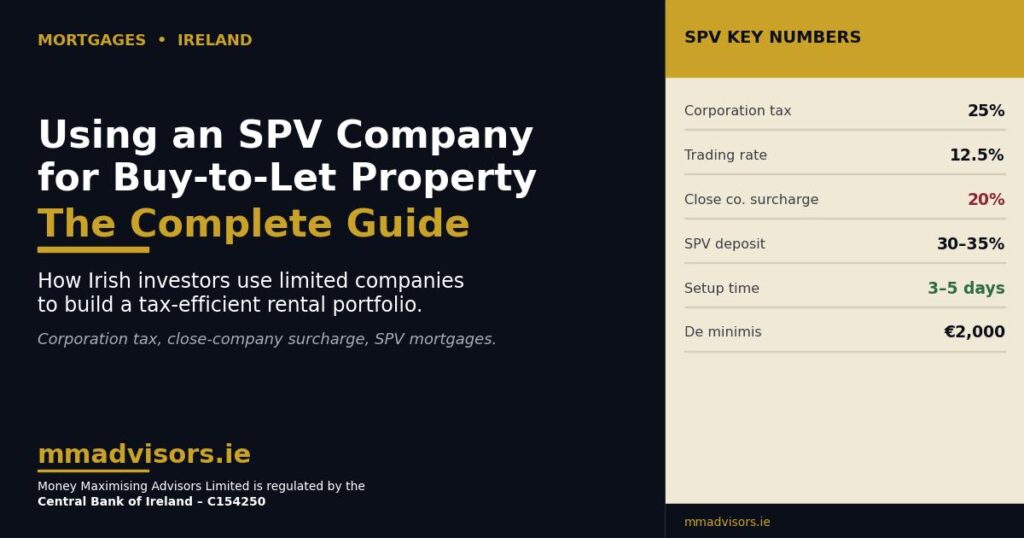
An SPV (Special Purpose Vehicle) is a limited company created for the sole purpose of holding property assets. Many investors form an Irish SPV property company because it separates personal finances from rental investments, provides limited liability protection, and creates clearer pathways for tax planning and estate structuring.
Common reasons for choosing a buy to let SPV Ireland include:
- Limited liability protection for landlords
- Professional structure for large property portfolios
- Easier succession planning (transferring shares instead of property)
- Flexible ways to manage and distribute profits
- More tax-efficient reinvestment of rental income
SPVs are especially popular among investors building long-term and scalable rental portfolios.
Mortgage Rates: SPV Mortgages vs Personal Buy-to-Let Mortgages
One of the biggest questions landlords ask is whether SPV mortgage rates differ from standard buy-to-let rates. In many cases, mortgage rates for SPVs can be slightly higher, or come with different underwriting requirements, because lenders view company structures as specialist products.
Key differences:
1. Rate Competitiveness
- Standard buy-to-let mortgages often have wider market options and can offer slightly lower interest rates.
- SPV mortgage rates in Ireland may be higher due to more complex underwriting.
- Specialist lenders, however, increasingly offer competitive SPV rates, narrowing the gap.
2. Lender Availability
- Many mainstream lenders do not offer limited company mortgages.
- SPVs attract mostly specialist lenders or the commercial lending divisions of major banks.
3. Product Choice
- Personal BTL: more product choice, introductory rates, and fixed-rate options.
- SPV BTL: tailored products designed for landlords building or scaling a portfolio.
4. Evaluation Process
- Personal BTL mortgages assess your personal income and credit profile.
- SPV applications assess both company performance (or projections) and director guarantees.
Though rates may differ, many landlords choose SPVs for the structural and tax benefits that outweigh the slightly higher mortgage rate.
Eligibility Requirements for SPV Mortgages in Ireland
When applying for a limited company BTL mortgage Ireland, lenders assess additional factors compared to a personal mortgage.
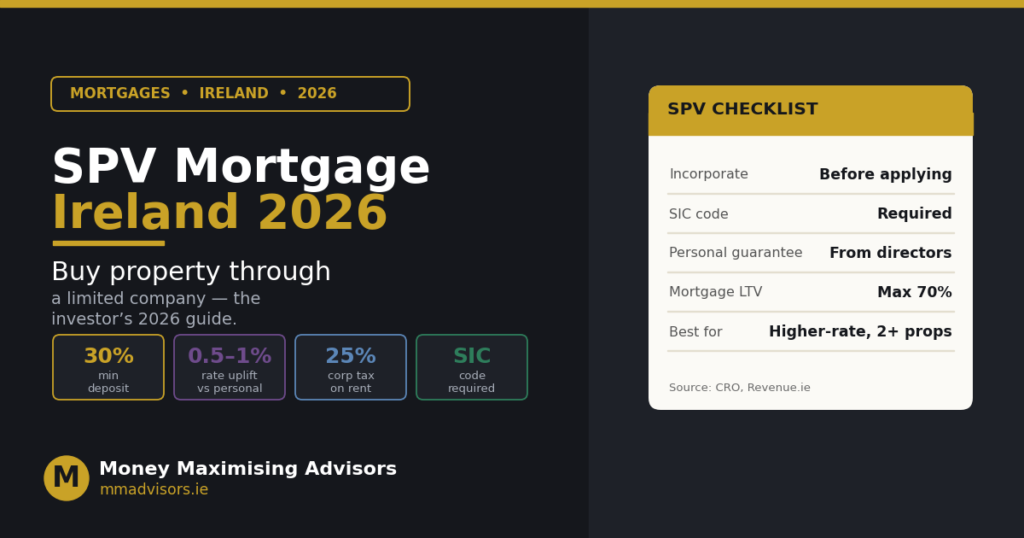
Common BTL SPV eligibility Ireland requirements include:
- The company must be a newly formed or existing Irish limited company.
- Company must be structured as an SPV solely for holding rental property.
- Directors may need to provide personal guarantees.
- Lenders may request Irish residency for at least one director (varies by lender).
- Minimum deposit requirements can be higher than traditional buy-to-let.
- Business plans, rental income forecasts, and tenancy agreements may be required.
Because the company is a separate legal entity, lenders conduct both corporate and personal checks.
Tax Treatment: Why Irish Landlords Choose SPVs
Tax is a major deciding factor when choosing between personal ownership and SPV ownership. Many landlords use a SPV for rental property Ireland to optimise their long-term tax exposure.
Tax advantages for SPV landlords:
- Rental profits are taxed under corporation tax (which can be more favourable depending on circumstances).
- Easier reinvestment of profits into new property purchases.
- Ability to structure income in the form of dividends, director salaries, or shareholder distributions.
- Cleaner separation of personal earnings from investment profits.
However, SPVs also come with tax considerations:
- Extracting funds from the company (dividends or salary) may introduce additional tax.
- Selling a personally owned property into an SPV triggers stamp duty and Capital Gains Tax.
- Annual corporate compliance is required.
This is why many investors focusing on long-term portfolio growth find Tax benefits SPV rentals Ireland appealing, especially when reinvesting profits rather than withdrawing them personally.
Costs and Administration of SPVs
Although SPVs offer attractive tax planning routes, they also come with additional costs:
- Company formation fees
- Annual CRO filings
- Accountant fees for statutory accounts and corporation tax returns
- Possible higher legal fees associated with SPV mortgages
- Additional mortgage underwriting fees
- Ongoing administrative duties (board minutes, shareholder records)
For landlords with one or two properties, these costs may outweigh benefits. However, for long-term investors or those building a multi-property portfolio, the corporate structure often pays off.
When an SPV Makes the Most Sense
Choosing an SPV structure is especially useful when you are:
- Planning to build a long-term portfolio
- Keeping profits within the company for reinvestment
- Looking for limited liability protection
- Wanting to transfer shares easily to family members
- Buying property jointly with business partners
- Seeking a professional and scalable investment structure
- Non-resident investors requiring an Irish entity for property ownership
For smaller, casual landlords, traditional buy-to-let mortgages may be easier and cheaper.
How to Set Up an SPV for Buy-to-Let Property in Ireland
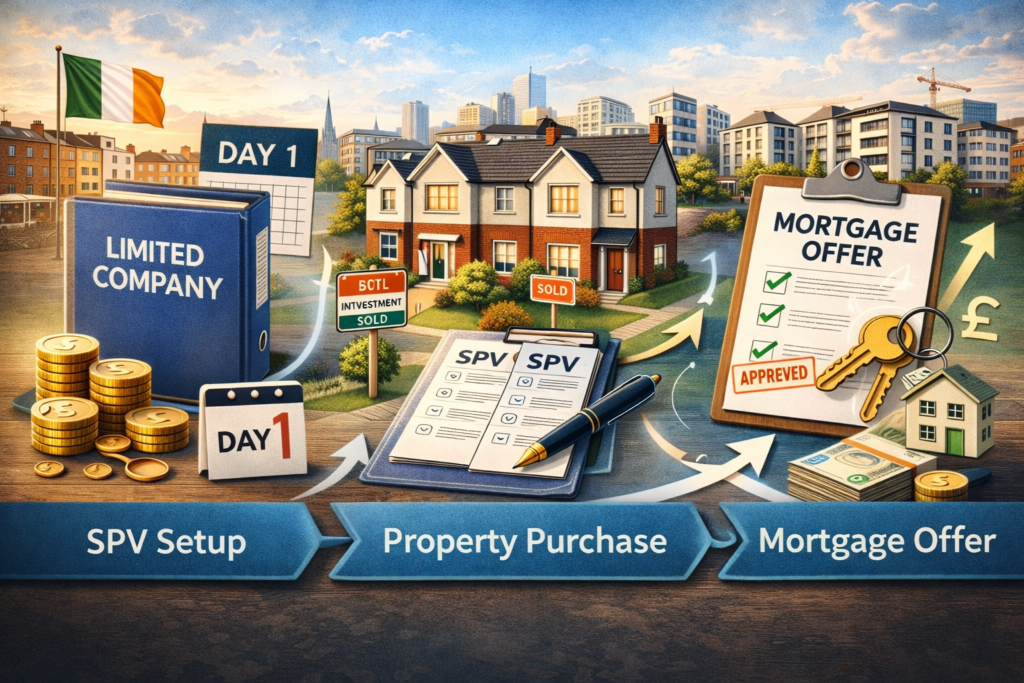
If you’re ready to set up SPV buy to let Ireland, follow these steps:
1. Choose a Company Name
Make sure your company name buy to let mortgage-friendly and acceptable to lenders.
2. Register the Company
Use the Companies Registration Office (CRO) to incorporate a private limited company.
3. Assign Directors & Shareholders
Appoint directors (one may need to be Irish-resident depending on future lending needs).
4. Set Up a Business Bank Account
A dedicated account is required for rent collection and expenses.
5. Register for Corporation Tax
Your accountant will handle tax registration and ongoing compliance.
6. Apply for SPV Mortgage Products
Work with a specialist broker like Money Maximising Advisors to find the best SPV mortgage rates Ireland.
7. Prepare Financial Statements
Lenders may request projections, tenancy agreements, or rental yield assessments.
Tips for Getting the Best SPV Mortgage in Ireland
- Work with specialist brokers who understand buy to let SPV Ireland lending criteria.
- Maintain strong personal credit scores — director guarantees are almost always required.
- Prepare a business plan demonstrating sustainable rental income.
- Compare overall costs (rates, fees, accountancy charges) instead of focusing only on interest rates.
- If scaling a portfolio, keep company records and financials clean and up to date.
Money Maximising Advisors can help assess what structure is financially best for you based on your planned investment size, tax band, and long-term goals.
FAQ’S
1. Are SPV mortgage rates always higher?
Not always. While some lenders charge more for corporate lending, specialist lenders offer competitive rates that sometimes match personal BTL rates.
2. Do SPVs save tax?
They can, especially when profits are reinvested rather than withdrawn. Corporate tax treatment may be more favourable for landlords planning long-term growth.
3. Do I need an Irish resident director?
Some lenders require this, while others do not. It depends on the lender’s risk policy.
4. Can I transfer my current rental property into an SPV?
Yes, but doing so triggers stamp duty and Capital Gains Tax, so professional tax advice is essential before proceeding.
5. Is an SPV suitable for first-time landlords?
It can be, but the structure suits those intending to build multiple properties rather than single-property landlords.
6. What is the main advantage of an SPV?
Clear separation of personal and business finances, potential tax efficiencies, and a more professional structure for long-term investment.
Final Thoughts
Choosing between a standard buy-to-let mortgage and an SPV mortgage is not just about comparing rates — it’s about your long-term strategy. SPVs offer structural, legal, and tax benefits that appeal to serious property investors and portfolio landlords, while traditional BTL mortgages are simpler and cost-effective for smaller investors.
Money Maximising Advisors can help you compare SPV mortgage rates Ireland, understand lending criteria, model tax savings, and decide whether an Irish SPV property company is the right path for your future investments.