
| Key Takeaways: ✅Stamp duty on Irish residential property is charged at 1 per cent up to €1 million, 2 per cent between €1 million and €1.5 million, and 6 per cent above €1.5 million. ✅The buyer pays, and the return must be filed and paid within 44 days of signing. ✅There is no general exemption for first-time buyers, although Help to Buy and the First Home Scheme can ease overall costs. ✅New builds are calculated on the price excluding VAT, which lowers the bill slightly. ✅Budget properly for stamp duty from day one, alongside your deposit, legal fees and survey costs. |
If you are buying a home in Ireland in 2026, stamp duty is one cost you simply cannot ignore. At Money Maximising Advisors, we help buyers across Ireland plan their purchases every week, and we still meet people who only discover the true size of their stamp duty bill when their solicitor mentions it near closing day. With house prices climbing and supply tight, every euro of your budget matters. So let us walk you through it clearly and simply, so there are no surprises when you get to the finish line.
What is stamp duty and who pays it?
Stamp duty is a once-off tax charged by Revenue when ownership of a property transfers to you. The buyer pays it, not the seller. Your solicitor normally calculates the amount, files the return through Revenue’s online system and pays it on your behalf as part of the conveyancing process. Your job is simply to make sure the money is there when it is needed.
It applies to nearly every residential purchase in the State, whether you are buying a house, an apartment, a new build or a second-hand home. If you are still at the planning stage, our mortgage comparison advice service can help you build stamp duty into your overall buying budget from the very start.
The stamp duty rates for 2026
Residential stamp duty in Ireland works in bands, a little like income tax. You only pay the higher rate on the portion of the price that falls into the higher band. The current rates are:
- 1 per cent on the first €1,000,000 of the purchase price
- 2 per cent on the portion between €1,000,000 and €1,500,000
- 6 per cent on any amount above €1,500,000
Worked example one: a typical family home
You buy a house in Galway for €400,000. The entire price sits inside the first band, so you pay 1 per cent of the full amount. Your stamp duty bill is €4,000.
Worked example two: a higher value property
You buy a home for €1,200,000. You pay 1 per cent on the first €1,000,000, which is €10,000, and 2 per cent on the remaining €200,000, which is €4,000. Your total bill is €14,000. For most Irish buyers though, the sums are simpler, because the vast majority of homes fall entirely within the 1 per cent band.
Do first-time buyers get an exemption?
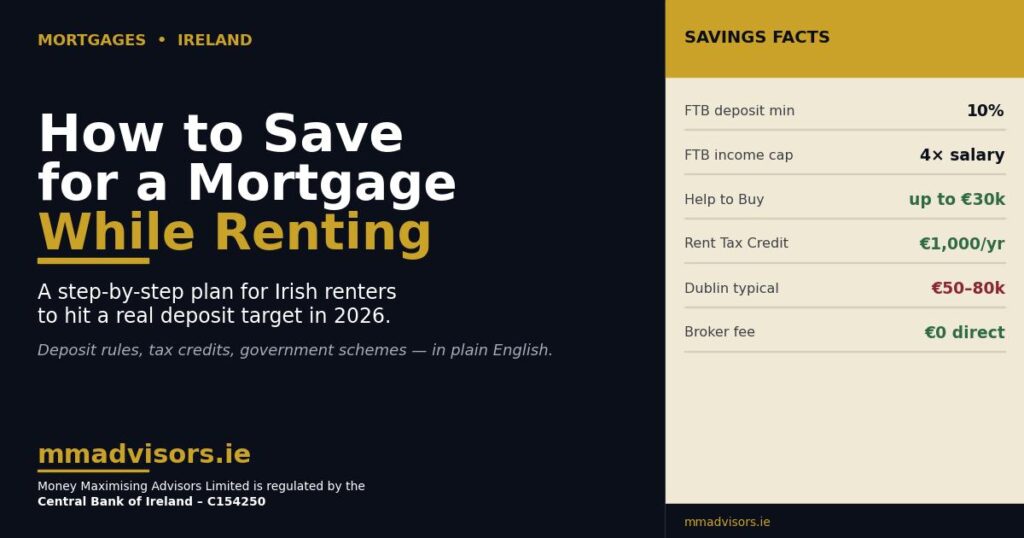
This is one of the most common misconceptions we hear, so let us clear it up. There is no general stamp duty exemption for first-time buyers in Ireland. First-time buyers pay the same rates as everyone else. The good news is that other supports exist. The Help to Buy scheme offers a tax rebate on new builds, and the First Home Scheme can bridge part of the gap between your mortgage and the purchase price. Details of both are available on Citizens Information. It is well worth checking what you qualify for before you make an offer, because the savings elsewhere can more than cover your stamp duty.
Buying a new build? The maths is slightly different
For newly built homes, stamp duty is calculated on the price excluding VAT, which is charged at 13.5 per cent. In practice, this means the figure used for your stamp duty is lower than the price you actually pay. On a new build priced at €454,000 including VAT, the stamp duty applies to roughly €400,000, so the bill is about €4,000 rather than €4,540. A small difference, but a welcome one when every euro is spoken for.
When and how do you pay?
Stamp duty must be filed and paid within 44 days of the deed being signed. Miss that deadline and Revenue applies interest and penalties, which is an expensive way to learn about paperwork. In reality, your solicitor handles the filing through Revenue’s eStamping system, but you should have the funds ready alongside your deposit, legal fees and survey costs. Treat it as part of your total buying budget from day one, not an afterthought.
Other rules worth knowing about
Investors and bulk purchases
Investors buying 10 or more residential properties within a rolling period pay a much higher bulk rate, introduced to discourage large-scale institutional buying of family homes. If you are building a property portfolio, take advice before you approach that threshold.
Non-residential property
Commercial property, offices and land carry a flat rate of 7.5 per cent, with no bands. Mixed-use properties are apportioned between the residential and commercial elements.
Gifts and family transfers
Stamp duty also arises on gifts and transfers of property between family members, and it interacts with capital acquisitions tax. If a family transfer is on your horizon, our inheritance tax advice team can help you structure it properly before anything is signed.
Frequently Asked Questions
How much is stamp duty on a €350,000 house in Ireland?
At the 1 per cent rate, stamp duty on a €350,000 home is €3,500. The full price falls within the first band, so the calculation is simply 1 per cent of the purchase price.
Do first-time buyers pay stamp duty in Ireland in 2026?
Yes. First-time buyers pay the same rates as all other residential buyers. There is no first-time buyer exemption, although supports like Help to Buy and the First Home Scheme can reduce your overall buying costs.
Who pays stamp duty, the buyer or the seller?
The buyer pays stamp duty in Ireland. Your solicitor files the return and pays Revenue on your behalf as part of the conveyancing process, using funds you provide.
What happens if stamp duty is paid late?
Revenue charges interest and penalties on late payments. The return must be filed and paid within 44 days of the deed being executed, so make sure your funds are ready well before closing.
Is stamp duty cheaper on a new build?
Slightly, yes. Stamp duty on new builds is calculated on the price excluding VAT at 13.5 per cent, so the taxable figure is lower than the full price you pay the builder.
Final Thoughts
Stamp duty is not the biggest cost of buying a home in Ireland, but it is one of the easiest to overlook, and in this market there is no room for surprise bills. Remember the essentials. Most buyers pay 1 per cent, the deadline is 44 days, first-time buyers get no special exemption, and new builds are calculated on the VAT-exclusive price. If you are planning a purchase this year, we would love to help you get the full picture right. Our team compares mortgage rates across multiple lenders, builds every cost into your budget and guides you from approval to keys. As an award-winning team of Certified Financial Planners, Qualified Financial Advisors and tax advisors regulated by the Central Bank of Ireland, we have spent over 30 years helping people buy well. The first consultation is free, so reach out below and let us make your move a smooth one.
Money Maximising Advisors Limited | Unit 3, Office 6, Liosban Business Park, Tuam Rd, Galway | +353 91 393 125 | office@mmadvisors.ie
Money Maximising Advisors Limited is regulated by the Central Bank of Ireland (C154250). This article is for information purposes only and does not constitute financial or tax advice.