

Self-Build Mortgages Build Your Own Home in Ireland
Finance your self-build with a mortgage designed around your project
Planning to build your own home? A self-build mortgage can help you fund your project through staged payments as construction progresses, giving you a clearer way to plan your site, build costs and mortgage from the beginning.
90%Maximum LTV*
10%Minimum contribution*
4×Income limit for first-time buyers
4 to 6Typical stage-payment range
BENEFITS SUMMARY
Benefits of a Self-Build Mortgage
Build a home designed around you
Create a property that reflects your needs, lifestyle and long-term plans.
Create a property that reflects your needs, lifestyle and long-term plans.
Access funding in stages
Mortgage funds can be released as your build progresses, subject to lender requirements.
Mortgage funds can be released as your build progresses, subject to lender requirements.
Use your site as part of your contribution
An eligible site you already own may potentially form part of your overall contribution.
An eligible site you already own may potentially form part of your overall contribution.
Plan your borrowing with greater clarity
Understand your income, contribution, project costs and potential borrowing before you commit.
Understand your income, contribution, project costs and potential borrowing before you commit.
Explore available mortgage options
Depending on the lender, fixed and variable rate options may be available.
Depending on the lender, fixed and variable rate options may be available.
Make use of eligible first-time buyer supports
Help to Buy and the First Home Scheme may be available to eligible self-build applicants, subject to their individual criteria.
Help to Buy and the First Home Scheme may be available to eligible self-build applicants, subject to their individual criteria.
What Is a Self-Build Mortgage?
Mortgage Finance for Building Your Own Home
A self-build mortgage is mortgage finance for someone building their own home.
Unlike a standard mortgage for an existing property, the house may not yet exist when you apply. This means the lender may need to assess both your financial circumstances and the proposed construction project.
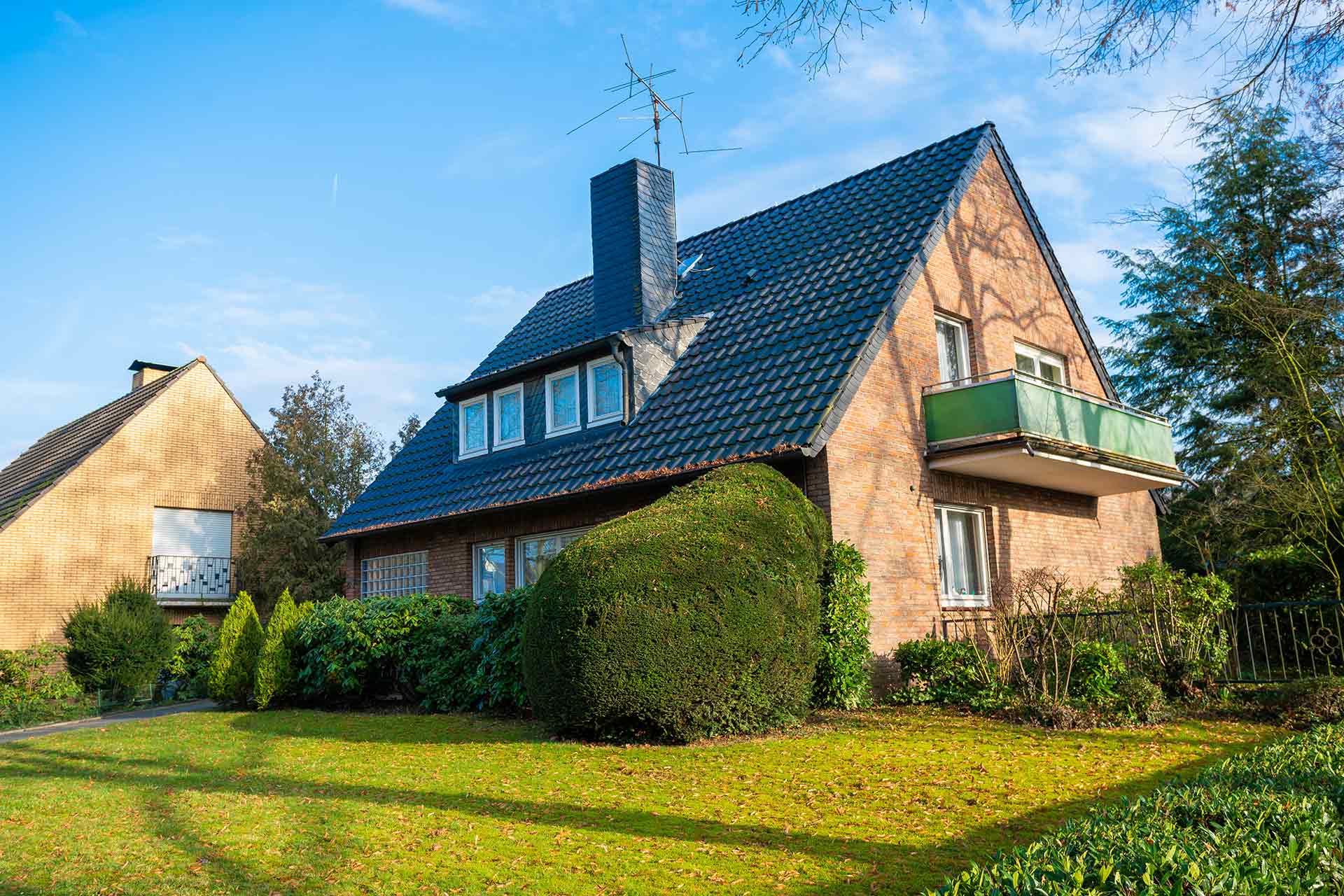

Information May Be Required About
Your income and financial commitments
Your available savings or contribution
The site
Planning permission
Building plans
Construction costs
The professionals involved in the project
The expected finished property
ANOTHER IMPORTANT DIFFERENCE IS HOW MORTGAGE FUNDS ARE BEING RELEASED
Rather than receiving the full mortgage amount at the beginning, self-build mortgage funds are commonly released in stages as construction progresses. A lender may require confirmation or certification that work has reached the relevant stage before releasing additional funds.
The exact process, number of stages, and documentation required can differ between lenders.
How it Works
How Does a Self-Build Mortgage Work in Ireland?
While requirements vary between lenders, the process will normally involve several key stages.
1
Establish your budget
Review income, existing commitments, savings, site position and the overall cost of the proposed build.
2
Check your site position
Confirm whether you already own the site or need to finance its purchase, and review title, access and planning considerations.
3
Obtain planning and professional information
Work with your architect, engineer or building professional to develop plans, costings and the required reports.
4
Seek an initial borrowing assessment
Use the project information and your financial details to understand the level of borrowing that may be supportable.
5
Prepare the full application
Provide the lender with the requested financial, planning, valuation and construction documentation.
6
Receive formal mortgage approval
If approved, review the mortgage offer and conditions carefully with your solicitor before proceeding.
7
Put insurance and legal arrangements in place
Arrange mortgage protection, building/home insurance and the legal work needed for the site and mortgage.
8
Start the build and request stage payments
As each milestone is completed, the assigned professional certifies the stage and the solicitor requests the relevant drawdown.
9
Complete and finalise the mortgage
Once the property is complete, final valuation and compliance documents are submitted and the final stage is released subject to lender conditions.
Who Is Eligible for a Self-Build Mortgage?
A self-build mortgage can help eligible buyers finance the construction of a new home in Ireland, whether you’re purchasing a site, already own land or are ready to begin construction.
First-Time Buyers
If you’re buying your first home and planning to build it yourself, you may be able to apply for a self-build mortgage, subject to the lender’s affordability and lending criteria.
Second & Subsequent Buyers
Already own a home but planning to build a new principal residence? Self-build mortgage options may also be available, with the lender assessing your income, existing commitments, contribution and overall project.
If You Already Own a Site
Owning your site can form an important part of your self-build funding plan. Depending on the lender and the accepted value of the site, it may be considered towards your overall contribution.
If You’re Still Looking for a Site
You may also be able to arrange finance where purchasing the site forms part of your overall self-build project. The lender will assess the site, planning position, project costs and proposed completed property.
Self-Employed Applicants
Self-employed applicants can also apply for self-build finance. Additional financial information may be required, such as business accounts, tax documentation and bank statements, to assess your income and affordability.
How Much Deposit Do You Need?
The amount you need to contribute towards a self-build depends on your circumstances, the value of your site, the total project cost and the lender’s assessment of the completed property.
First-time buyers: Some lenders may offer up to 90% LTV for an eligible self-build. This means a contribution of around 10% may be possible, subject to the lender’s affordability assessment, valuation and lending criteria.
Second-time buyers: The contribution required can vary depending on the lender and your individual circumstances. Different lending criteria may apply.
Already own your site? Depending on the lender, the value of a site you already own may be considered as equity towards the project.
Don’t forget your contingency fund
Your mortgage contribution is only one part of the money you need to plan for. A self-build can involve unexpected costs, changes to specifications, delays and construction cost increases.
Bank of Ireland advises allowing an additional 10% of the total project cost as a contingency for unforeseen expenses. This is lender guidance and is not a universal requirement.
How Much Can You Borrow?
The amount you can borrow depends on more than just your income.
Lenders will consider your income, existing financial commitments, deposit or contribution, the cost of your self-build project and the expected value of the completed property.
- First-time buyers: up to 4 times gross annual income
- Second and subsequent buyers: up to 3.5 times gross annual income
For example, if a first-time buyer has a gross annual household income of €80,000, the applicable LTI limit could allow borrowing of up to €320,000, subject to the lender’s assessment. For a second or subsequent buyer with the same gross annual income, the applicable limit could be €280,000.
Gross annual household income€80,000
First-time buyer (4×)Up to €320,000
Second or subsequent buyer (3.5×)Up to €280,000
Your actual mortgage amount may be lower depending on your financial commitments, affordability and the lender’s criteria.
THESE ARE REGULATORY LIMITS, NOT APPROVED BORROWING AMOUNTS
Your lender will still carry out its own affordability and credit assessment and may offer less depending on your individual circumstances.
What Documents Will You Need?
A self-build mortgage usually requires more project-specific information than a standard mortgage application. Depending on the lender and stage of your project, you may need:
Proof of income and financial information
Evidence of your deposit or available contribution
Site details and site valuation
Planning permission
Site map and location information
Architectural drawings and building plans
Detailed construction costings
Architect, engineer or surveyor reports
Professional indemnity insurance details
Initial valuation
Details of your solicitor
Mortgage protection and building insurance
Stage certification and progress reports during construction
Final valuation and compliance documentation at completion
How Do Self-Build Mortgage Stage Payments Work?
A self-build mortgage is different from a standard mortgage because the funds are generally released in stages as your home is built.
Rather than receiving the full mortgage amount at the beginning, you draw down funds as agreed construction milestones are completed.
Typical Self-Build Stages
Site & Initial WorksFunding may cover the site purchase or initial site works, depending on your circumstances and lender.
FoundationsFunds are released once the required foundation stage has been completed and certified.
Floor / Wall Plate LevelThe next stage is released once the property reaches the agreed structural milestone.
Roof LevelFunding progresses once the property reaches the required roof or shell stage.
Internal WorksFurther funds can be released as internal construction and installation work progresses.
CompletionThe final stage is released once the property is substantially complete and the required final documentation and valuation have been provided.
PLEASE NOTE The number and timing of stages can vary between lenders and individual projects.
WHO OFFERS SELF-BUILD MORTGAGES IN IRELAND?
A number of Irish mortgage lenders offer self-build mortgage options, including:
AIB
BANK OF IRELAND
EBS
HAVEN
PTSB
LENDER CRITERIA VARY
However, the amount you can borrow, how your site is treated as part of your contribution, the number of stage payments and the documentation required can vary between lenders.
Self-Build Mortgage at a Glance
Up to 90% LTV
Eligible residential mortgage applicants may generally borrow up to 90% of the property’s value, subject to lender assessment and criteria.
Up to 4× Income
First-time buyers are generally subject to a maximum borrowing limit of 4 times gross annual income.
Up to 3.5× Income
Second and subsequent buyers are generally subject to a maximum borrowing limit of 3.5 times gross annual income.
4 to 6 Stage Payments
Self-build mortgages are generally released in stages as construction progresses. The number of stages varies between lenders and projects.
What Costs Should You Budget For?
The cost of building your home goes beyond the construction work itself. Your overall project budget may need to account for:
- Site purchase
- Construction and labour
- Building materials
- Architect and engineering fees
- Planning-related costs
- Professional reports and certifications
- Valuation fees
- Legal and solicitor fees
- Local authority charges or contributions
- Utility connections
- Mortgage protection
- Building or home insurance
- BER certification
- Finishing, fixtures and fittings
- Moving and storage costs
- Contingency for unexpected expenses
Bank of Ireland specifically recommends allowing an additional 10% of the total project cost as a contingency for unforeseen expenses.
WHY IS CONTINGENCY IMPORTANT?
Construction costs can change. You may encounter unexpected site conditions, specification changes, delays or additional work.
Having a contingency planned from the beginning can reduce the risk of a funding shortfall later in the build.
Government Supports for Self-Builders
Depending on your circumstances, you may be eligible for government schemes that can help with the cost of building your own home.
Help to Buy
Eligible first-time buyers building a new home may be able to use the Help to Buy incentive towards their self-build. Eligibility conditions apply, including requirements relating to your first-time buyer status, the property, tax compliance and the value of the completed home.
First Home Scheme
The First Home Scheme is a shared-equity scheme that can help eligible applicants purchase or build a new home. For self-build applicants, specific requirements apply around the site, property, planning and maximum property value.
Local Authority Home Loan
The Local Authority Home Loan is a government-backed mortgage option available to qualifying applicants, including certain self-builders. Specific eligibility and lending criteria apply, including requirements around income, deposit, property value and the applicant's financial circumstances.
Government scheme rules and eligibility requirements can change. Always check the current criteria before including a scheme in your funding plans.
Practical Self-Build Scenarios
EXAMPLE 1Building a First Home on a Site You Already Own
EXAMPLE 1
Building a First Home on a Site You Already Own
Meet Aoife. She has secured a site and wants to build her first home, but she is unsure how the site may affect her mortgage application.
Before finalising the build, Aoife wants to understand her potential borrowing position, what contribution she may need to make herself and what information a lender may require about the site, planning permission and construction costs.
She speaks with a mortgage adviser early so she can review the mortgage alongside the overall project budget.
Depending on the lender and circumstances, the value of an owned site may be considered part of the applicant’s contribution or equity.
Why this matters: Understanding the mortgage position before construction begins can help Aoife plan the size, specification and budget of the build more realistically.
EXAMPLE 2Planning a Family Home Around Your Affordability
EXAMPLE 2
Planning a Family Home Around Your Affordability
Meet Sarah and Conor. They want to build a family home but have not yet finalised the size or specification of the property.
Rather than designing the finished house first and looking at finance afterwards, they want to understand what level of mortgage borrowing may be realistic based on their income, existing commitments, savings, and expected project costs.
They review their financial position with a mortgage adviser before committing to the final plans.
This gives them a clearer framework for discussing the project with their architect and other professionals.
Why this matters: Reviewing affordability early can help ensure the design and construction budget are considered alongside the mortgage from the beginning.
EXAMPLE 3Preparing for a Self-Build Mortgage Application
EXAMPLE 3
Preparing for a Self-Build Mortgage Application
Meet David. He already has planning permission and building plans for his proposed home and is now preparing to apply for mortgage finance.
He wants to understand what information may be required before submitting the application. Alongside his personal and income documentation, David may need to prepare information relating to:
- The site
- Planning permission
- Building plans
- Construction costings
- His available contribution
- Relevant professional reports or certification
The exact requirements will depend on the lender and the proposed build.
Why this matters: Organising the project and financial documentation in advance can make it easier to identify anything that is still needed before the application progresses.
EXAMPLE 4Planning a Build Around Staged Mortgage Payments
EXAMPLE 4
Planning a Build Around Staged Mortgage Payments
Meet Niamh and Michael. Their mortgage application is progressing, and they are preparing for construction.
They understand that self-build mortgage funds may be released in stages rather than as one payment at the beginning of the project. Before work starts, they want to understand:
- When mortgage funds may become available
- What construction progress may need to be completed first
- What certification could be required
- When their own funds may need to be used
- How contractors and suppliers will be paid between drawdowns
They review the lender’s stage-payment process as part of their overall construction plan.
Why this matters: A self-build is not only about how much you can borrow. You also need to understand when funds may be available during the build.
EXAMPLE 5Understanding Your Options Before Committing to a Self-Build
EXAMPLE 5
Understanding Your Options Before Committing to a Self-Build
Meet Emma and Jack. They like the idea of building their own home but have not yet purchased a site or committed to a final design.
Before taking the next step, they want to understand whether a self-build is financially realistic for them. They speak with a mortgage adviser about:
- Their current borrowing position
- Their available savings
- Potential site and construction costs
- The information lenders may assess
- How self-build mortgage funding generally works
They can then decide how to progress with a clearer understanding of the mortgage process.
Why this matters: You do not need to have every detail of the build finalised before seeking mortgage advice. An early conversation can help you understand what to plan for next.
FREQUENTLY ASKED QUESTIONS (FAQs)
These FAQs are general information only. Lending criteria vary by lender and your individual circumstances.
What is a self-build mortgage?
It is a mortgage designed to help finance the construction of a new home. Unlike a standard purchase mortgage, funds are generally released in stages as the build progresses.
Can I include the cost of the site?
Some lenders can include site purchase as part of a self-build mortgage. If you already own the site, its accepted value may be treated as part of your contribution. The lender will assess the site, title, valuation and planning position.
How many stage payments are there?
It depends on the lender and the project. Published Irish lender information currently shows examples of four to six stages, from site or foundation works through to completion.
Do I pay interest on the full mortgage during the build?
With a staged-drawdown structure, you generally pay interest on the amount already drawn rather than the full approved amount. Your mortgage offer will confirm the exact repayment arrangement.
Do I need planning permission before applying?
Planning requirements vary by lender, but full planning permission is commonly required before full approval or before funds are released. Bank of Ireland, for example, lists full planning permission among its published application requirements.
What documents will the lender need?
Typical requirements include financial documents, evidence of contribution, site map, planning permission, building plans, detailed costings, valuation and reports from the relevant architect, engineer or building surveyor.
Can I use my site as my deposit?
Potentially. AIB states that a secured site can be used as a deposit, while other lenders have their own rules. The lender must accept the site value and the overall contribution structure.
Can first-time buyers use Help to Buy for a self-build?
Eligible first-time self-build applicants can potentially use Help to Buy, subject to Revenue’s rules. The current enhanced relief can be up to €30,000, but the actual amount is limited by the scheme’s statutory conditions.
Can the First Home Scheme be used for a self-build?
There is a First Home Scheme self-build product for eligible first-time builders. It has separate eligibility, valuation, planning, timing and local-authority price-ceiling requirements.
How long does a self-build mortgage take?
There is no universal timeline. The process depends on planning, professional reports, valuation, lender underwriting, legal work and how quickly the build reaches each certified stage.
What happens if the build goes over budget?
The lender is not automatically required to increase the mortgage. You may need to fund the overrun from your own resources or obtain separate approval for additional borrowing if available. A contingency should therefore be planned before the build starts.
What happens if the completed valuation is lower than expected?
A lower valuation can affect the amount the lender is prepared to fund and the required contribution. This is why the project should be assessed using realistic costs and a credible completed valuation before construction begins.
Do I need mortgage protection and building insurance?
Mortgage protection and appropriate building/home insurance are normally required. The selected lender will confirm the policies and timing required before relevant drawdowns.
Can self-employed applicants get a self-build mortgage?
Yes, self-employed applicants can apply, but lenders may request additional financial information such as accounts, tax documentation and business bank statements. The treatment of income is lender-specific.
What is the first step?
Start with the overall project numbers: site position, total build cost, available contribution, income and expected borrowing. An initial assessment can then identify the information and lender criteria that need to be addressed before you commit to the build.
🔍 More Helpful Guides & Advice for Self-Build Mortgages
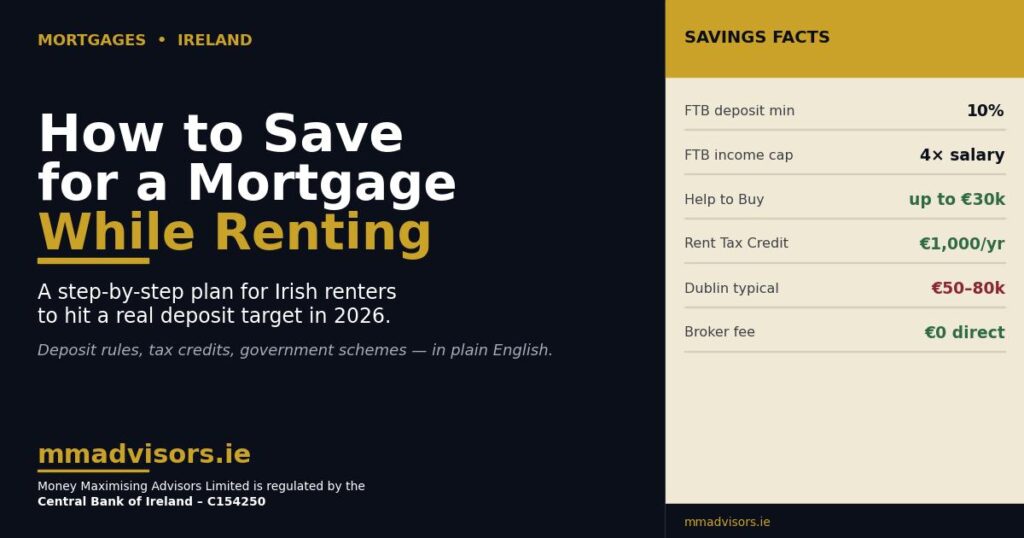
How to Save for a Mortgage While Renting in Ireland
Read more » about How to Save for a Mortgage While Renting in Ireland
September 3, 2026
•
No Comments
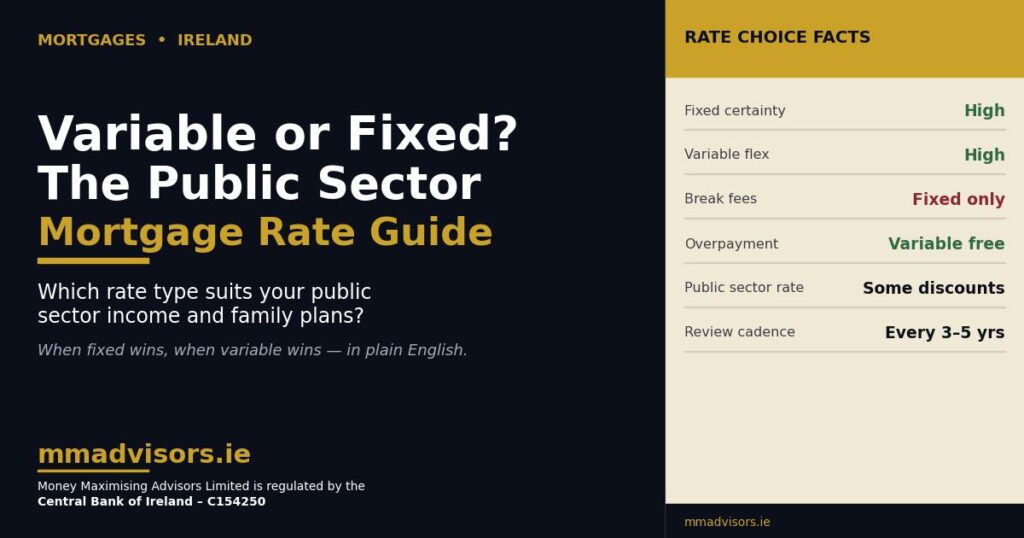
Ready to Explore Your Options?
Money Maximising Advisors Ltd is regulated by the Central Bank of Ireland. C154250.
Warning: If you do not meet the repayments on your loan, your account will go into arrears. This may affect your credit rating, which may limit your ability to access credit in the future.
Warning: The cost of your monthly repayments may increase.
Warning: You may have to pay charges if you pay off a fixed-rate loan early.