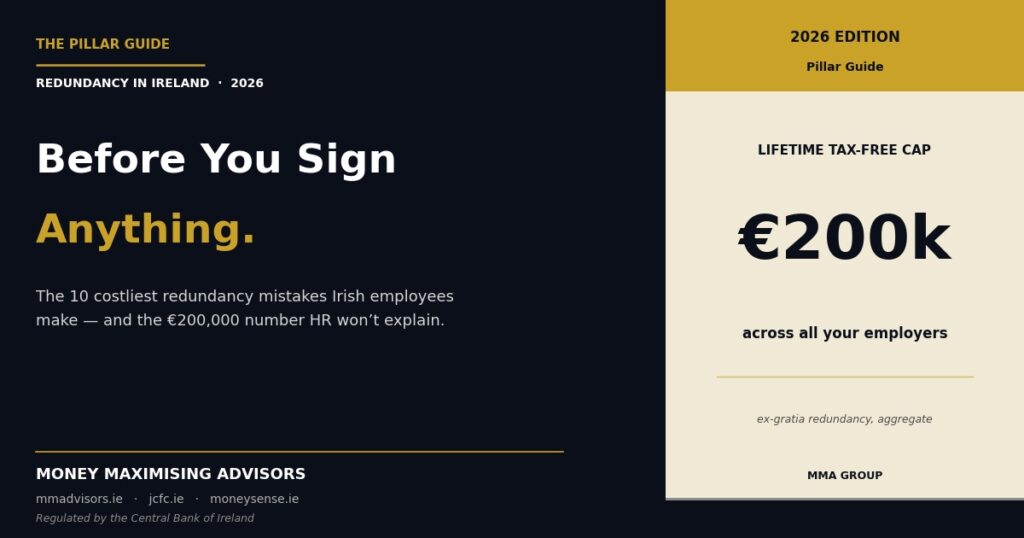
Facing redundancy in Ireland can be daunting, but understanding your rights and entitlements can help ease the financial and emotional burden of this transition. Whether it’s navigating the complexities of statutory redundancy, exploring tax-free options, or considering pension transfers, being informed is crucial. With various methods available for calculating your pay-out and maximising your tax-free benefits, you have more control over your financial future than you might think.
Navigating Redundancy in Ireland: Maximising Tax-Free Benefits and Pension Options
Facing redundancy can be a challenging experience for anyone in Ireland. The uncertainty surrounding one’s financial future, combined with the emotional toll of losing a job, can be overwhelming. However, understanding your redundancy entitlements and making informed decisions regarding your pension can help ease this transition. This comprehensive guide aims to provide clarity on redundancy advice in Ireland, statutory redundancy entitlements, and the various options available to maximise tax-free benefits while securing your pension for the future.
Understanding Your Redundancy Entitlements
When facing redundancy in Ireland, it’s essential to grasp what you are entitled to. Statutory redundancy is a benefit designed to provide financial support when an employee loses their job through no fault of their own. The calculation for redundancy payments can seem complex, but it is crucial to know your rights.
Irish statutory redundancy ensures that eligible employees receive a payment based on their length of service and weekly pay. Specifically, you are entitled to two weeks’ pay for each year worked, plus an additional week’s pay. This amount can make a significant difference during this transitional period.
Moreover, beyond the basic statutory redundancy payment Ireland offers, some employers may provide ex gratia payments as part of a redundancy package. These additional sums can enhance your financial cushion but may be subject to taxation.
Understanding these components allows you to better navigate your options and advocate for yourself during this challenging time. Utilising resources like a redundancy calculator Ireland can also clarify what you can expect regarding payments and overall support.
Statutory Redundancy Entitlement
Statutory redundancy entitlement is a pivotal aspect of the Irish employment landscape. This legally mandated benefit is designed to provide financial support during a challenging transition period. Employers must offer this payment, giving employees some security as they navigate uncertainty.
Notably, statutory redundancy is completely tax-free for recipients. This means that you receive the full amount without any deductions, making it an essential consideration when evaluating your total settlement.
To qualify for statutory redundancy Ireland, employees must meet specific criteria regarding their length of service and employment contract terms. It’s crucial to understand these requirements to ensure you receive what you’re entitled to.
The calculation involves factors such as years worked and average earnings leading up to redundancy. Being informed about how this payment is determined can empower you during negotiations or discussions with your employer.
Statutory Redundancy Calculations
Statutory redundancy is a payment your employer must provide if you are made redundant. This entitlement is completely tax-free.
The calculation involves two weeks of pay for each year worked, plus an additional week. The amount you receive depends on your length of service and average earnings before redundancy.
Knowing how statutory redundancy pay works can help you plan financially during this transition period. It’s essential to understand these calculations so you can ensure you’re receiving what you deserve.
In Ireland, the statutory minimum for redundancy payments may vary based on specific factors. Make sure to check the current rates when assessing your entitlements.
Keeping track of your years in service and understanding how they contribute to your payout is crucial as well. A redundancy calculator Ireland could simplify this process and give clarity amid uncertainty.
You might also like our post on Redundancy Payment Entitlements In Ireland: What You Need To Know.
Ex-Gratia Redundancy Payment
When facing redundancy, understanding the ex-gratia payment is crucial. This is a discretionary amount paid by your employer on top of statutory redundancy.
Unlike statutory redundancy, which is calculated based on your years of service and weekly wage, the ex-gratia payment is not mandated by law. Instead, it’s often offered as a gesture of goodwill or to incentivise employees during tough transitions.
The total you receive in an ex-gratia payment can vary significantly. It depends on factors like company policy, negotiations, and individual circumstances.
It’s essential to clarify whether any part of your redundancy package qualifies as ex-gratia before accepting it. This clarity can prevent confusion over expected payments and help you budget effectively for the future.
Keep in mind that while statutory redundancy is delivered tax-free, an ex-gratia payment may be subject to different tax implications depending on how it’s structured within your overall package.
How to Maximise Your Tax-Free Redundancy Payment
Making redundancy decisions can feel overwhelming, especially when faced with numerous financial considerations. It’s crucial to understand how to maximise your tax-free redundancy payments effectively.
First, become familiar with the various methods for calculating your tax-free entitlement. Many people are unaware that different calculations can significantly affect their payout. This knowledge empowers you during negotiations and ensures you don’t leave money on the table.
Next, consider the implications of each method regarding future pension benefits. Some choices may provide higher immediate payouts but could impact your long-term pension security. Understanding these outcomes can help guide your decision-making process.
Seeking expert advice is invaluable in this scenario. A financial advisor specialising in redundancies can offer personalised guidance tailored to your specific situation, ensuring you make informed decisions about maximizing benefits while securing a stable future.
Methods for Calculating Your Tax-Free Redundancy Payment
Understanding your tax-free redundancy payment is crucial. There are several methods you can use to calculate it effectively.
The simplest method is the basic exemption. This allows you to receive a certain amount of your redundancy package without paying tax.
Related read: Overseas Pension Advice Ireland: How To Maximize Your Overseas Pension Benefits While Living In Ireland.
If you have long service with your employer, consider the Standard Capital Superannuation Benefit. This could significantly increase your tax-free allowance based on your years of employment.
Another approach involves looking at any unused tax-free entitlements from previous employments. These could further enhance the amount you can claim today.
Each method has specific criteria and outcomes, so it’s wise to research or seek professional advice tailored to your circumstances for the best result.
Ready to clarify your redundancy entitlements? Enquire now for personalised advice.
Basic Exemption
The Basic Exemption is a key element when it comes to redundancy payments in Ireland. It serves as the foundation for calculating your tax-free entitlement.
Facing workplace changes? Book a consultation to explore your redundancy options.
Under this scheme, employees are entitled to a certain amount of their redundancy payment without paying any tax on it. The exact value is set by the government and can change annually.
This exemption is available to all qualifying employees. It provides significant relief during what can be an emotionally challenging time of transition.
Knowing how much you’re eligible for under the Basic Exemption can help clarify your financial outlook post-redundancy. It’s essential to check current rates or consult with an expert familiar with Irish redundancy laws.
Understanding this initial step could lay a solid foundation for maximising your overall benefit. This sets you up better when exploring additional entitlements or enhancing your tax-free payout options later on.
Increased Exemption (if You Qualify)
If you’re facing redundancy in Ireland, it’s crucial to understand the potential for an increased exemption. Statutory redundancy entitlements provide a baseline, but there’s more you can qualify for.
The increased exemption is designed to offer additional tax-free benefits. If you meet specific criteria, your payout could be significantly higher. This is especially valuable if you have years of continuous employment with the same employer.
Several factors come into play here: length of service, age, and overall salary. It’s not just about what the law mandates; it’s about maximising your entitlements based on your unique circumstances.
Recommended: Step By Step Redundancy Advice Ireland For Employers.
Understanding these nuances can make a world of difference when navigating life post-redundancy. Don’t leave money on the table—ensure you know what options are available so you can maximise your benefit during this challenging transition period.
Standard Capital Superannuation Benefit (SCSB)
The Standard Capital Superannuation Benefit (SCSB) is a key component when considering tax-free redundancy payments in Ireland. It’s designed to ensure you receive the maximum benefit based on your years of service and average salary.
Calculating the SCSB involves some specific formulas. The result can significantly affect how much of your redundancy payment remains tax-free, so it’s crucial to understand this method thoroughly.
This option becomes particularly valuable for those with long-term employment or higher average earnings over their career span. Understanding these nuances can help you make informed decisions about which calculation method benefits you most during this transitional period.
Consulting a financial advisor specializing in SCSB calculations can provide clarity. Their expertise ensures that you’re navigating these waters effectively, maximizing your entitlements without unnecessary confusion or stress.
SCSB Calculation Options
Navigating the SCSB calculation options can feel overwhelming. Understanding your choices is crucial for making informed decisions about your pension benefits.
One option allows you to maximise your tax-free redundancy payment. By carefully assessing your years of service and average earnings, you can unlock a significant sum that might otherwise go unnoticed.
On the other hand, it’s important to remember that choosing this route may affect your overall pension calculations in the future. This trade-off requires thoughtful consideration based on your long-term financial goals.
Discussing these options with a financial advisor can provide clarity. They will help tailor strategies to suit your unique circumstances, ensuring that you make the most beneficial choice possible during what is often a challenging time.
SCSB – Waiving Pension Lump Sum
The Standard Capital Superannuation Benefit (SCSB) offers a unique way to maximise your redundancy entitlements. It’s crucial to understand how it impacts your pension options.
When using the SCSB calculation, you can choose to waive your pension lump sum. This decision allows you to receive a larger tax-free redundancy payment but sacrifices immediate access to that pension fund.
Many employees in Ireland find this route beneficial, especially if they anticipate needing more liquid assets during their transition period. You’ll need clear and honest communication with an advisor who understands the nuances of redundancy advice in Ireland.
You might also like our post on Redundancy In Ireland: Implications And Entitlement.
By waiving the pension lump sum, you’re essentially prioritising short-term financial relief over long-term savings. This choice depends heavily on individual circumstances; knowing what suits you best is essential for making informed decisions amidst uncertainty.
SCSB – Retaining Pension Lump Sum
Considering the SCSB – Retaining Pension Lump Sum option can be pivotal during the redundancy process. It allows you to preserve your pension lump sum, which can provide financial flexibility as you transition into a new phase.
By keeping your pension intact, you maintain access to valuable resources that could support your long-term financial goals. This option often appeals to those seeking security and stability after leaving their current employment.
The calculation for this route involves understanding how much of your redundancy payment is tax-free. It’s essential to get clarity on what you’re entitled to before making decisions that could impact your future income.
Engaging with a professional who specialises in redundancy advice Ireland can help demystify these calculations. An expert’s guidance ensures you’re informed and prepared at every step of the journey ahead.
Pension Options After Redundancy
After redundancy, navigating your pension options can feel overwhelming. Understanding what avenues are available is crucial for your financial future.
Many people may not realise they have several paths to explore. Each option comes with its own implications for tax and accessibility.
Concerned about your financial future after redundancy? Book a consultation today to secure your benefits.
You might consider transferring your pension into a Personal Retirement Savings Account (PRSA). This move often simplifies management while potentially maximising benefits in the long run.
Discover how much tax-free redundancy you could receive. Enquire now for a tailored calculation.
Alternatively, leaving the pension where it is or moving it to another employer’s scheme could suit different financial goals. Evaluating each route ensures you’re making an informed decision tailored to your needs.
Seeking advice from a professional can also shed light on nuances you might overlook. Engaging with someone who understands the intricacies of redundancy Ireland scenarios will help pave the way toward securing your future, making it easier to focus on new opportunities ahead.
Your Pension Transfer Options After Redundancy
When facing redundancy, understanding your pension options can be crucial. You have the opportunity to take control of your retirement savings.
Related read: Voluntary Vs. Compulsory Redundancy: Key Differences In Ireland.
You might consider transferring your occupational pension into a Personal Retirement Bond. This move allows you to manage the investment yourself and potentially grow it further.
Alternatively, transferring into a PRSA could offer flexibility. With this option, you can continue contributing even after leaving employment, keeping your retirement plans on track.
Another route is leaving your pension within the old scheme. While less hands-on, it ensures that those funds are preserved for future use without immediate tax implications.
Each choice has its unique benefits and considerations. Consulting with an expert ensures you make informed decisions tailored to your needs during this transitional period.
PRSA Transfers: A Tax Efficient Retirement Strategy
PRSA transfers can be a strategic move for those facing redundancy in Ireland. They offer flexibility and tax benefits that are hard to ignore.
By transferring your pension into a PRSA, you retain control over your funds. This option allows you to access your tax-free lump sum when needed, which is invaluable during uncertain times.
The beauty of PRSAs lies in their adaptability. Unlike traditional schemes, they cater to varying retirement needs and timelines. You can choose how and when to draw down on your savings without facing hefty taxes or penalties.
Moreover, considering the Irish tax landscape, this approach provides peace of mind. With careful planning, you can ensure your financial future remains secure while maximising available benefits. Expert advice here can make all the difference as you navigate these waters post-redundancy.
PRSA Transfer Requirements: An Independent Report is Needed
When considering a PRSA transfer, it’s essential to understand the requirements involved. One key requirement is an independent report that outlines the comparison of benefits between your current pension scheme and a Personal Retirement Savings Account (PRSA).
This report serves as a crucial tool for decision-making during times of redundancy. It ensures you are fully informed about how your benefits might change, helping you make a sound financial decision.
In Ireland, regulated financial entities are responsible for conducting this analysis. Their expertise ensures that all potential outcomes are clearly laid out, giving clarity to what can often feel like complex choices.
Recommended: Ireland Spv Tax Benefits: What Every Real Estate Investor Should Know.
Acquiring this independent report isn’t just about compliance; it’s about safeguarding your future. It helps identify any opportunities or risks associated with transferring pensions post-redundancy. Taking this step seriously can profoundly impact your long-term financial security and peace of mind as you navigate through challenging times.
Make an Informed Decision with Expert Advice
Facing redundancy can be overwhelming. Understanding your entitlements and making informed decisions is crucial during this transitional period.
Many individuals feel uncertain about their options regarding redundancy payments and pensions. The landscape can seem complex, with various statutory and tax-free elements at play.
Choosing the right financial strategy requires clarity. Expert advice becomes invaluable here. A seasoned advisor can guide you through your choices, ensuring you maximise your benefits while considering future implications on your pension.
Every situation is unique, influenced by factors such as length of service and individual circumstances. Personalised guidance will help you navigate these complexities effectively.
Engaging with a professional early on allows for strategic planning that aligns with both immediate needs and long-term goals. This proactive approach ensures that you are well-prepared to face potential financial challenges head-on while securing a stable future.
FAQ’S:
1. What is statutory redundancy in Ireland?
Statutory redundancy is a benefit provided by the state to employees who have lost their jobs through no fault of their own. It’s designed to provide financial support during a transitional period, helping individuals adjust while they seek new employment. The calculation for statutory redundancy entitlements depends on various factors such as length of service and weekly earnings. This ensures that each person receives an amount tailored to their unique situation.
2. How is statutory redundancy calculated?
Statutory redundancy entitlements in Ireland are determined based on your length of service and weekly pay. This calculation ensures that employees receive a fair payout during challenging times. For those eligible, the standard formula involves two weeks’ pay for each year of service. This sum is capped at a maximum amount, ensuring consistency across the board.
3. Will I have to pay tax on my redundancy payments?
When considering redundancy payments in Ireland, a common concern is whether you’ll have to pay tax on the money received. Understanding this can make a significant difference in how much you actually take home. Statutory redundancy payments are usually tax-free. This means that the amount you receive for lost employment due to redundancy won’t be subject to income tax.
4. How does an Ex Gratia payment affect my redundancy?
An Ex Gratia payment can significantly impact your redundancy experience. It’s a discretionary bonus, offered by employers on top of statutory entitlements. This additional sum isn’t mandated by law but often reflects the company’s appreciation for your service. The amount can vary widely, depending on factors like length of service and business circumstances
5. What should I know about my tax-free redundancy allowance?
Understanding your tax-free redundancy allowance is crucial. This allowance can significantly impact the amount you take home after being made redundant. In Ireland, statutory redundancy payments are not taxable. That’s a relief for many who face job loss. However, it’s important to consider how other elements of your payout might be treated differently.
CONCLUSION
Navigating redundancy in Ireland can be a daunting experience, but being informed about your statutory redundancy entitlements, ex-gratia payments, and pension options is crucial. Whether you’re looking to calculate your redundancy payment using a redundancy calculator Ireland or seeking advice on the best way to manage your pension after redundancy, understanding these key elements will empower you to make informed decisions.
Maximising your tax-free redundancy allowance involves exploring various methods of calculation. From the basic exemption to the enhanced exemption for long-standing employees, each option holds different financial implications. The SCSB calculation presents another layer of complexity depending on whether you choose to waive or retain your pension lump sum.
As you face the uncertainties of redundancy, remember that your choices can significantly impact your financial future. By understanding your entitlements, exploring all calculation methods, and seeking expert guidance tailored to your unique situation, you empower yourself to make informed decisions.
At Money Maximising Advisors, we specialise in providing redundancy advice in Ireland. Our team is dedicated to helping you navigate the complexities of statutory redundancy entitlements and pension options after redundancy. Get in touch today to ensure you maximise every opportunity available during this pivotal time.