
Losing your job is never easy. Whether it comes out of the blue or after weeks of uncertainty, redundancy in Ireland is a stressful and often confusing experience. But it’s important to know that you have rights — and that understanding those rights could make a significant financial difference to your future. At Money Maximising Advisors, we’ve helped hundreds of individuals across Dublin, Galway, and beyond navigate redundancy with confidence and clarity.
In this guide, we’ll walk you through everything you need to know about redundancy rights Ireland, statutory redundancy payments, how redundancy is calculated, and the key steps to protect your financial future after being made redundant.
What Is Redundancy in Ireland?
Redundancy occurs when your employer eliminates your role because it is no longer needed — not because of any fault on your part. Redundancy in Ireland is governed by the Redundancy Payments Acts 1967–2014, which set out your legal entitlements and your employer’s obligations.
Common reasons for redundancy include business closures, restructuring, downsizing, or the introduction of new technology. Regardless of the reason, if you have been in continuous employment for at least two years, you are generally entitled to statutory redundancy Ireland.
What Are My Redundancy Rights in Ireland?
Your redundancy rights Ireland are clearly defined under Irish employment law. Key rights include:
- The right to a statutory redundancy payment if you have 104 weeks (2 years) of continuous service
- The right to reasonable notice before your employment ends
- The right to a written notice of redundancy (RP50 form)
- The right to time off to look for alternative employment during your notice period
- The right to appeal if you believe the redundancy is unfair
It’s worth noting that you do not have redundancy rights if you have been employed for less than two years, are self-employed, or are in certain categories of public sector employment.
How Is Redundancy Calculated in Ireland?
The redundancy payment Ireland formula under Irish law is as follows:
- Two weeks’ gross pay for every year of service
- Plus one additional week’s pay (the bonus week)
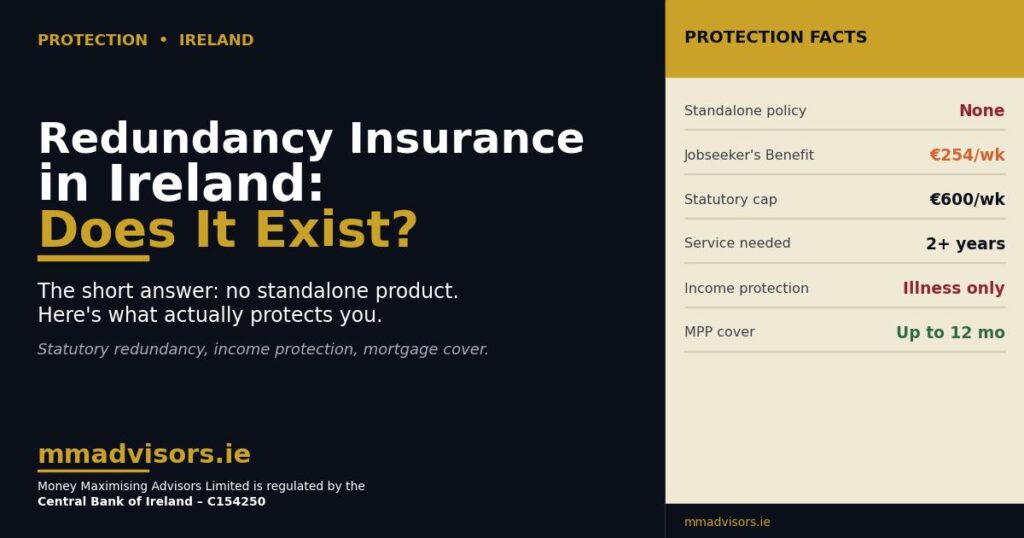
- Calculated on your normal weekly earnings (capped at €600 per week for statutory purposes)
For example, if you have worked for 10 years and earn €600 per week or more, your statutory redundancy would be:
(2 x 10 years x €600) + €600 = €12,600
This is the minimum you are legally entitled to. Many employers offer enhanced redundancy packages above the statutory minimum, particularly in larger organisations or those with union agreements.
You can use the government’s official redundancy calculator Ireland to estimate your entitlement, or speak with our team at Money Maximising Advisors for a full personalised assessment.
Read also: Redundancy in Ireland: Implications and Entitlement
Do I Qualify for Statutory Redundancy in Ireland?
To qualify for statutory redundancy Ireland, you generally need to meet the following criteria:
- Be aged 16 or over
- Have worked for your employer for at least 104 continuous weeks (2 years)
- Be employed under a contract of employment (including full-time, part-time, and fixed-term workers)
- Be dismissed due to redundancy — not misconduct or resignation
If your employer is insolvent and unable to pay, the Department of Social Protection’s Social Insurance Fund can cover your statutory entitlement.
Is Redundancy Pay Taxable in Ireland?
This is one of the most important questions for anyone facing redundancy in Ireland. The good news: your statutory redundancy payment is entirely exempt from income tax, regardless of the amount.
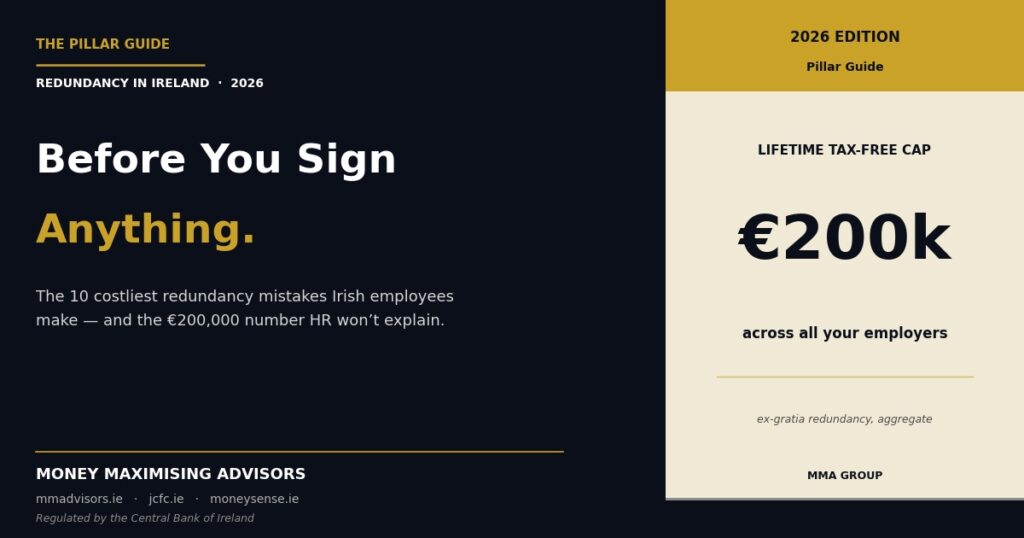
For any ex gratia redundancy payments above the statutory amount, you may be entitled to significant tax exemptions, including:
- The Basic Exemption: €10,160 plus €765 for each complete year of service
- The Increased Exemption: an additional €10,000 if you have not received certain other tax-free lump sums
- Standard Capital Superannuation Benefit (SCSB): particularly valuable for longer-serving employees with higher earnings
Tax planning around a redundancy lump sum can be complex, and getting it wrong can be very costly. We strongly recommend speaking with a qualified financial advisor at Money Maximising Advisors before you agree to or accept any enhanced redundancy package.
Discover more: Understanding Redundancy Payment Options in Ireland
What Is Considered Unfair Redundancy in Ireland?
Not every redundancy is legally valid. Unfair dismissal Ireland can occur if:
- Your employer selected you for redundancy on discriminatory grounds (gender, age, disability, etc.)
- You were made redundant while on maternity, paternity, or parental leave
- Your role was later re-filled by someone else (suggesting the redundancy was not genuine)
- Your employer failed to consult you properly before making you redundant
If you believe your redundancy was unfair, you can take a claim to the Workplace Relations Commission (WRC). It’s advisable to seek legal or financial advice as quickly as possible if this is the case.
Related reading: Step-by-Step Redundancy Advice Ireland for Employers
What Happens to Your Pension After Redundancy?
Your pension doesn’t disappear when you’re made redundant — but you do need to take action. Depending on your scheme type, you may be able to:
- Leave your pension pot in your former employer’s scheme (a ‘deferred pension’)
- Transfer it to a Personal Retirement Bond (PRB) or Buy-Out Bond
- In some cases, access benefits early if aged 50 or over (with Revenue approval)
Making the wrong decision with your pension at this stage could have long-term consequences. Our advisors can help you understand your options and protect your retirement savings.
Also: Redundancy Pension in Ireland: A Complete Guide to Protecting Your Financial Future
Get Expert Redundancy Advice Today
Facing redundancy is challenging enough without having to navigate complex legal and financial decisions alone. At Money Maximising Advisors, we’re here to help you understand your entitlements, maximise your tax exemptions, and plan confidently for the road ahead.
To speak with one of our expert advisors, Enquire Now or Book a Consultation today. You can also Contact Us or Book an Appointment online at your convenience.
Conclusion
Being made redundant is undeniably difficult, but understanding your redundancy rights Ireland puts you in a far stronger position. From knowing how your statutory redundancy Ireland is calculated to understanding the tax implications of your payout, the right knowledge can mean the difference between financial struggle and financial security. At Money Maximising Advisors, we’re proud to support individuals across Dublin, Galway, and throughout Ireland during one of life’s most challenging transitions.
Facing redundancy in Ireland? Don’t face it alone — let our team guide you through every step.
Frequently Asked Questions (FAQs)
1. What are my redundancy rights in Ireland?
You are entitled to statutory redundancy pay, proper notice, a written RP50 form, and time off to seek new employment — provided you have at least two years’ continuous service. You also have the right to appeal if you believe the redundancy is unfair.
2. How much redundancy pay am I entitled to in Ireland?
You are entitled to two weeks’ gross pay per year of service, plus one bonus week, based on normal weekly earnings capped at €600. Enhanced packages above the statutory minimum may also be available depending on your employer.
3. How is redundancy calculated in Ireland?
The formula is: 2 weeks’ pay x years of service + 1 bonus week, based on weekly earnings capped at €600. For example, 10 years’ service at €600 per week = €12,600 statutory redundancy.
4. Do I qualify for statutory redundancy in Ireland?
You qualify if you are aged 16 or over, have at least two continuous years of service, are employed under a contract of employment, and are dismissed due to genuine redundancy rather than misconduct.
5. Is redundancy pay taxable in Ireland?
Statutory redundancy is fully exempt from income tax. Ex gratia payments above the statutory amount may also benefit from significant tax exemptions, but expert advice is essential to maximise your relief.
6. What is considered unfair redundancy in Ireland?
A redundancy may be considered unfair if you were selected on discriminatory grounds, were on protected leave, or if your role was later filled by someone else. You can bring a claim to the Workplace Relations Commission (WRC).
Disclaimer
This article provides general information about redundancy entitlements and should not be considered personalised legal, financial, or tax advice. Redundancy rules and tax exemptions in Ireland are subject to change. Individual circumstances vary significantly. Always consult with our qualified financial advisors or a qualified solicitor before making decisions about your redundancy settlement.