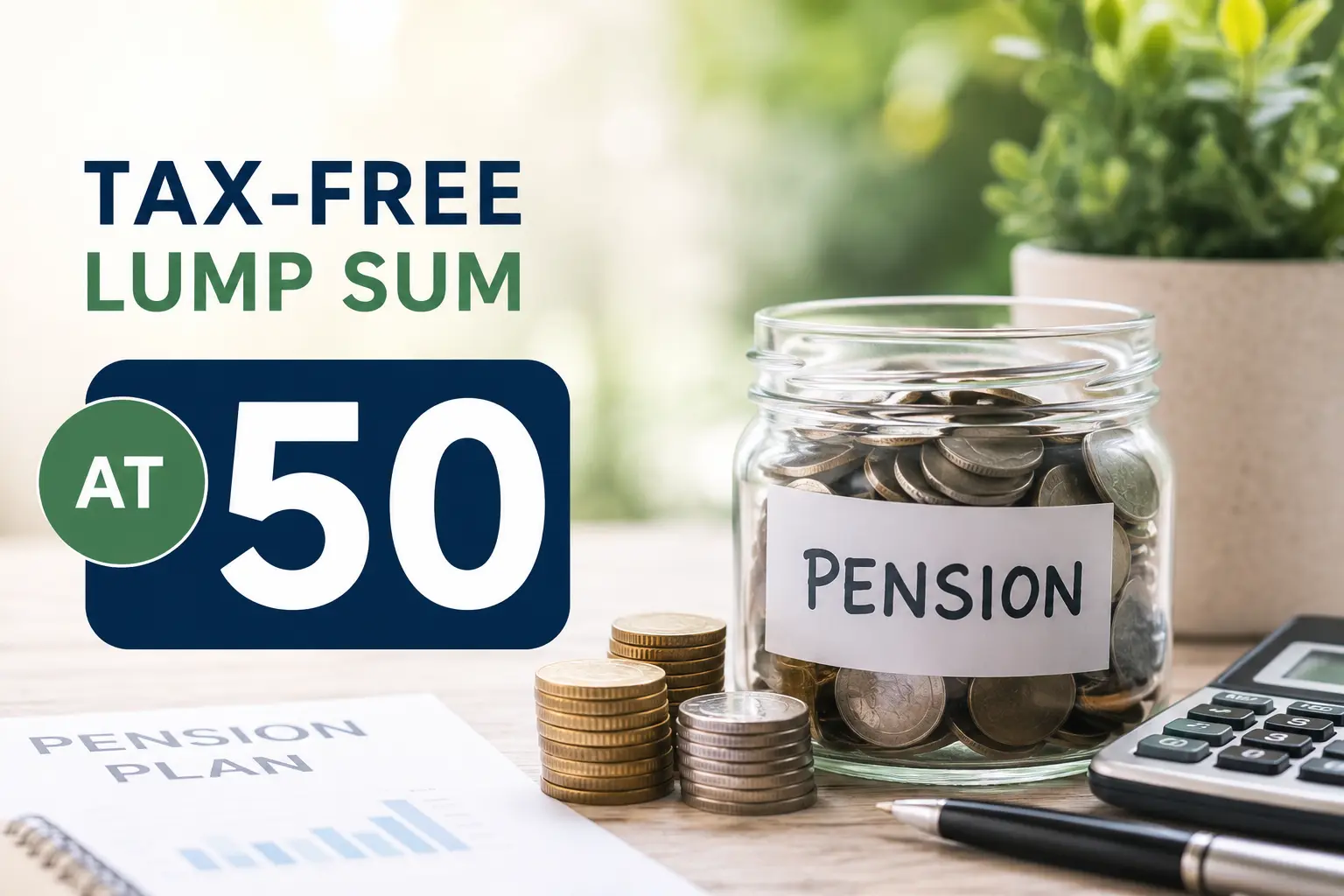
Thinking about accessing your pension early? You’re not alone. Many Irish workers are exploring their options when it comes to taking a Lump Sum Investment in Ireland from their pension fund — sometimes as early as age 50. At Money Maximising Advisors Limited, we regularly help clients understand the rules around the pension tax free lump sum Ireland rules, so they can make informed decisions without costly mistakes. Here’s everything you need to know.
Can I Take My Pension at 50 in Ireland?
Yes — in certain circumstances, you can cash in pension at 50 Ireland. This is typically possible if you’ve left the employment scheme to which your pension is attached, or if you hold a Personal Retirement Savings Account (PRSA) that allows early access. However, this is not automatic and it’s important to understand the specific rules that apply to your type of pension.
For occupational pension schemes, you usually need to have left service (i.e., no longer employed by that company) before accessing benefits at 50. Self-employed individuals and those with certain executive pension plans may also have more flexibility.
What is the Tax-Free Pension Lump Sum in Ireland?
The pension lump sum Ireland rules allow you to take a portion of your pension fund tax-free when you retire or access your benefits. The amount you can take tax-free depends on the type of pension you hold:
- Defined Contribution (DC) scheme: You can take 25% of your pension fund as a tax free pension Ireland 25% lump sum, subject to a lifetime limit of €200,000
- Defined Benefit (DB) scheme: The tax-free amount is calculated differently, based on years of service and final salary
- PRSAs: Follow similar rules to DC schemes — up to 25% tax-free, capped at €200,000
The first €200,000 of any pension lump sum taken in your lifetime is completely tax-free. The next €300,000 is taxed at 20%, and anything above €500,000 is taxed at your marginal rate.
How Much of My Pension Can I Take Tax-Free in Ireland?
Under pension lump sum Ireland rules, the maximum tax free pension Ireland 25% rule allows most individuals to take up to 25% of their pension fund completely tax-free. Here’s a worked example:
- Total pension fund: €400,000
- Tax-free lump sum (25%): €100,000
- Remaining fund (€300,000): transferred to an ARF or annuity
It’s worth noting that the €200,000 lifetime limit applies across all pension arrangements. If you’ve taken a lump sum from a previous employer’s pension, this counts towards your lifetime limit.
For more detail on maximising your pension withdrawal, see: Tax-Free Lump Sum: How Much Can You Get?
Is Pension Lump Sum Taxable in Ireland?
The short answer is: partly. The first €200,000 is tax-free. After that:
- €200,001 – €500,000: taxed at 20%
- Above €500,000: taxed at your marginal income tax rate (up to 40%) plus USC and PRSI
This is why planning when and how you take your lump sum is so important. Taking it in stages or combining it with other financial strategies can significantly reduce your overall tax bill.
What Happens to the Rest of My Pension Fund?
Once you’ve taken your tax-free pension lump sum Ireland, you have several options for the remaining fund:
- Approved Retirement Fund (ARF): Invest the remaining fund and draw down income as needed — this is the most popular option
- Annuity: Convert the remaining fund into a guaranteed income for life
- Approved Minimum Retirement Fund (AMRF): If your guaranteed income doesn’t meet the minimum income threshold, a portion must go into an AMRF
Choosing the right option depends on your income needs, investment preferences, and tax situation. Our advisors at Money Maximising Advisors Limited can help you structure your retirement income in the most tax-efficient way.
You might also find these guides helpful:
Key Things to Consider Before Taking Your Pension Early
Before you decide to cash in pension at 50 Ireland, think carefully about:
- Your long-term income needs: Accessing your pension early reduces the fund available to you in later retirement
- Tax implications: A large lump sum could push you into a higher tax bracket for that year
- State Pension entitlement: You won’t receive the State Pension until age 66 — you need income to bridge this gap
- Inflation: Money drawn down early has less time to grow, so your future purchasing power may be reduced
Frequently Asked Questions (FAQs)
Can I take my pension at 50 in Ireland?
Yes, in certain circumstances — primarily if you’ve left the employer scheme attached to your pension. PRSAs and some executive plans may also allow early access. Always take professional advice before proceeding.
How much of my pension can I take tax-free in Ireland?
Most people can take up to 25% of their pension fund tax-free, subject to a lifetime limit of €200,000. The exact amount depends on your pension type and individual circumstances.
What is the tax-free pension lump sum limit in Ireland?
The first €200,000 of pension lump sums taken in your lifetime is completely tax-free. The next €300,000 is taxed at 20%, and amounts above €500,000 are taxed at your marginal rate.
Is pension lump sum taxable in Ireland?
Only amounts above the €200,000 lifetime threshold are taxable. The first €200,000 is entirely tax-free, with a graduated tax applying above that amount.
Conclusion
Understanding the pension tax free lump sum Ireland rules is essential for making the most of your retirement savings — especially if you’re considering early access at 50. The rules can be complex, and the decisions you make can have a significant impact on your long-term financial wellbeing. At Money Maximising Advisors Limited, our expert advisors are here to help you navigate the process from start to finish.
📞 Enquire Now — we’ll get back to you promptly.
📅 Book Your Appointment and let’s plan your retirement together.
You may also want to explore: Lump Sum Investment in Ireland for options on investing your pension proceeds.
Disclaimer
This article provides general information and should not be considered personalised financial or tax advice. Irish tax laws change periodically, and individual circumstances vary. Always consult with our qualified financial advisors or tax professionals before making significant pension or retirement decisions.