Quick Answer
Most homeowners in Ireland pay between €250 and €650 a year for a comprehensive buildings and contents policy in 2026. Apartments typically sit at the lower end, from around €200, while large detached and high value properties often exceed €700. Your premium is driven by the rebuild cost of the property rather than its market value, along with location, age, construction type, security features, claims history and the voluntary excess you select.
Introduction
Working out the home insurance cost Ireland homeowners face in 2026 is one of the harder parts of budgeting for a property. Mortgage repayments are predictable. Utility bills follow a pattern. Home insurance premiums are priced individually, which means two almost identical houses on the same street can be quoted very different figures.
The Irish insurance market has changed considerably in recent years. Rising construction costs, general inflation and more frequent storm events have pushed up the cost of settling claims, and insurers have adjusted their pricing models in response. Many homeowners are seeing higher renewal figures in 2026 even though they have never made a claim.
Whether you are buying your first property, trading up to a larger home or simply reviewing an existing policy, understanding how premiums are calculated makes it far easier to compare quotes and spot the difference between genuine value and a cheap price with thin cover. The good news is that once you understand how insurers assess risk, you can influence a meaningful part of your premium.
What Is the Average Home Insurance Cost in Ireland in 2026?
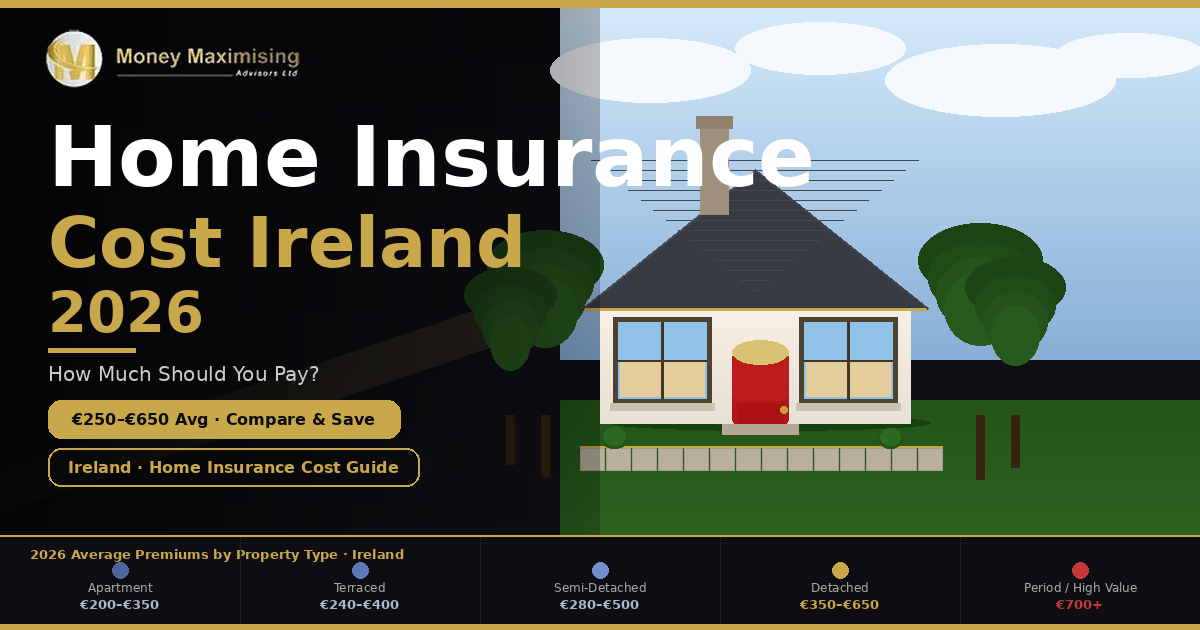
There is no single price that applies to every property. That said, the ranges below give a realistic picture of what homeowners are paying this year for a comprehensive policy covering both the building and its contents.
| Property Type | Estimated Annual Premium |
| Apartment | €200 to €350 |
| Terraced house | €240 to €400 |
| Semi detached house | €280 to €500 |
| Detached house | €350 to €650+ |
| High value or period property | €700+ |
Treat these as benchmarks rather than guaranteed prices. Two detached houses of similar size can receive very different quotations if one sits in an area with a history of flooding and the other has monitored security and a long claims free record.
Insurers Price on Rebuild Cost, Not Market Value
This is the single most misunderstood part of home insurance pricing. Insurers do not care what your house would sell for. They care what it would cost to rebuild it from the ground up after a total loss.
That rebuild figure includes labour, materials, demolition, debris removal, site clearance and professional fees such as architects and engineers. As construction costs have climbed across Ireland, rebuild valuations have climbed with them, and premiums have followed.
The Society of Chartered Surveyors Ireland publishes regional rebuilding cost guidelines each year, and it is worth checking yours against the sum insured on your policy schedule. Understating the rebuild value shaves a little off the annual premium, but it can leave you badly exposed. If your home is insured for less than it costs to rebuild, an insurer may apply average and reduce a claim payout proportionally, even on a partial claim.
What Affects the Home Insurance Cost Ireland Homeowners Pay?
Every insurer weights risk slightly differently, but the underlying factors are consistent across the market. The table below shows which ones carry the most weight and which you can realistically do something about.
| Pricing Factor | Weight | Can You Influence It? |
| Rebuild cost or sum insured | High | Yes, by keeping it accurate |
| Location of the property | High | Only by moving |
| Previous claims on the property or by you | High | Yes, over time |
| Age and construction type | Medium | Partly, through upgrades |
| Security features and alarm specification | Medium | Yes |
| Level of cover and optional extras | Medium | Yes |
| Voluntary excess applied | Medium | Yes |
| Whether the home is occupied full time | Medium | Sometimes |
Location Is One of the Biggest Pricing Factors
Insurers analyse historical claims data by area to assess the likelihood of burglary, flooding and storm damage. Properties in coastal regions or near watercourses often attract higher premiums because they are statistically more likely to generate expensive claims.
Prices vary even within the same county. Local crime rates, proximity to emergency services and the record of previous weather events all feed into the assessment.
The Age and Construction of Your Home
Older properties present more variables. Traditional construction methods, ageing plumbing and outdated electrical wiring increase the likelihood of an escape of water or fire claim, and repairs to period features are more expensive.
Newer homes built to current Irish building regulations generally meet higher safety standards and tend to attract lower premiums. Construction materials matter too. Conventional brick and concrete builds are viewed as lower risk than specialist or non-standard materials, which are more expensive to repair or source.
If your property falls outside the usual mould, whether that is a thatched roof, a converted building, a flood risk address or a previous subsidence claim, a standard online quote engine may decline it altogether. Our guide to non standard home insurance in Ireland explains how these cases are handled.
Claims History and Voluntary Excess
A clean claims record is one of the most valuable assets you have when negotiating a premium. Insurers typically look back five years, and a recent claim, even a modest one, will be reflected in your renewal price.
Your voluntary excess also has a direct effect. The excess is the portion of any claim you agree to pay yourself. Raising it lowers the annual premium but only choose a figure you could comfortably cover at short notice.
Buildings Insurance vs Contents Insurance
When comparing quotations it is essential to know exactly what is being insured. A standard Irish home insurance policy is made up of two distinct elements.
| Buildings Insurance | Contents Insurance | |
| What it covers | Walls, roof, floors, fitted kitchens and bathrooms, permanent fixtures | Furniture, electronics, clothing, appliances and personal belongings |
| Sum insured based on | Rebuild cost of the property | Replacement value of your possessions |
| Required by a lender | Yes, where a mortgage is in place | No |
| Common optional extras | Accidental damage, home emergency assistance | All risks or personal possessions cover, specified high value items |
| Who typically needs it | Property owners | Owners and tenants |
Most providers offer both as a single combined policy. Besides being simpler to administer, a combined policy is often better value than arranging the two separately. Compare the cover levels rather than the headline price, because single item limits, contents sums insured and exclusions differ significantly between insurers.
Why the Home Insurance Cost Ireland Homeowners Face Is Rising
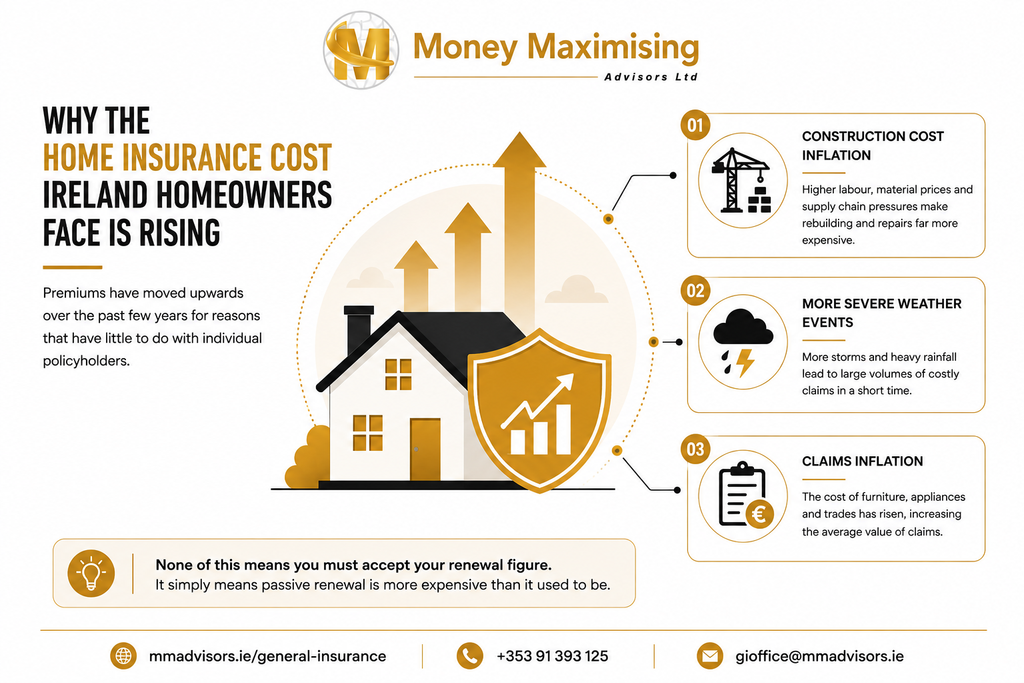
Premiums have moved upwards over the past few years for reasons that have little to do with individual policyholders.
Construction cost inflation is the largest driver. Labour shortages, higher material prices and supply chain pressure have made rebuilding and repairing homes considerably more expensive than it was a few years ago. Because insurers must price for those costs in advance, premiums rise to match the exposure.
Weather is the second factor. Ireland has seen a growing number of severe storms and heavy rainfall events, which produce large volumes of claims in a short window. Storm and flood claims are expensive to settle and they arrive in clusters, which affects how insurers price for the whole book.
The third factor claims inflation more broadly. The cost of replacement furniture, appliances and tradespeople has risen, so the average value of a settled claim has risen with it.
None of this means you must accept your renewal figure. It simply means passive renewal is more expensive than it used to be.
How to Reduce Your Home Insurance Cost in Ireland

Some factors, such as the age of your property or its location, are outside your control. Plenty of others are not.
- Compare before every renewal. This is the highest impact action available to you. Many homeowners accept the renewal notice without checking the market. Insurers adjust their underwriting appetite constantly, and the provider that was most competitive last year may not be this year.
- Set an appropriate excess. A higher voluntary excess usually reduces the annual premium. Balance the saving against what you could realistically pay out of pocket.
- Improve security. Approved locks on doors and windows, a monitored alarm and sensible lighting all reduce burglary risk. Discounts vary by provider, but the improvement usually pays for itself over time.
- Maintain the property. Routine maintenance prevents the leaking roofs, blocked gutters and burst pipes that generate the most common claims. Well maintained homes present lower risk and are easier to place.
- Avoid small claims. Insurance exists for events you could not absorb yourself. Frequent low value claims erode your no claims record and affect future pricing, often by more than the claim was worth.
- Keep your rebuild sum insured accurate. Accurate is not the same as high. Review it after any extension or significant renovation and check it against current rebuilding cost guidelines.
- Consider consolidating your policies. Some households find that arranging home, motor and other cover through the same broker simplifies renewals and surfaces savings they would not spot otherwise. The same principle applies on the motor side, as explained in our guide to multi car insurance in Ireland.
Home Insurance Costs for Properties That Are Not Standard
The ranges quoted earlier apply to an owner occupied family home in normal use. Costs change once the property does not fit that description.
- A property left empty for an extended period, whether during probate, renovation or an extended absence, needs unoccupied home insurance, because most standard policies restrict cover after 30 to 60 consecutive days of vacancy.
- A second property used seasonally requires holiday home insurance, which accounts for periods of vacancy and, in some cases, guest occupancy.
- A property you rent out is not covered by a standard homeowner policy at all. That needs landlord insurance, which adds property owner liability and, optionally, loss of rent.
- Homes with unusual construction, a flood history or a previous structural claim fall under non standard home insurance.
If you are unsure which category your property falls into, it is worth checking before renewal rather than after a claim.
Why Comparing Home Insurance Quotes Matters
Price matters, but it should never be the only measure. Policies that look similar immediately can differ substantially in cover limits, exclusions, excesses and optional benefits.
One insurer may include accidental damage as standard while another treats it as a paid extension. Single item limits for jewellery, bicycles and home office equipment vary widely. Alternative accommodation cover, which pays for somewhere to live while your home is uninhabitable, differs in both duration and monetary limit.
Comparing quotations properly means reading the policy schedule and the exclusions, not just the premium line. This is where working with a broker saves time. Rather than filling in the same details across multiple quote engines, you give your circumstances once and receive advice on which structure suits the property.
Common Mistakes That Push Up Your Home Insurance Cost
Homeowners routinely increase their costs or weaken their protection through avoidable errors:
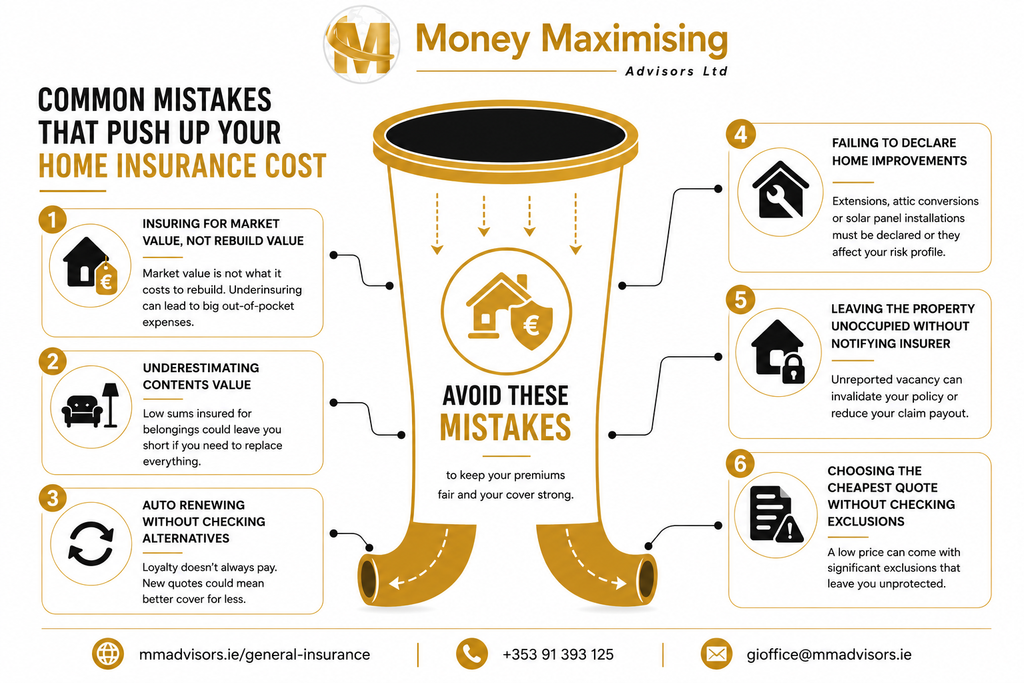
- Insuring the property for its market value instead of it rebuild value
- Underestimating the total value of household contents
- Auto renewing without comparing alternatives
- Failing to tell the insurer about an extension, attic conversion or solar panel installation
- Leaving the property unoccupied without notifying the insurer
- Choosing the cheapest quote without reading what has been excluded to reach that price
Each of these looks harmless until a claim is made. Undeclared renovations and unreported vacancy are two of the most common reasons claims are reduced or declined.
Is the Cheapest Home Insurance Always the Best Option?
Not usually. A lower premium is often achieved through higher excesses, tighter exclusions or reduced limits on personal belongings. Benefits such as accidental damage, home emergency assistance and alternative accommodation may be stripped out entirely.
The useful question is not “what is the cheapest policy” but “what would this policy actually pay if my roof came off in a February storm”. A policy that costs €60 more a year and includes accidental damage and a realistic alternative accommodation limit is usually the better financial decision.
How Often Should You Review Your Home Insurance?
Annually at minimum, and immediately after any of the following:
- Purchasing expensive furniture, jewellery or electronic equipment
- Completing an extension, attic conversion or major renovation
- Installing solar panels or other permanent improvements
- Changing occupancy, including letting a room or leaving the property empty
- Paying off your mortgage or moving home
Even with no change in circumstances, comparing before renewal keeps you from drifting onto a price set by inertia rather than risk.
Choosing the Right Home Insurance for Your Needs
There is no universal policy. A first-time buyer in a modern apartment needs something quite different from a family in a detached rural property or an owner letting out a second home.
Rather than focusing only on premium, weigh the quality of cover, the flexibility of the policy, the service you receive at renewal and the insurer’s reputation for handling claims. The aim is the right balance between comprehensive protection and long-term affordability for one of the largest assets you own.
Protect Your Home with the Right Insurance, Not Just the Cheapest Policy
Your home is one of your biggest investments, so your insurance should do more than simply meet the minimum requirements. In 2026, the cost of home insurance in Ireland continues to be influenced by rising rebuild costs, changing weather patterns, property location, security features, and claims history. That’s why reviewing your cover has never been more important.
At MM Advisors, we help homeowners across Ireland find home insurance that matches their property’s true value and their individual needs. Whether you’re buying your first home, switching providers, facing a higher renewal premium, or struggling to secure cover, our experienced advisers will help you explore your options with confidence.
We take the time to understand your circumstances, explain your cover clearly, and help you choose protection that offers real peace of mind, not just a lower premium.
Looking for more than home insurance? We can also help with:
Frequently Asked Questions
1. How much is home insurance in Ireland in 2026?
Most homeowners pay between €250 and €650 a year for combined buildings and contents cover. The figure depends on rebuild value, location, property type, security and claims history.
2. What affects the home insurance cost Ireland homeowners pay the most?
Rebuild cost and location carry the most weight, followed by claims history, the age and construction of the property, the level of cover selected and the excess applied.
3. Is buildings insurance mandatory in Ireland?
It is not a legal requirement, but if you have a mortgage your lender will require it as a condition of the loan.
4. Does home insurance cover flooding?
Many policies include flood cover, but it depends on the property’s flood risk and the insurer’s underwriting criteria. Homes in higher risk areas may face a larger flood excess or an exclusion. Always check the policy wording.
6. Can I reduce my home insurance premium?
Yes. Comparing quotes annually, improving security, maintaining the property, keeping a clean claims record and selecting an appropriate excess all help.
5. How do I work out my rebuild cost?
Use the Society of Chartered Surveyors Ireland rebuilding cost guidelines for your region and property type as a starting point, and adjust for extensions, unusual finishes and site access. Review it after any significant renovation.
7. Should I buy buildings and contents insurance together?
For most homeowners a combined policy is more convenient and often better value than two separate policies. Compare the cover levels rather than the premium alone.
8. Will my premium go up if I make a claim?
Usually yes. Insurers typically look back five years, so a claim affects pricing for several renewals. For small losses, weigh the payout against the likely increase and the loss of your no claims record.
Key Takeaways
- Most Irish homeowners pay €250 to €650 a year in 2026, with apartments lower and large detached or period homes higher.
- Premiums are calculated on rebuild cost, not market value, so check your sum insured against current rebuilding cost guidelines.
- Location and claims history carry the most weight after rebuilding cost, and neither can be changed quickly.
- Construction inflation and more frequent severe weather are the main reasons renewal figures have risen for people who have never claimed.
- Comparing before every renewal is the single highest impact way to reduce your premium.
- Underinsurance to save money can trigger the average clause and cut your payout, even on a partial claim.
- Unoccupied, holiday, rented and unusual properties need a different product entirely, not a standard homeowner policy.
Get Expert Home Insurance Advice Today
Don’t wait until renewal to discover gaps in your cover or pay more than you need to. Speak with the team at MM Advisors for a personalised home insurance review and find cover that’s built around your home, your budget, and your future.
Get in touch with MM Advisors for a home insurance review.
Money Maximising Advisors Ltd is regulated by the Central Bank of Ireland, Ref. C154250.